
 en
en


Yes, Machu Picchu is generally considered safe for tourists who follow local rules, use reputable transportation and tour services, protect their belongings, and prepare for the altitude and physical demands of the trip. However, travellers should still be aware of crime in parts of Peru, possible protests or transportation disruptions, altitude sickness, steep trails, changing weather, and limited emergency medical care in remote areas.
For U.S. travellers, it is important to separate the safety situation at Machu Picchu from conditions elsewhere in Peru. As of September 4, 2026, the U.S. Department of State lists Peru at Level 2: Exercise Increased Caution because of crime, civil unrest, kidnapping, and terrorism. However, the advisory specifically notes that Cusco, the Sacred Valley, the Inca Trail, and Machu Picchu are not within the areas covered by its highest-risk travel restrictions.
This guide explains the main risks, how to reduce them, and what tourists should know when planning a Machu Picchu trip in 2026 or 2027.
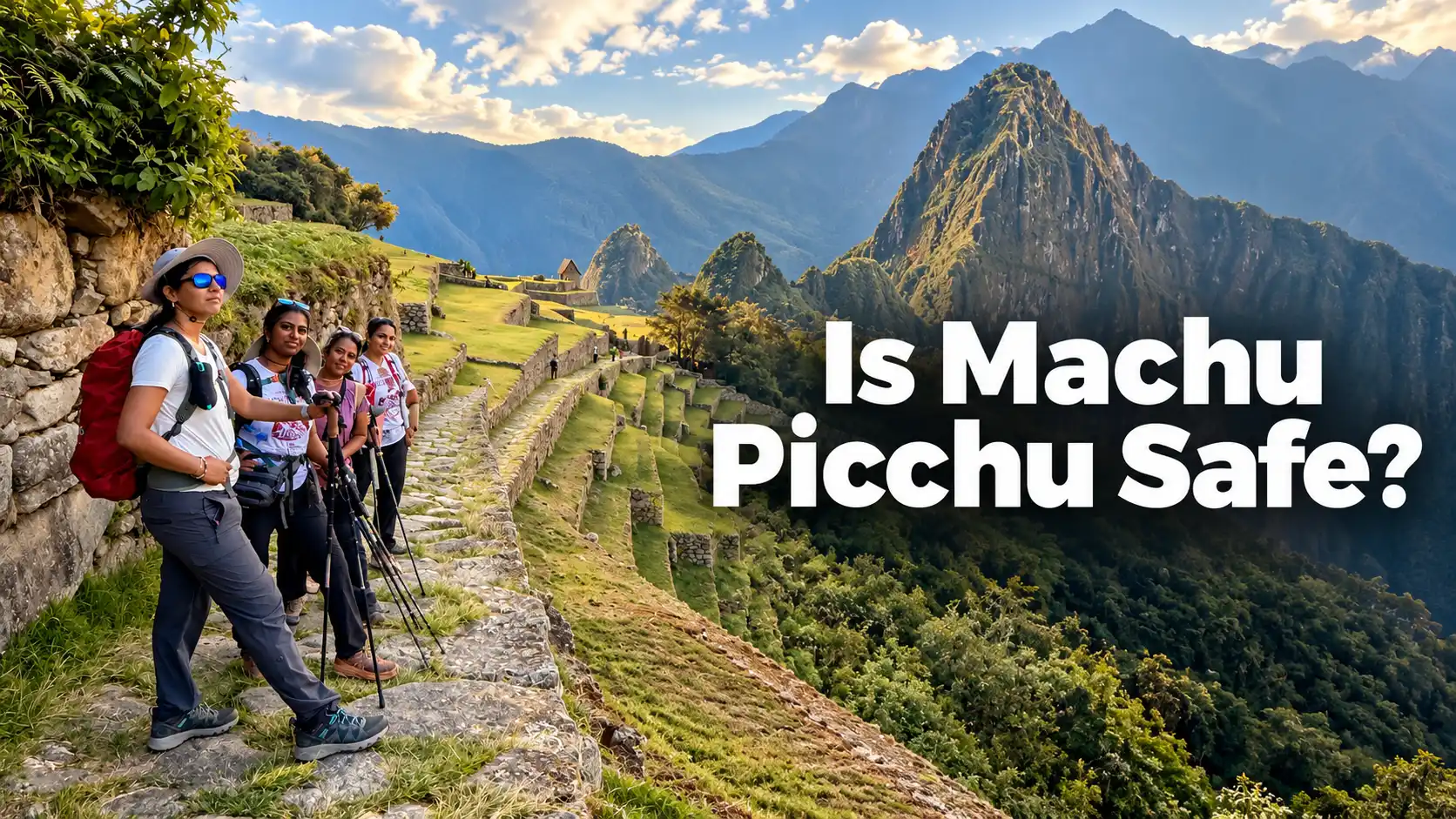
Yes, Machu Picchu is generally considered safe for tourists who follow local rules, use reputable transportation and tour services, protect their belongings, and prepare for the altitude and physical demands of the trip. However, travelers should still be aware of crime in parts of Peru, possible protests or transportation disruptions, altitude sickness, steep trails, changing weather, and limited emergency medical care in remote areas.
For U.S. travelers, it is important to separate the safety situation at Machu Picchu from conditions elsewhere in Peru. As of September 4, 2026, the U.S. Department of State lists Peru at Level 2: Exercise Increased Caution because of crime, civil unrest, kidnapping, and terrorism. However, the advisory specifically notes that Cusco, the Sacred Valley, the Inca Trail, and Machu Picchu are not within the areas covered by its highest-risk travel restrictions.
This guide explains the main risks, how to reduce them, and what tourists should know when planning a Machu Picchu trip in 2026 or 2027.
Is Machu Picchu Safe for American Tourists?
For most American tourists following the established tourist route through Cusco, the Sacred Valley, Aguas Calientes, and Machu Picchu, the trip can be completed safely with normal travel precautions.
The main safety concerns are usually not violent incidents inside the archaeological site. Instead, travelers should prepare for:
- Petty theft in busy tourist areas
- Transportation disruptions
- Demonstrations or strikes
- Altitude sickness
- Slippery or uneven paths
- Steep mountain trails
- Sun exposure
- Changing mountain weather
- Limited medical services in remote areas
- Accidents while trekking
The U.S. State Department advises travelers to exercise increased caution throughout Peru and notes that crime can occur even in daylight. At the same time, its current advisory clearly distinguishes Machu Picchu and the main Cusco tourism corridor from the areas where Americans are advised not to travel.
You can check the latest information before departure on the U.S. State Department Peru Travel Advisory.
Is Machu Picchu Itself Dangerous?
Machu Picchu is a controlled archaeological site with established visitor circuits and rules.
Visitors cannot simply walk anywhere they want. Peru's Ministry of Culture currently organizes the site into three main circuits containing 10 routes, helping manage visitor movement through different sections of the archaeological complex.
These routes also help protect both visitors and the historic site.
Most standard Machu Picchu routes involve stone paths, stairs, terraces, and uneven ground. Some sections may feel steep, especially for travelers who are not used to walking at elevation.
Visitors should:
- Stay on their assigned route
- Follow instructions from park staff
- Avoid running
- Stay away from restricted edges and structures
- Wear suitable walking shoes
- Walk carefully when stones are wet
- Give yourself enough time instead of rushing
The official Machu Picchu rules prohibit visitors from leaving established circuits, climbing or leaning on archaeological walls, running, jumping, and entering with certain items that could create safety or conservation problems.
What Are the Main Safety Risks at Machu Picchu?
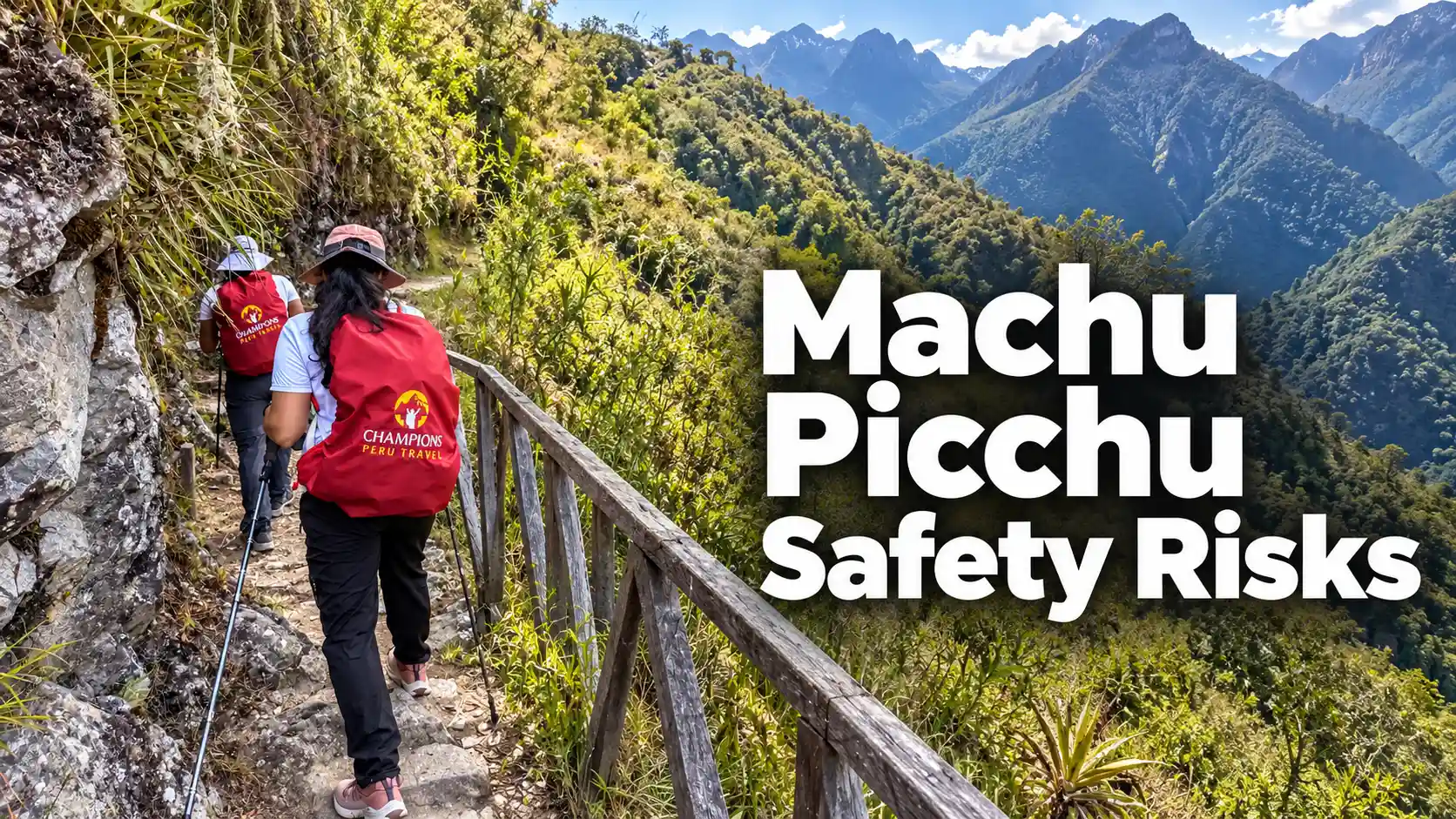
The risks are easier to manage when you know what to expect.
| Safety Concern | Risk Level for Most Tourists | What to Do |
|---|---|---|
Petty theft | Moderate in busy travel areas | Keep valuables secure |
Crime inside Machu Picchu | Generally lower than major urban areas | Follow normal precautions |
Altitude sickness | Possible, especially in Cusco | Acclimatize before strenuous activity |
Slips and falls | Possible | Wear suitable footwear and walk carefully |
Mountain hikes | Higher physical risk | Choose routes that match your fitness |
Weather | Variable | Carry suitable layers and rain protection |
Protests or strikes | Occasional | Check transport conditions before traveling |
Medical emergencies | More difficult in remote areas | Consider travel and evacuation insurance |
No destination is completely risk-free, but most Machu Picchu risks can be reduced with good preparation.
How Safe Is Cusco Before Visiting Machu Picchu?
Cusco is the main starting point for many Machu Picchu trips.
It is also a busy city where visitors should take the same precautions they would use in other popular international tourist destinations.
Keep your phone, wallet, passport, and other valuables secure, especially in:
- Crowded markets
- Bus terminals
- Train stations
- Busy plazas
- Tourist streets
- Transportation pickup areas
Avoid displaying large amounts of cash.
Use established taxis, hotel transportation, or prearranged transfers when possible.
The current U.S. travel advisory identifies crime as a concern in Peru but also specifically states that the city of Cusco and major nearby tourist destinations such as the Sacred Valley, Inca Trail, and Machu Picchu are outside the areas listed under the advisory's “Do Not Travel” restrictions.
Is Aguas Calientes Safe?
Aguas Calientes, also known as Machu Picchu Pueblo, is the small town below Machu Picchu where most train travelers arrive.
The town depends heavily on tourism and is filled with hotels, restaurants, stores, train passengers, and visitors preparing for Machu Picchu.
Most travelers spend their time around the central tourist area.
Normal precautions are still sensible:
- Keep valuables close in crowded areas.
- Confirm hotel addresses before arriving.
- Be careful when carrying luggage through busy streets.
- Keep passports and important documents secure.
- Confirm train and bus departure times in advance.
The main concern for many visitors is less about personal security and more about avoiding missed transportation connections.
Train times, bus lines, weather, and other delays can affect a tightly planned itinerary.
You can review the differences between the major train options in this guide to Inca Rail vs. PeruRail for Machu Picchu.
Is Altitude Sickness a Risk at Machu Picchu?
Altitude should be taken seriously when visiting the Cusco region.
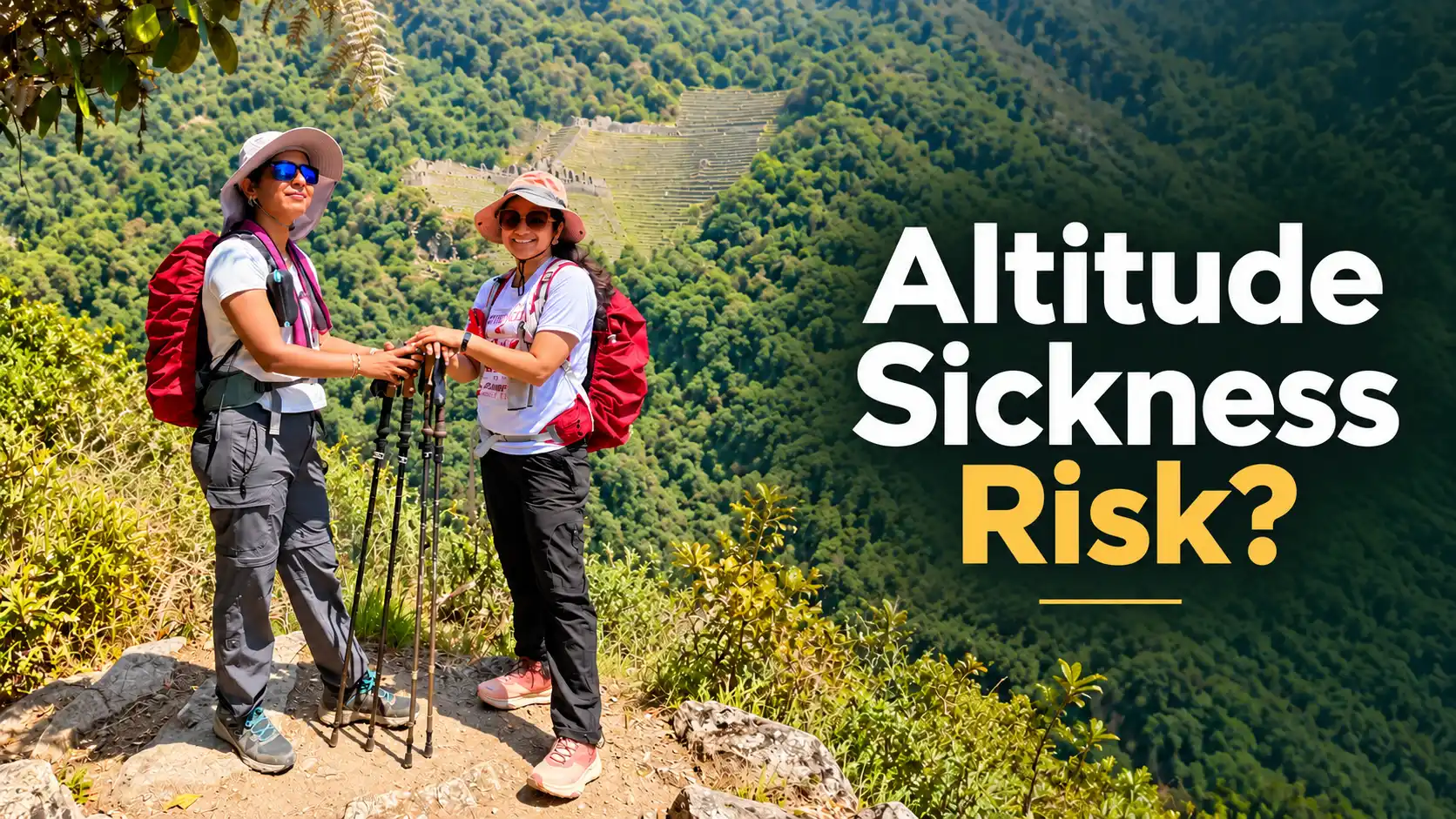
The U.S. Centers for Disease Control and Prevention notes that travelers visiting high-altitude destinations in Peru can experience altitude illness. Cusco sits at roughly 3,350 meters, or around 11,000 feet, above sea level.
Interestingly, Machu Picchu itself is lower than Cusco.
For many travelers, the greatest altitude adjustment happens when they first arrive in Cusco rather than when they reach Machu Picchu.
Common symptoms of mild altitude illness may include:
- Headache
- Tiredness
- Dizziness
- Trouble sleeping
- Nausea
- Reduced appetite
The CDC recommends gradual acclimatization when possible and advises travelers not to perform heavy exercise or drink alcohol during the first 48 hours after arriving above 8,000 feet.
Travelers with heart, lung, or other medical conditions should speak with a healthcare professional before traveling to high altitude.
For official health guidance, see the CDC information on high-altitude travel.
Is Hiking the Inca Trail Safe?
The Inca Trail is different from a standard train-and-bus visit to Machu Picchu.
It involves several days of hiking through mountainous terrain, including steep climbs, descents, uneven stone paths, changing weather, and high elevations.
The U.S. State Department specifically notes that hiking and climbing accidents can occur in remote areas of Peru and that rescue capabilities may be limited. It advises travelers not to trek alone and recommends using an experienced guide.
Preparation matters.
Before attempting the trail, consider:
- Your general fitness
- Previous hiking experience
- Altitude adjustment
- Suitable hiking shoes
- Weather protection
- Hydration
- Required medications
- Travel insurance
- The experience of your tour operator
First-time trekkers may find the guide for beginners hiking the Inca Trail useful when deciding whether the route matches their fitness and experience.
Is the Inca Trail Safe for 2027?
Travelers planning the Inca Trail 2027 should prepare well in advance, but they should avoid assuming that every rule, permit arrangement, visitor capacity, or operational detail will remain identical to 2026.
Official requirements can change.
The safest approach is to:
- Monitor official permit information.
- Book through an established operator.
- Confirm your exact route.
- Review current weather conditions.
- Allow time to acclimatize in the Cusco region.
- Follow your guide's instructions.
- Check current government travel advice shortly before departure.
Travelers choosing the traditional trek can review the 4-Day Classic Inca Trail to Machu Picchu.
Those who want a shorter hiking experience can consider the 2-Day Short Inca Trail.
Are Machu Picchu Mountain and Huayna Picchu Safe?
Both mountains require more caution than a normal visit to the archaeological site.
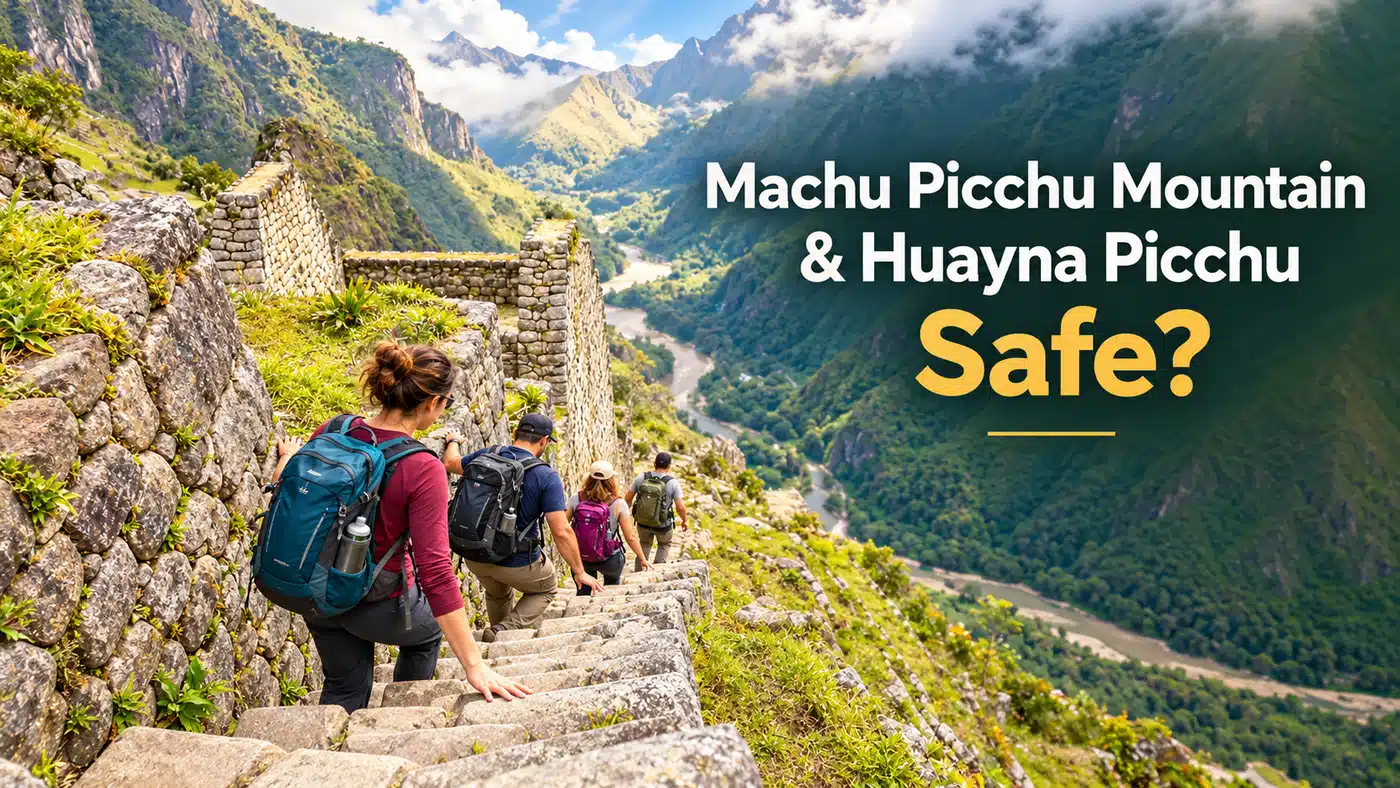
Machu Picchu Mountain
Machu Picchu Mountain involves a long climb with many steps.
The current official visitor system places the mountain under Circuit 1, Route 1-A.
It can be physically demanding, especially if you are not fully acclimatized.
Huayna Picchu
Huayna Picchu is the steep mountain visible behind Machu Picchu in many famous photographs.
Under the current official system, access is through Circuit 3, Route 3-A.
Some parts are steep and may not be comfortable for travelers who dislike heights.
Whichever mountain you choose:
- Do not rush.
- Use available handholds where appropriate.
- Follow the marked route.
- Avoid taking unnecessary risks for photographs.
- Wear footwear with good traction.
- Do not attempt the hike if you feel unwell.
Travelers unsure which mountain suits them can compare Huayna Picchu vs. Machu Picchu Mountain.
What Happens When It Rains at Machu Picchu?
Rain can make stone paths and stairs slippery.
The region has wet and drier seasons, but mountain weather can change quickly.
Even during periods known for better weather, rain is still possible.
Pack:
- A lightweight waterproof jacket
- Quick-drying clothing
- Shoes with good traction
- Sun protection
- Water
- Avoid running when it rains.
Move slowly on smooth stone steps and pay extra attention around steep sections.
Are There Dangerous Animals at Machu Picchu?
Dangerous animal encounters are not one of the main concerns for normal visitors inside Machu Picchu.
Travelers should still avoid touching, feeding, or approaching wildlife.
The official code of conduct prohibits disturbing, collecting, or removing wildlife and plants from the archaeological site.
The CDC also advises travelers throughout Peru to take normal precautions against insect bites where relevant to their itinerary.
For travelers staying only in the highland tourist areas of Cusco and Machu Picchu, the CDC states that malaria transmission is not present in those highland tourism areas.
Are Trains to Machu Picchu Safe?
Train travel is the main transportation method for tourists traveling from the Sacred Valley toward Aguas Calientes.
Travelers should follow the railway company's instructions and keep their belongings with them.
The U.S. State Department notes that train and bus travel in Peru can involve safety risks, which is another reason to use established transportation providers and follow local instructions.
During periods of severe weather, protests, or other disruptions, train operations can sometimes change.
Check your train status before departure and avoid leaving extremely tight connections between your Machu Picchu entry time and transportation.
Can Protests Affect a Machu Picchu Trip?
Yes.
Civil demonstrations, transportation strikes, road closures, or other disruptions can occasionally affect travel in Peru.
Even when Machu Picchu itself remains safe, disruptions elsewhere may affect:
- Roads from Cusco
- Transportation through the Sacred Valley
- Train services
- Airport access
- Tour schedules
U.S. travelers should check the latest Peru Travel Advisory and local transportation information shortly before traveling.
If demonstrations occur, avoid crowds and protest areas rather than attempting to walk through them.
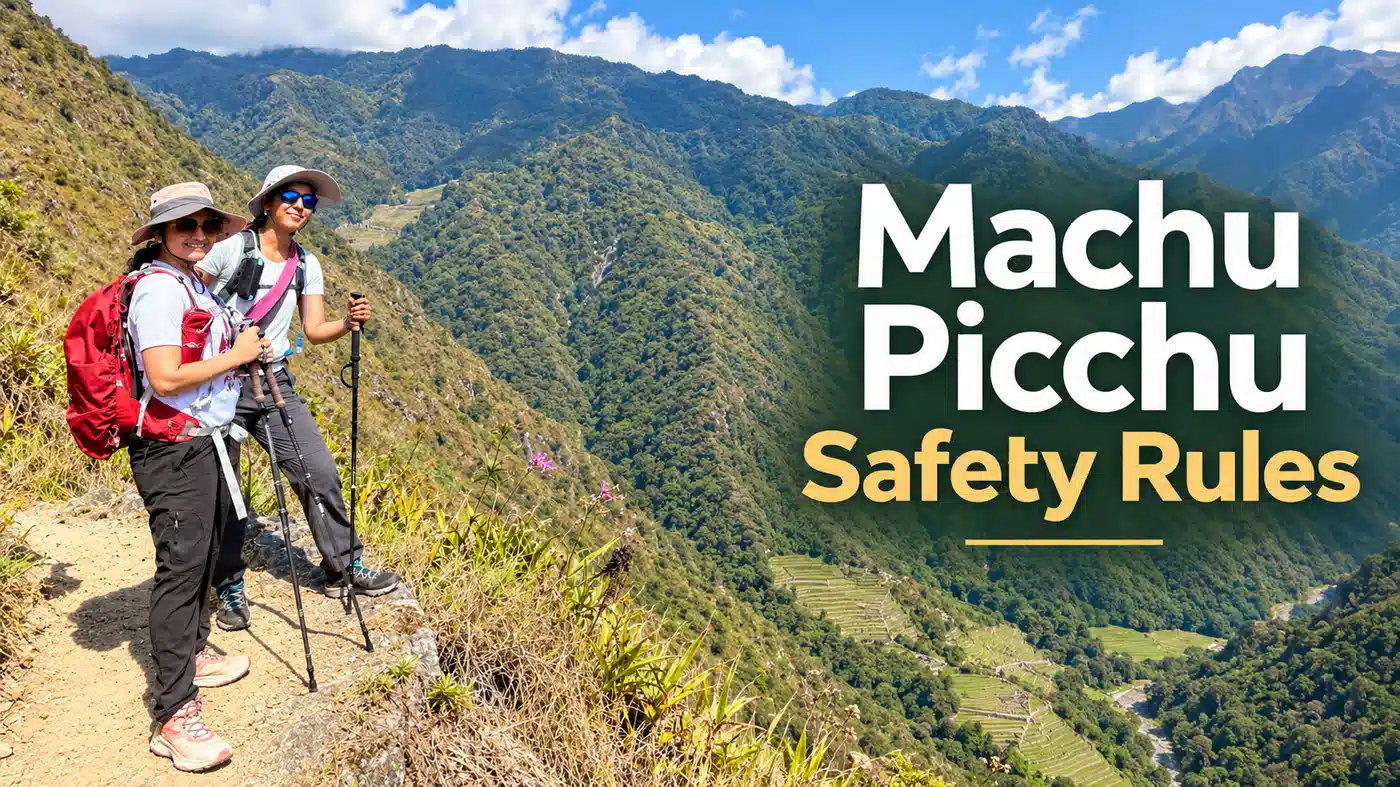
Peru's Ministry of Culture has clear visitor rules for protecting both tourists and the archaeological site.
Among other restrictions, visitors must not:
- Leave their established route
- Run or jump
- Climb archaeological walls
- Lean on historic structures
- Bring weapons
- Smoke or vape
- Fly drones
- Enter under the influence of alcohol
- Feed wildlife
- Bring large bags beyond the allowed dimensions
- Use selfie sticks, tripods, or similar equipment
- Damage or remove archaeological or natural materials
Park guards and officers of the Peruvian National Police have authority inside the monument.
You can review the full official Machu Picchu code of conduct before your visit.
What Should You Carry for a Safe Machu Picchu Visit?
Keep your day bag simple.
Useful items may include:
- Passport or required identification
- Machu Picchu ticket
- Water
- Waterproof jacket
- Light clothing layers
- Sun hat
- Sunscreen
- Any personal medication
- Comfortable walking shoes
- Charged phone
- Small amount of cash
Remember that Machu Picchu has restrictions on bag size and certain equipment.
Check the official rules before packing.
Should You Get Travel Insurance for Machu Picchu?
Travel insurance can be useful, particularly if your trip includes trekking.
The U.S. State Department strongly encourages travelers visiting remote areas of Peru to consider medical evacuation insurance because advanced medical facilities and emergency response can be limited outside major cities.
When comparing policies, check whether your plan covers:
- Trip cancellation
- Trip interruption
- Emergency medical treatment
- Medical evacuation
- Trekking at your planned altitude
- Lost or delayed luggage
Do not assume every standard insurance plan covers high-altitude hiking.
Read the policy terms carefully.
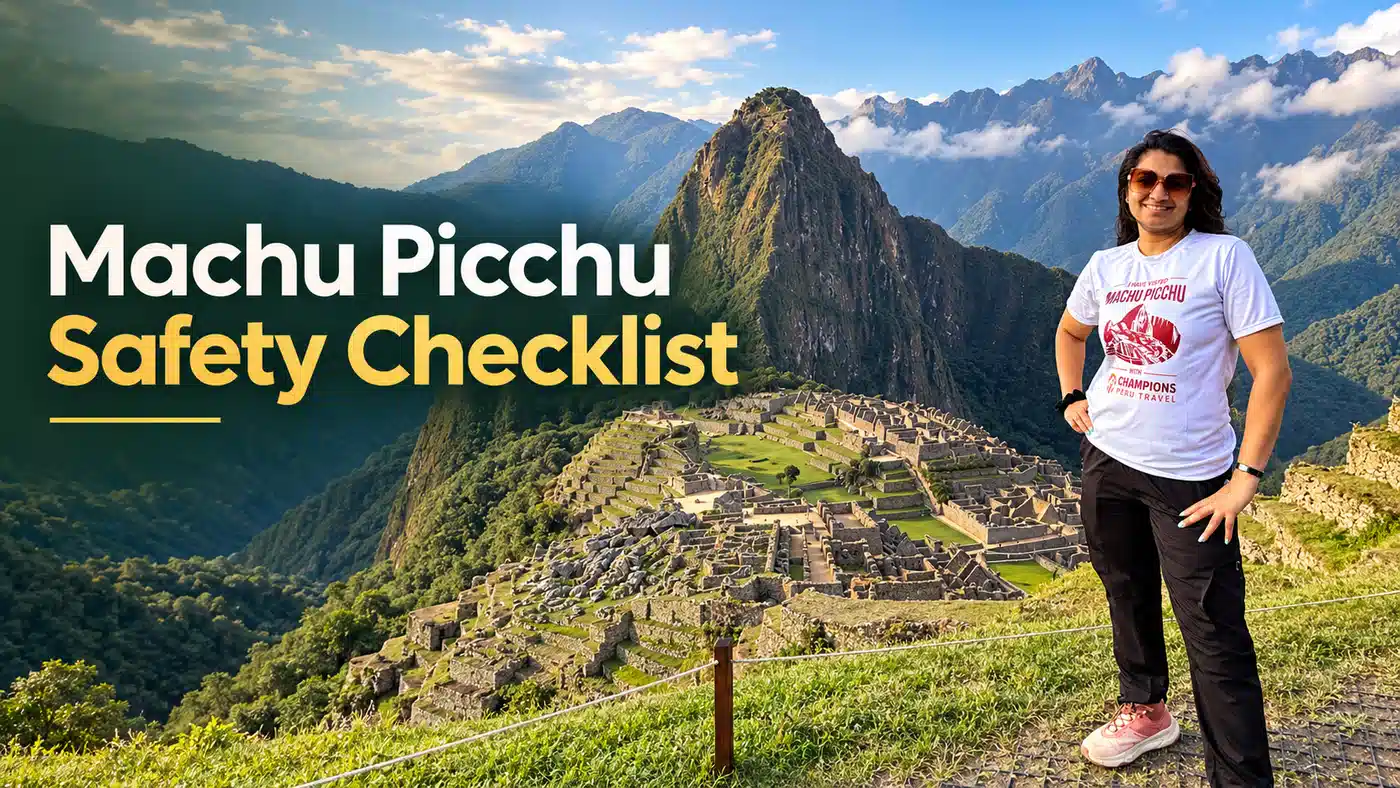
Before leaving for Machu Picchu, use this simple checklist.
Before Your Trip
- Check current Peru travel advisories.
- Confirm your Machu Picchu ticket and route.
- Confirm train and transportation reservations.
- Purchase appropriate travel insurance if needed.
- Speak with your doctor if you have health concerns.
- Check the weather forecast.
- Leave copies of important documents somewhere secure.
In Cusco
- Give your body time to adjust to the altitude.
- Avoid excessive alcohol when you first arrive.
- Keep valuables secure in crowded places.
- Use trusted transportation.
- Drink enough water.
- Avoid pushing yourself physically if you feel unwell.
At Machu Picchu
- Follow your assigned circuit.
- Listen to park staff and your guide.
- Wear suitable walking shoes.
- Walk carefully on stone stairs.
- Do not climb restricted structures.
- Stay away from dangerous edges.
- Avoid rushing for photographs.
- Carry only permitted items.
On the Inca Trail
- Use an experienced authorized operator.
- Follow your guide.
- Do not hike alone.
- Tell your guide immediately if you feel sick.
- Carry appropriate clothing.
- Protect yourself from rain and sun.
- Maintain a comfortable pace.
Is Machu Picchu Safe for Solo Travelers?
Solo travelers can visit Machu Picchu, but careful planning is important.
The train-and-bus route through Aguas Calientes is widely used by tourists.
If you are visiting alone:
- Tell someone your itinerary.
- Keep your phone charged.
- Use established transportation.
- Avoid isolated areas at night.
- Protect your passport and valuables.
- Keep accommodation details saved offline.
For remote trekking routes such as the Inca Trail, going alone is not recommended. Follow the official requirements for your route and travel with a qualified operator and guide.
Is Machu Picchu Safe for Seniors?
Many older travelers visit Machu Picchu successfully.
However, mobility, balance, altitude, and general health should be considered before choosing a route.
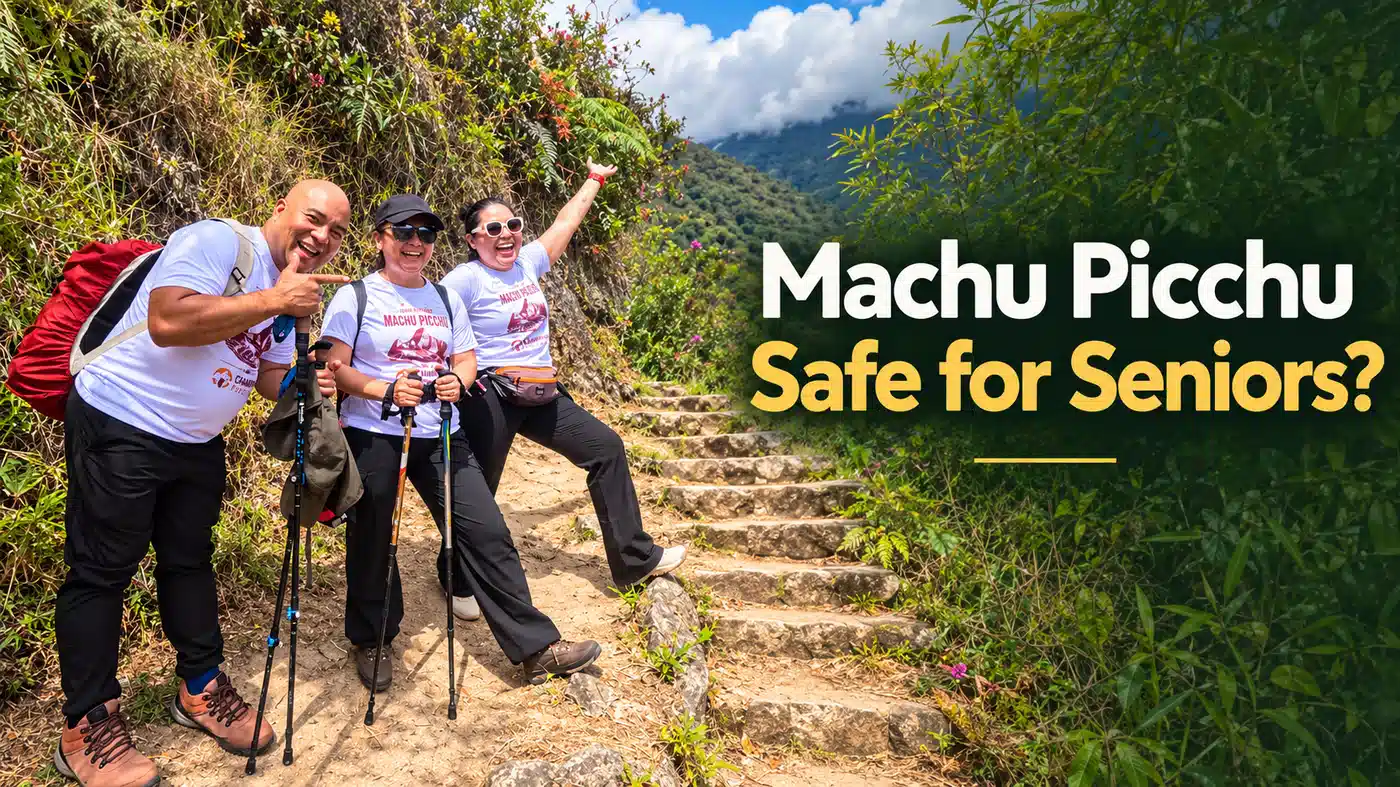
A standard visit may still involve:
- Stone stairs
- Uneven surfaces
- Slopes
- Long periods of walking
- Limited places to sit
Seniors do not need to climb Machu Picchu Mountain or Huayna Picchu to experience the archaeological site.
A less demanding circuit may be more appropriate depending on personal mobility.
Travelers with medical conditions should discuss high-altitude travel with their healthcare provider before departure.
Is Machu Picchu Safe for Children?
Families can visit Machu Picchu, but adults need to supervise children closely.
There are steep terraces, stone steps, uneven paths, and areas where running would be unsafe.
The official rules specifically prohibit running and jumping inside the archaeological site.
Parents should also consider whether children can comfortably handle the walking involved in the chosen route.
When Should You Avoid Hiking?
Do not continue a demanding hike simply because it is part of your itinerary.
Stop and speak with your guide if you experience:
- Severe shortness of breath
- Extreme weakness
- Severe headache
- Confusion
- Difficulty walking normally
- Chest discomfort
- Persistent vomiting
- Symptoms that continue getting worse
- Altitude illness can become serious.
If symptoms are severe or worsening, seek medical attention rather than attempting to push through the hike.
Common Safety Mistakes Tourists Should Avoid
Ignoring Altitude Adjustment
Arriving in Cusco and immediately beginning a demanding hike can make the first days of the trip much harder.
Allow your body time to adjust.
Wearing the Wrong Shoes
Machu Picchu has stone paths, stairs, and uneven surfaces.
Shoes with good traction are more useful than fashionable footwear.
Carrying Too Much
Large bags can make walking harder and may not meet Machu Picchu's entry rules.
Carry only what you need.
Leaving Valuables Unprotected
Keep phones, money, passports, and cameras secure in busy stations, markets, and transportation areas.
Taking Risks for Photographs
Do not climb walls, leave approved routes, or move close to dangerous edges simply for a better photo.
Ignoring Your Guide
Experienced local guides understand the route, conditions, timing, and terrain.
Listen to their instructions, especially while trekking.
Failing to Check Conditions Before Travel
Political conditions, strikes, weather, train operations, and visitor regulations can change.
Check current information shortly before your trip.
Final Thoughts: Is Machu Picchu Safe for Tourists?
Yes, Machu Picchu is generally a manageable and well-established destination for tourists when visitors prepare properly and follow official guidance.
The latest U.S. State Department advisory asks travelers to exercise increased caution in Peru, but it specifically notes that Cusco, the Sacred Valley, the Inca Trail, and Machu Picchu are outside the locations covered by its highest-risk restrictions.
For most visitors, the more practical risks are altitude, slips and falls, changing weather, transportation disruptions, petty theft during the wider journey, and the physical demands of mountain hiking.
You can reduce these risks by:
- Acclimatizing before difficult hikes
- Using reliable transportation
- Following your assigned Machu Picchu route
- Using an experienced guide for trekking
- Protecting valuables
- Wearing suitable footwear
- Checking weather and transportation updates
- Following government travel guidance
If you are planning Machu Picchu or an Inca Trail 2027 trip, avoid relying on outdated information. Check current entrance rules, permit availability, transportation conditions, and official travel advice closer to your departure date.
Champions Peru Travel helps travelers plan Machu Picchu and Inca Trail experiences with local support in Cusco. For questions about your itinerary, route, or 2027 travel plans, call +51 986 029 262, email info@championsperutravel.com, or use the Champions Peru Travel inquiry form.