
 en
en


The road to Machu Picchu is not usually considered dangerously unsafe for tourists, but the journey takes place in steep Andean terrain where weather, landslides, narrow mountain roads, rail disruptions, and other natural conditions can occasionally affect travel.
Most visitors do not drive directly to Machu Picchu. They normally travel by road to a train station, take a train to Aguas Calientes, and then use the Hiram Bingham road by shuttle bus to reach the archaeological site.
For travellers from the United States, the most important point is to understand that there is no single highway running from Cusco directly to the entrance of Machu Picchu.
The usual journey includes several separate sections, and each has different safety considerations.
The road to Machu Picchu is not usually considered dangerously unsafe for tourists, but the journey takes place in steep Andean terrain where weather, landslides, narrow mountain roads, rail disruptions, and other natural conditions can occasionally affect travel.
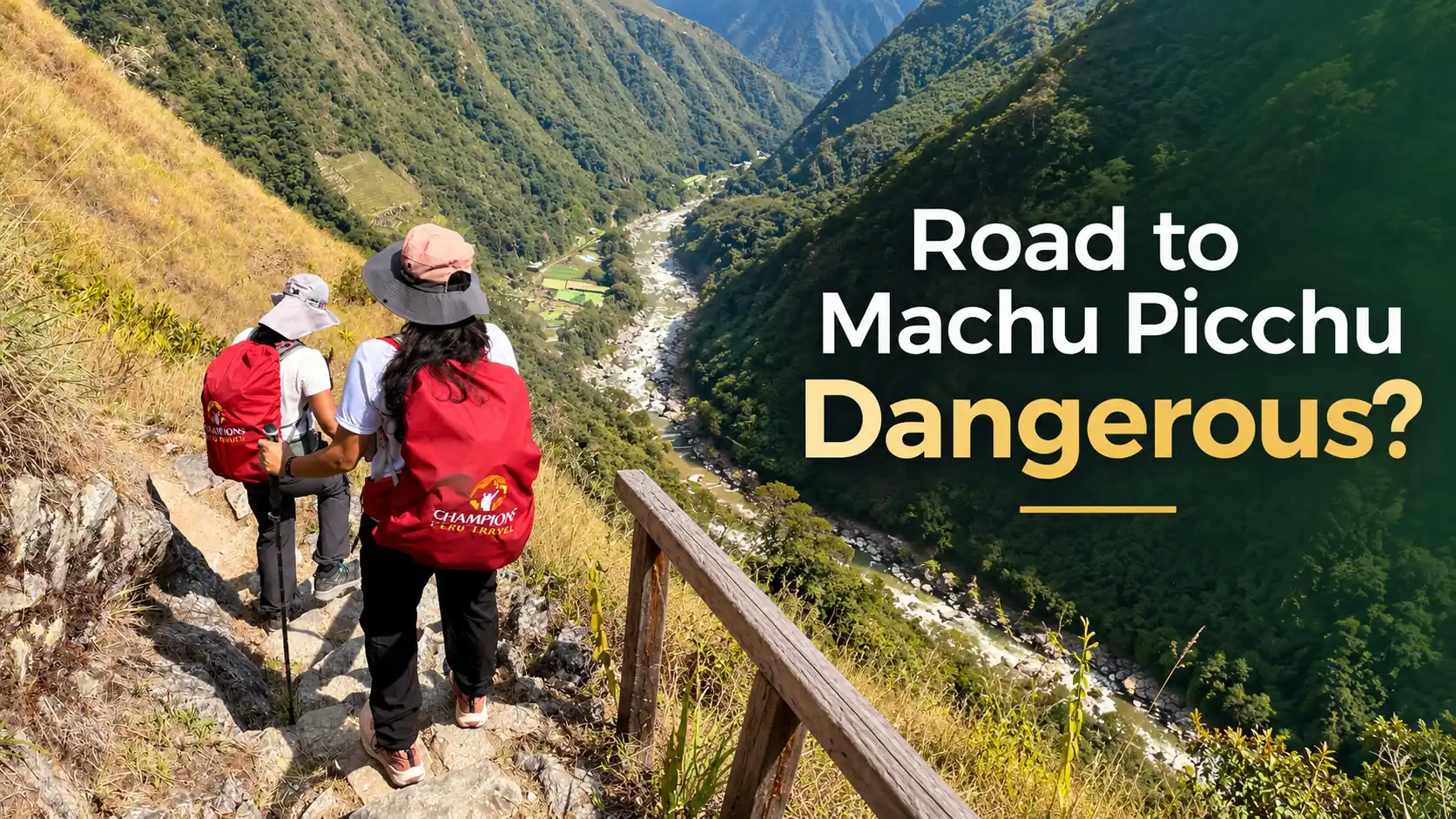
Most visitors do not drive directly to Machu Picchu. They normally travel by road to a train station, take a train to Aguas Calientes, and then use the Hiram Bingham road by shuttle bus to reach the archaeological site.
For travellers from the United States, the most important point is to understand that there is no single highway running from Cusco directly to the entrance of Machu Picchu.
The usual journey includes several separate sections, and each has different safety considerations.
Is the Road to Machu Picchu Dangerous?
For most tourists using established transportation, the route to Machu Picchu is manageable when normal precautions are followed.
However, the surrounding landscape is mountainous. Some roads are narrow and winding, and heavy rain can sometimes cause landslides or transportation delays.
The U.S. Department of State currently advises travellers to exercise increased caution in Peru. Its September 4, 2026 advisory also makes an important distinction: the city of Cusco, Sacred Valley, Inca Trail, and Machu Picchu are not within the areas covered by its highest-level “Do Not Travel” restrictions.
The main transportation concerns for Machu Picchu visitors include:
- Narrow mountain roads
- Steep terrain
- Heavy seasonal rain
- Landslides
- Train disruptions
- Road closures
- Strikes or demonstrations
- Bus accidents
- Tight travel connections
Good planning reduces many of these risks.
Is There a Direct Road From Cusco to Machu Picchu?
No. There is no normal road that allows tourists to drive directly from Cusco to the Machu Picchu entrance.
For most visitors, the standard journey looks like this:
Cusco → Sacred Valley or Ollantaytambo → train → Aguas Calientes → shuttle bus → Machu Picchu
Ollantaytambo is one of the main railway departure points for visitors going to Machu Picchu.
From there, trains travel through the Urubamba Valley to Machu Picchu Pueblo, also called Aguas Calientes.
Inca Rail describes Ollantaytambo to Machu Picchu Pueblo as a main rail connection through the Sacred Valley. After arriving in Aguas Calientes, travellers continue by bus toward the archaeological site.
Travellers comparing train options can also review the Inca Rail vs. PeruRail guide.
What Is Hiram Bingham Road?
The Hiram Bingham Road is the final vehicle route connecting the area near Aguas Calientes with the Machu Picchu archaeological site.
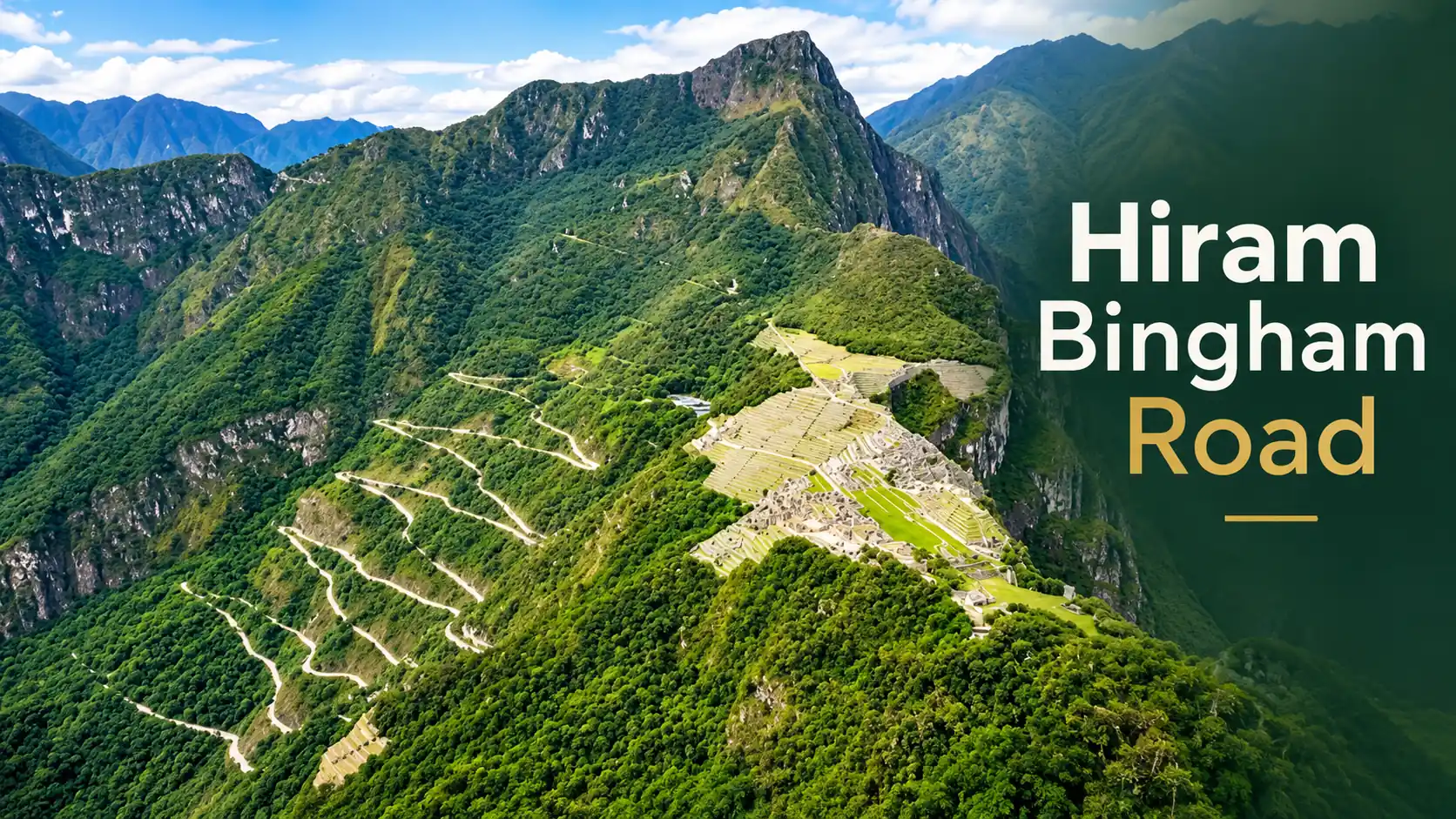
This is probably the road many travellers are referring to when they ask, “Is the road to Machu Picchu dangerous?”
The road climbs the mountain through a series of bends and switchbacks.
According to the official Machu Picchu Master Plan, the Hiram Bingham road was originally opened in 1948 and connects the railway area below Machu Picchu with the archaeological site.
Tourists normally travel this section by authorised shuttle bus rather than driving themselves.
Is the Hiram Bingham Road Dangerous?
The road is steep and winding, so some passengers may find the journey intimidating.
However, it is an established tourism transportation route used to move visitors between Machu Picchu Pueblo and the archaeological site.
This does not mean accidents are impossible.
In September 2024, Peru's Ministry of Foreign Trade and Tourism reported an accident involving a tourist bus on the Hiram Bingham road. Tourists were injured after the vehicle left the roadway while descending from Machu Picchu. Authorities coordinated emergency assistance and an investigation into the accident.
That incident shows why mountain-road safety should be taken seriously.
It does not mean the route is normally unsafe. It does mean travellers should use official transportation, remain seated during the journey, and follow driver and operator instructions.
How Long Is the Bus Ride From Aguas Calientes?
The bus ride from Aguas Calientes to the Machu Picchu entrance is relatively short compared with the overall journey.
Visitors arrive by train at Machu Picchu Pueblo and then continue toward the archaeological site by bus.
PeruRail confirms that its regular train services leave passengers at Machu Picchu Pueblo rather than directly at the archaeological site, so travellers must complete the final section separately.
The ride typically takes around 25 to 30 minutes, depending on traffic, weather, and operating conditions.
Because the road climbs steep terrain, travellers who are uncomfortable with mountain roads may prefer to sit away from the window.
Can You Walk Instead of Taking the Bus?
Yes.
Travellers can walk from Aguas Calientes toward the Machu Picchu entrance instead of taking the shuttle bus.
However, this does not necessarily make the journey easier.
The pedestrian route involves a long uphill climb and many steps. Depending on fitness and pace, it may take around 1.5 to 2 hours.
Walking can be tiring, particularly if you plan to spend several more hours exploring Machu Picchu afterwards.
Visitors should also remember that wet conditions can make paths slippery.
For most first-time travellers, taking the shuttle bus is the easier option.
Are the Roads From Cusco to Ollantaytambo Dangerous?
The road journey from Cusco through the Sacred Valley is commonly used by tourists.
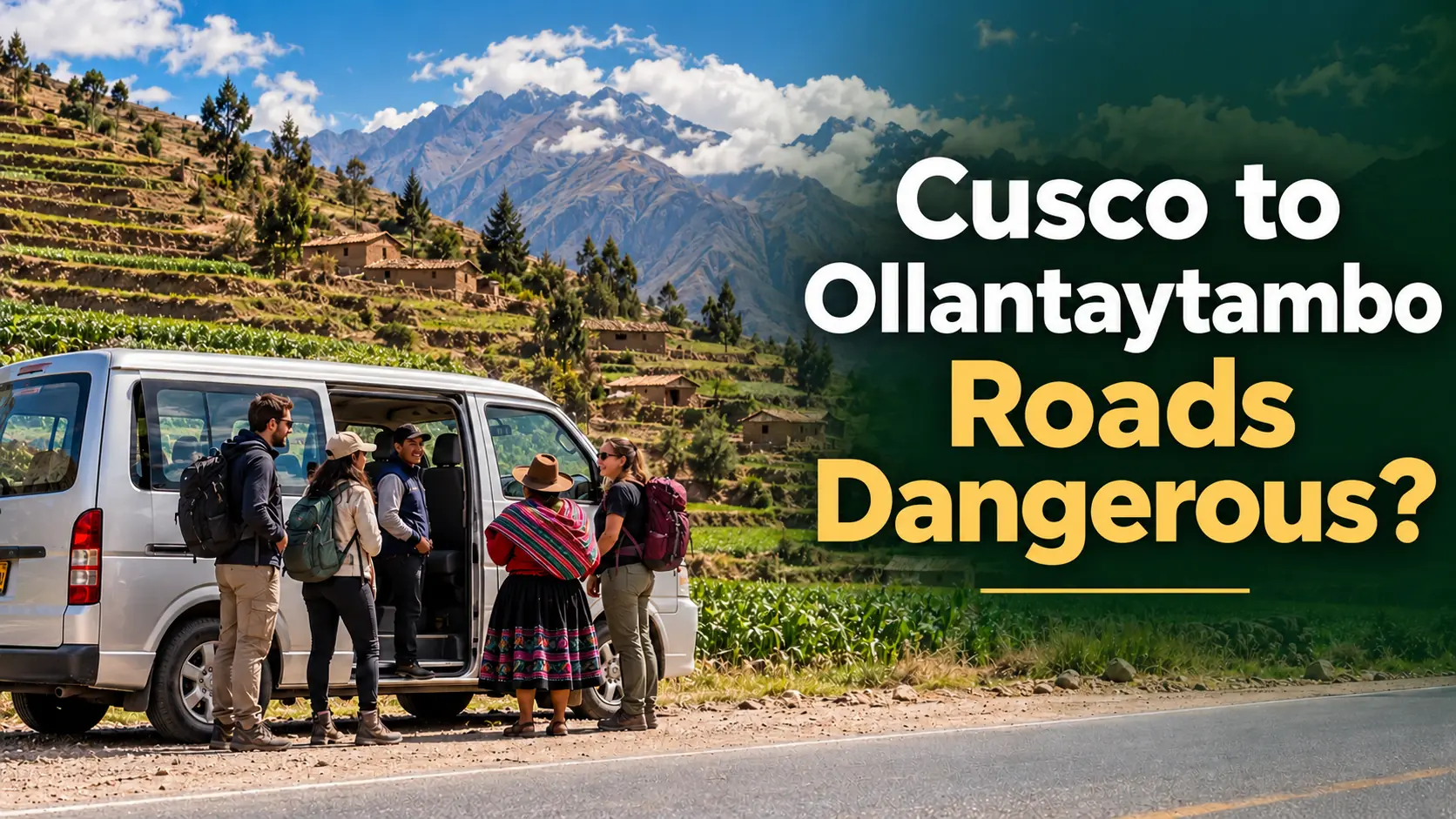
However, many roads in the Andes contain curves, steep slopes, and sections where driving conditions are different from what many U.S. travellers may be used to.
The U.S. State Department warns that road transportation in Peru can involve hazards related to:
- Narrow and winding roads
- Steep drop-offs
- Poorly maintained vehicles
- Speeding
- Driver fatigue
- Limited safety features in some vehicles
It also notes that serious bus accidents occur in Peru.
This makes choosing transportation carefully important.
Use a reputable tour company, hotel-arranged transfer, or established transportation provider rather than selecting transportation only because it is the cheapest option.
Is the Train to Machu Picchu Dangerous?
Train travel is the main way most tourists reach Machu Picchu Pueblo.
The route from Ollantaytambo follows the Urubamba River through steep mountain terrain.
For most travelers, the train is a straightforward and comfortable part of the journey.
However, services can occasionally be affected by:
- Landslides
- Rockfalls
- Flooding
- Track problems
- Demonstrations
- Strikes
- Other operational incidents
The U.S. State Department specifically notes that train services to Machu Picchu can occasionally be disrupted by landslides, derailments, strikes, or protest activity.
In March 2026, for example, PeruRail temporarily suspended operations on the alternative Machu Picchu-Hidroeléctrica section after a landslide in the Mandor area. The main Ollantaytambo-Machu Picchu rail service continued operating normally at that time.
This is a useful example of how local conditions can affect one route without necessarily closing all access to Machu Picchu.
Can Landslides Affect the Road to Machu Picchu?
Yes.
Landslides are one of the natural hazards travellers should understand when visiting this part of Peru.
Machu Picchu lies in steep mountain terrain where heavy rainfall can loosen soil and rocks.
The Hiram Bingham road has experienced landslide-related closures in the past.
Peru's Ministry of Culture has previously restricted visitor access after heavy rains caused landslides along the road connecting Machu Picchu Pueblo with the archaeological site.
In August 2026, authorities also temporarily suspended access to sections of the Inca Trail network after unusually heavy rain caused landslides, flooding, erosion, and damage to infrastructure.
Authorities monitor these risks and may close routes when conditions are unsafe.
Travellers should respect closures rather than trying to find unofficial ways around them.
Is the Rainy Season More Dangerous?
The rainy season can increase travel complications.
Heavy rain may cause:
- Slippery roads
- Reduced visibility
- Mud
- Rockfalls
- Landslides
- Trail erosion
- Railway interruptions
- Changes to hiking routes
This does not mean tourists should automatically avoid Machu Picchu during wetter months.
Many people visit during this period.
However, itineraries should include more flexibility.
Avoid building a schedule where one short delay causes you to miss your Machu Picchu entrance, train, or flight.
What Is the Safest Way to Reach Machu Picchu?
For many first-time visitors, the simplest option is:
- Stay in Cusco or the Sacred Valley.
- Use organised transportation to Ollantaytambo or another appropriate railway station.
- Take an established train service to Machu Picchu Pueblo.
- Use the authorised shuttle bus to reach the archaeological entrance.
- Follow your assigned Machu Picchu circuit.
- Return using confirmed transportation.
This approach avoids unnecessary driving on unfamiliar mountain roads.
Travellers who want everything organised in advance may prefer a Machu Picchu guided tour, where transportation and site arrangements can be coordinated as part of the itinerary.
Train and Bus vs. Alternative Road Route
There are different ways to reach the Machu Picchu area.
| Route | Typical Experience | Main Safety Consideration |
|---|---|---|
| Train + shuttle bus | Most common tourist route | Weather and occasional transport disruptions |
| Inca Trail | Multi-day hiking route | Altitude, terrain, weather, physical effort |
| Short Inca Trail | Shorter trekking experience | Steps, altitude, wet terrain |
| Hidroeléctrica route | Longer alternative route involving road travel and walking | Mountain roads, weather, longer journey |
| Aguas Calientes uphill walk | Walking instead of bus | Steep climb, fatigue, slippery paths |
For most visitors who prioritise convenience, the train and shuttle-bus combination is the easiest route.
Is the Hidroeléctrica Road to Machu Picchu Dangerous?
Some budget travellers reach the Machu Picchu area through the Hidroeléctrica route.
This usually involves a much longer road journey through mountainous areas followed by walking or rail travel toward Aguas Calientes.
The journey can include narrow and winding mountain roads.
For travellers uncomfortable with long mountain drives, the traditional train route from the Sacred Valley is usually simpler.
Weather is another important factor.
In March 2026, a landslide affected the Machu Picchu-Hidroeléctrica railway section near Mandor and caused a temporary suspension of that service.
If considering the Hidroeléctrica route, check current road and railway conditions before travelling.
Is the Inca Trail Safer Than Traveling by Road?
The Inca Trail removes some road travel, but it introduces different risks.
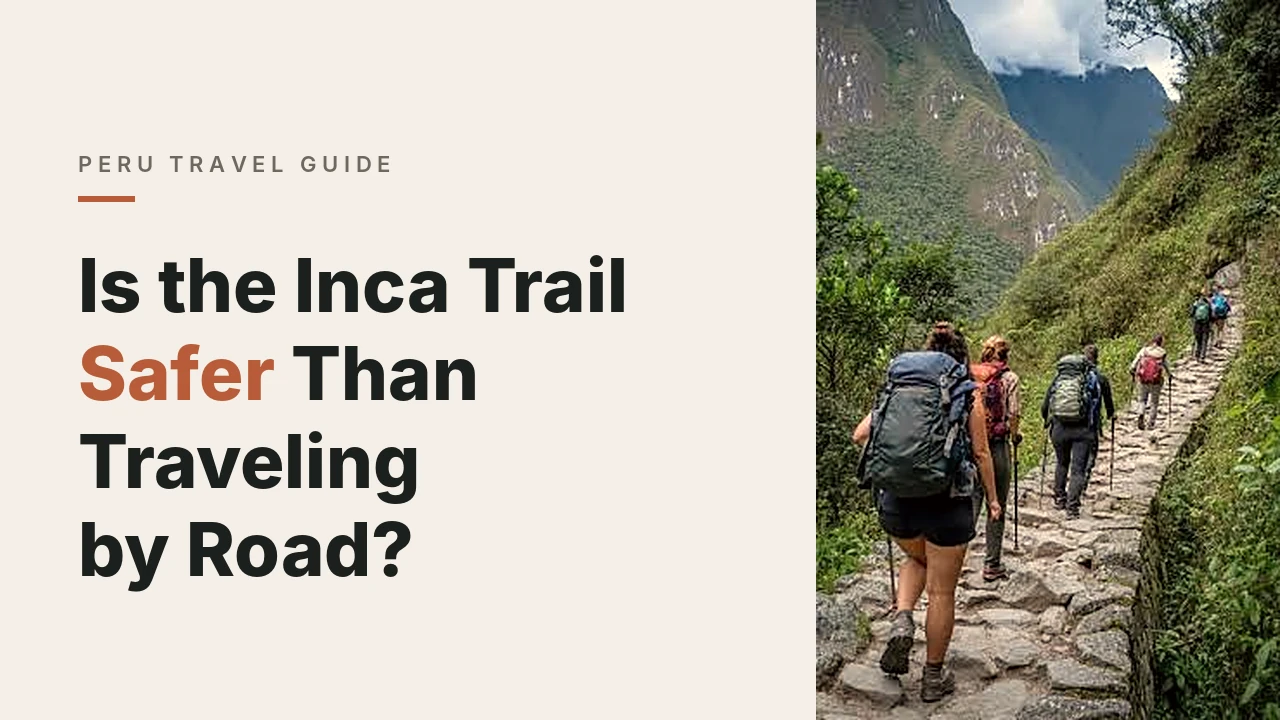
The trail involves:
- High altitude
- Long hiking days
- Stone stairways
- Mountain passes
- Wet and slippery surfaces
- Physical fatigue
- Remote terrain
The U.S. State Department warns that accidents while hiking and climbing in remote areas of Peru occur and that rescue capabilities can be limited. It advises travellers not to hike alone and to use an experienced guide.
Travellers should therefore choose between the road-and-train route and the Inca Trail based on fitness and the kind of experience they want, rather than assuming one is completely risk-free.
You can compare the physical demands in the guide to how difficult the Inca Trail hike is.
Is the Short Inca Trail a Good Alternative?
For travellers who want to hike into Machu Picchu but do not want a full four-day trek, the Short Inca Trail can be an option.
It still involves climbing, stone paths, and mountainous terrain, so proper footwear and fitness remain important.
You can review the 2-Day Short Inca Trail to Machu Picchu when comparing hiking and train-based routes.
Weather conditions should always be checked before departure.
Planning the Inca Trail for 2027
If you are considering the Inca Trail 2027, safety planning should begin before you arrive in Peru.
Prepare for:
- High altitude
- Mountain weather
- Long periods of walking
- Rain protection
- Proper hiking footwear
- Permit requirements
- Current trail conditions
- Possible route changes
Natural events can lead authorities to temporarily modify Inca Trail access.
For example, after an alluvial event affected the traditional Km 104 access in March 2026, Peru's Ministry of Culture temporarily established an alternative entrance at Km 106 so tourists could continue using the Short Inca Trail under controlled conditions.
That shows why travellers should use current official information rather than assuming trail conditions will always remain the same.
Before Your Trip
- Check current government travel advice.
- Confirm railway schedules.
- Confirm your Machu Picchu entry time.
- Check weather conditions.
- Leave extra time between transportation connections.
- Consider travel insurance.
- Save copies of your reservations offline.
During Road Travel
- Use established transportation providers.
- Wear a seat belt when available.
- Remain seated while the vehicle is moving.
- Avoid distracting the driver.
- Do not use unofficial vehicles simply to save money.
- Follow instructions during delays or closures.
During Train Travel
- Arrive at the station early.
- Confirm your train number and departure point.
- Keep valuable items with you.
- Listen to railway announcements.
- Check for service changes before departure.
On the Hiram Bingham Road
- Stay seated during the bus journey.
- Follow instructions from the driver and staff.
- Avoid standing to take photographs while the vehicle is moving.
- Expect bends and switchbacks.
- Allow extra time during rain.
When Hiking
- Wear shoes with good traction.
- Carry rain protection.
- Stay on established paths.
- Do not hike alone on remote routes.
- Tell your guide if you feel sick.
- Avoid rushing on wet stone steps.
What Should You Do if Transportation Is Suspended?
Do not attempt to bypass an official closure.
Instead:
- Contact your train company or tour operator.
- Follow instructions from local authorities.
- Check whether your service can be rescheduled.
- Ask about alternative routes only if authorities consider them safe.
- Keep accommodation and flight plans flexible.
- Monitor official announcements.
Closures are usually introduced because authorities believe conditions could put visitors at risk.
Trying to continue through an unsafe road or trail can turn an inconvenience into a serious problem.
Should You Travel to Machu Picchu During Heavy Rain?
That depends on current conditions.
Rain itself does not automatically make Machu Picchu unsafe.
However, heavy or prolonged rain can increase the risk of:
- Landslides
- Rockfalls
- Slippery paths
- Railway disruptions
- Road closures
If authorities close a road, railway section, or trail, respect the closure.
Weather in the Andes can change quickly, so conditions should be checked near your travel date.
Are Machu Picchu Tours Safer Than Travelling Independently?
A tour does not remove every risk, but an experienced local operator can make logistics easier.
A local operator can help coordinate:
- Road transportation
- Train tickets
- Bus connections
- Machu Picchu entrance times
- Guides
- Changes caused by transportation problems
This can be particularly useful for first-time U.S. travellers who are unfamiliar with the region.
It also reduces the need to make last-minute transportation decisions in an unfamiliar place.
Is the Road to Machu Picchu Safe for Seniors?
Families regularly travel to Machu Picchu.
Parents should make sure children remain seated on buses and follow instructions during train journeys.
At the archaeological site, children need close supervision because there are stone steps, terraces, slopes, and uneven surfaces.
Families may find the train-and-bus route easier than alternative road journeys or long hikes.
Is It Safe to Travel to Machu Picchu Alone?
Solo travellers can use the main train and shuttle-bus route.
Plan each connection in advance and keep your transportation details available offline.
Solo travellers should:
- Use established transportation
- Avoid unofficial rides
- Tell someone their itinerary
- Keep a charged phone
- Protect passports and valuables
- Avoid walking remote routes alone
For the Inca Trail and other remote mountain hikes, travelling with an experienced guide is strongly recommended.
Common Mistakes to Avoid on the Road to Machu Picchu
Choosing the Cheapest Transportation Without Checking the Operator
Price should not be the only factor when selecting mountain transportation.
Creating an Extremely Tight Schedule
Leave enough time between road transfers, trains, buses, and Machu Picchu admission.
Ignoring Weather Alerts
Conditions in mountainous areas can change quickly.
Continuing Despite an Official Closure
A temporary closure usually exists for safety reasons.
Assuming There Is a Direct Highway to Machu Picchu
There is no normal direct road from Cusco to the archaeological entrance.
Taking Unnecessary Risks for Photos
Remain seated in moving vehicles and follow safety rules at viewpoints.
Final Thoughts: Is the Road to Machu Picchu Dangerous?
The journey to Machu Picchu involves mountain terrain, but it is not a route that tourists should automatically consider too dangerous to travel.
The main thing to understand is that there is no single road from Cusco directly to Machu Picchu.
Most travellers use:
Cusco → Sacred Valley/Ollantaytambo → train → Aguas Calientes → Hiram Bingham shuttle bus → Machu Picchu
Weather, landslides, road conditions, protests, and transportation disruptions can occasionally affect the journey. Authorities sometimes restrict access when conditions are unsafe, which is why visitors should follow official guidance and avoid attempting closed routes.
The safest approach is to use established transportation, check conditions before departure, leave enough time between connections, and follow instructions from local authorities and tourism staff.
Travellers planning Machu Picchu or the Inca Trail in 2027 should also recheck road, rail, permit, and trail conditions closer to their actual travel dates.
For help planning transportation, Machu Picchu tours, or an Inca Trail itinerary, contact Champions Peru Travel at +51 986 029 262, email info@championsperutravel.com, or use the Machu Picchu trip inquiry form.
Frequently Asked Questions
Is the bus ride to Machu Picchu scary?
Some travellers find the Hiram Bingham road intimidating because it climbs steep mountain terrain and contains many turns. However, it is an established tourist transportation route used regularly to reach Machu Picchu.
Can tourists drive themselves to Machu Picchu?
No. Tourists do not normally drive a private vehicle directly to the archaeological site. Most visitors reach Aguas Calientes by train and then use the authorised shuttle bus.
Is there a dangerous cliff road to Machu Picchu?
Some roads in the wider region travel through steep Andean terrain. The final Hiram Bingham road is winding and mountainous, but tourists normally travel it using established shuttle transportation.
Can landslides close Machu Picchu?
Landslides can temporarily affect roads, railway sections, trails, or individual visitor routes. Authorities may suspend access when conditions create a safety risk.
Is the train safer than going by road?
For most tourists, the established train route from the Sacred Valley is the simplest way to reach Aguas Calientes. Train travel can still face occasional disruptions caused by weather, landslides, strikes, or operational problems.
Is the Hidroeléctrica route safe?
Travellers use the route, but it involves a longer road journey through mountainous terrain and may be more demanding than the standard train route. Check current conditions and use a reputable transportation provider.
What is the easiest way to get to Machu Picchu?
For many first-time travellers, one of the easiest options is to travel from Cusco to Ollantaytambo, take a train to Aguas Calientes, and then take the shuttle bus to Machu Picchu.