
 en
en
 es
es


The Inca Trail to Machu Picchu is one of the world’s most iconic hiking routes. For many travellers, especially those flying from the USA, walking this 500‑year‑old stone highway is the highlight of a Peru vacation.
Yet the trek is no longer a one‑size‑fits‑all experience. Operators now offer classic camping packages and high end glamping options and the choice between a standard and luxury Inca Trail can feel confusing. Both journeys follow the same route, conquer the same passes, and culminate at the Sun Gate, but the level of comfort at camp, quality of services, and overall price can vary dramatically.
This guide breaks down the differences to help you decide which style fits your travel personality and budget. You’ll learn what to expect on each trek, understand cost ranges and service levels, discover when to go and what to pack, and get expert tips from Champions Peru Travel, a Cusco based company specializing in Peru trekking tours. By the end, you’ll know exactly how to design your dream Inca Trail adventure.
Quick Answer: Luxury vs Standard Inca Trail
If you’re short on time, here’s the gist: Both the luxury and standard Inca Trail treks cover the same 42–43 km route and summit the same high passes. The difference is in comfort, service, and price. On a standard trek, you share basic tents at busy campsites, eat hearty but simple meals, and trek with a larger group.
Prices range roughly $550–$900 per person. By contrast, a luxury Inca Trail includes high‑end camping or glamping with spacious tents, proper beds, hot showers, gourmet cuisine, and private guides. Groups are small, and the pace is slower, allowing you to avoid crowds.
Expect to pay $2,250–$3,550 for a four‑day luxury trek. Both require the same permits and acclimatization, so your choice comes down to how much comfort and personalization you want during this once‑in‑a‑lifetime hike.
The Inca Trail at a Glance
Distance, altitude, and route
The classic Inca Trail stretches about 42–43 km (26–27 mi) from the starting point near KM 82 to Machu Picchu.
Over four days, you climb thousands of stone steps and cross three passes, including Dead Woman’s Pass at 4,215 m (13,828 ft). Oxygen levels here are roughly 60 % of sea level, making altitude acclimatization essential.
The trail winds through high mountain puna grasslands, cloud forests, and archaeological terraces before finishing at the Sun Gate overlooking the citadel. Regardless of the tour type, you’ll need at least two days in Cusco or the Sacred Valley to adjust to the altitude.
Difficulty
Most hikers describe the Inca Trail as moderate to challenging. The terrain is not technical, but you’ll be hiking for four consecutive days at altitude, often on steep staircases.
With steady training and acclimatization, anyone capable of walking 10–12 km with hills and stairs can finish comfortably. The physical demands are the same whether you choose a budget camping trip or a luxury glamping experience.
Standard Inca Trail: Experience, Itinerary & Cost
What to expect on a standard trek
The standard 4‑day Inca Trail is the most popular choice and appeals to travellers seeking a classic camping experience at a reasonable price.
Your group (usually 10 –16 people) hikes at a slightly faster pace and uses the trail’s busiest campsites. Campsite toilets are basic, and tents are shared. Meals are plentiful but simple think porridge or omelettes for breakfast, sandwiches at lunch, and soups or pasta for dinner.
After hiking each day, groups gather in a shared dining tent for cards, chats, and hot drinks. This communal atmosphere is great for meeting fellow travellers. The itinerary usually follows this pattern:
- Day 1 (KM 82 to Wayllabamba) – You start near the railway tracks at KM 82 and climb gradually through farmland to the first campsite. Total distance: ~12 km.
- Day 2 (Wayllabamba to Pacaymayo) – The toughest day. You ascend Dead Woman’s Pass (4,215 m), then descend steeply to Pacaymayo.
- Day 3 (Pacaymayo to Wiñay Wayna) – Cross Runquraqay Pass (3,975 m) and traverse lush cloud forests and Inca ruins.
- Day 4 (Wiñay Wayna to Machu Picchu) – Hike to the Sun Gate before dawn for your first view of the citadel, arriving at Machu Picchu early in the morning.
Prices for a standard trek typically fall within the budget or mid range categories roughly $750 to $900 per person. This includes permits, transport, guides, porters, and meals. If you extend your stay with a hotel night in Aguas Calientes, there’s an additional cost.
While the camp comfort is basic, this option is ideal for adventurous travellers, those on a tighter budget, and anyone who enjoys the camaraderie of camping with like‑minded hikers.
Pros of the standard trek
- More affordable price point.
- Larger groups foster social interaction.
- A faster pace means you reach Machu Picchu early and have free time afterward.
- Ideal for travellers with limited vacation days.
Cons to consider
- Basic tents and communal bathrooms.
- Busier campsites with less privacy.
- Simple meals and limited extra services.
Luxury Inca Trail: Comfort & Premium Services
High‑end camping and personalized service
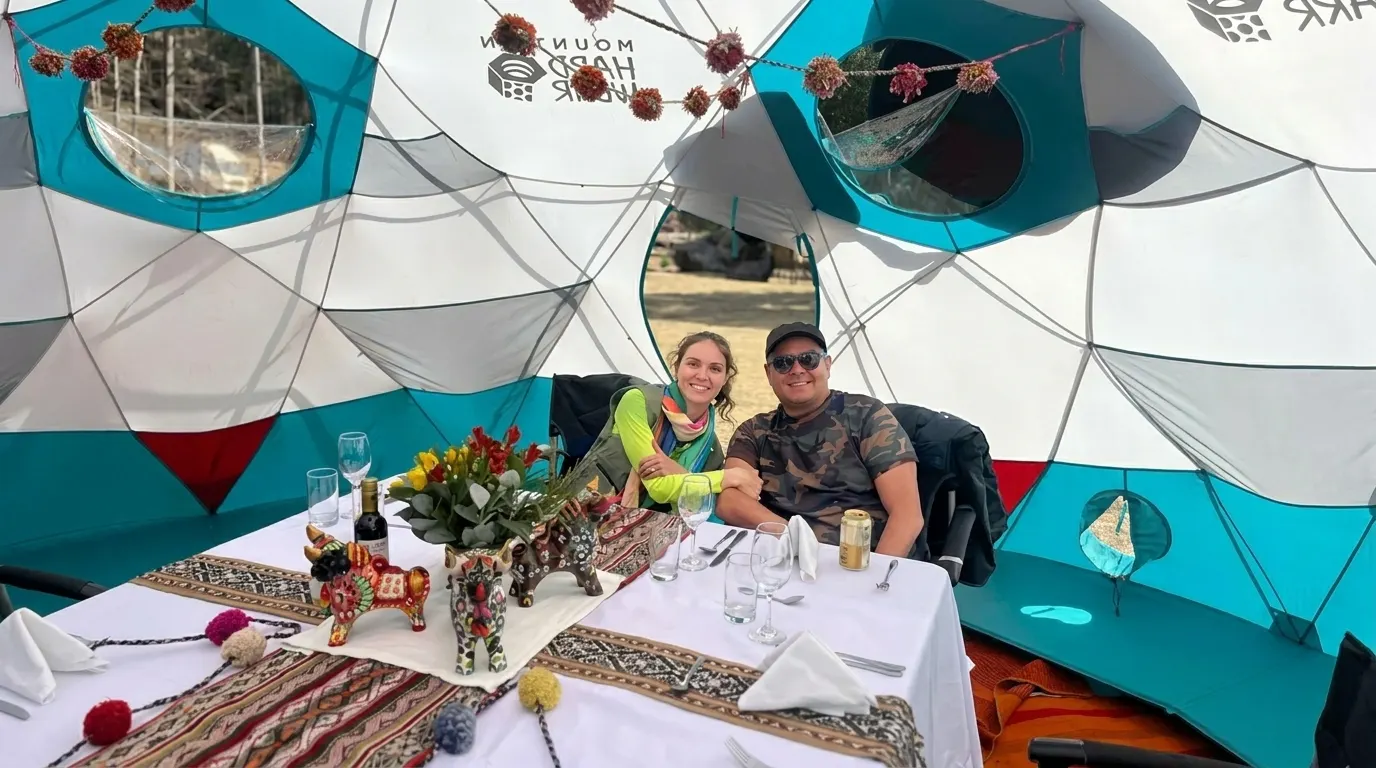
A luxury Inca Trail transforms the trek into a glamping adventure. You still hike the same distance and cross the same passes, but at camp you return to a roomy tent that feels like a mountain lodge. Luxury operators provide private bathroom facilities and restaurant quality meals.
Tents are furnished with stretcher beds or cots, thick duvets, sheets, and lanterns. Portable showers supply hot water, and porters set up chemical toilets so you don’t have to use the public ones. After dinner, you might enjoy afternoon tea, wine, or even a massage.
Luxury tours also emphasize exclusivity. Groups are smaller, with up to 6 hikers, and follow a slightly slower pace, meaning you rarely see other tourists and often camp at quieter sites. On day 3, for example, some luxury itineraries camp at Phuyupatamarca, one of the trail’s best sunrise spots. Many operators provide private guides, extra porters, and upgraded transport, including returning on panoramic trains.
Meals are gourmet: chefs prepare three course dishes with fresh ingredients, served on tables with white linen and silverware. Some packages even include massages, yoga sessions, and cultural ceremonies.
Cost and itinerary options
Luxury experiences require a bigger budget. According to a 2026 cost guide, luxury Inca Trail tours range from $1,800 to $2,850 or more per person. Specific packages break down like this:
- 4‑day luxury trek: $2,250–$3,350 per person.
- 5‑day luxury trek: $2,650–$3,550 per person. The extra day allows for a slower pace and more time at campsites.
- Short luxury trek (2 days): $1,250–$1,850 per person, usually combining a hotel stay in Aguas Calientes with a day of trekking.
The itinerary parallels the standard trek but with modifications. Luxury groups often start later in the day to avoid crowds, camp in more secluded locations, and arrive at Machu Picchu in the afternoon of day 4, when the site is quieter. A full guided tour takes place the next morning, after a night in a hotel in Aguas Calientes.
Pros of the luxury trek
- Glamping comfort with real beds, duvets, and private bathrooms.
- Gourmet meals, afternoon tea, and optional massages.
- Smaller groups and slower pace; often camp away from the crowds.
- Personalized service: private guides, additional porters, upgraded train travel.
- Ideal for special occasions or travellers who want comfort without sacrificing adventure.
Cons to consider
- High price point.
- Fewer departures and limited spots due to small group sizes.
- You still need to hike the same distance and elevation; luxury doesn’t remove the physical challenge.
Short Inca Trail: Standard vs Luxury
Travellers with limited time can opt for the Short Inca Trail, a two‑day hike that covers 11–12 km and reaches the Sun Gate on the first day. You still need a permit and must book through an authorized operator.
Standard short tours typically cost $450–$650 and include a hotel night in Aguas Calientes. Luxury short tours add glamping or premium hotel accommodations and run $1,250–$1,850.
Both versions require an early start on day 2 to catch the first buses back to Machu Picchu. Because logistical costs like train tickets remain high, the short trek isn’t dramatically cheaper than the classic route.
Pros & Cons at a Glance
| Feature | Standard 4‑Day Trek | Luxury 4‑Day Trek | Short Trek (Standard or Luxury) |
|---|---|---|---|
| Accommodation & Comfort | Shared tents, basic toilets | Glamping tents with beds, duvets, private showers, and toilets | Hotel night or glamping, depending on the package |
| Group Size & Pace | Larger groups (10–16); faster schedule | Small groups; slower pace, more seclusion | Very small groups; condensed itinerary |
| Food & Services | Hearty but simple meals; communal dining | Gourmet meals, afternoon tea, massages, and cultural ceremonies | Standard or gourmet meals, depending on the package |
| Cost Range (per person) | ~$750–$900 | $2,250–$3,350 (4 days) | $450–$650 (standard 2 days); $1,250–$1,850 (luxury 2 days) |
| Who It’s For | Budget or mid‑range travellers who enjoy camping and socializing | Honeymooners, comfort seekers, small groups celebrating a milestone | Travellers with limited time who still want to hike to Machu Picchu |
Best Time to Hike: Weather & Crowds
The Inca Trail’s climate has two main seasons:
- Dry Season (May–September): Clear skies and minimal rain make this the best time for both standard and luxury treks. Nights can be cold, especially at higher camps. These months are also the busiest, so permits sell out quickly. Book 6–10 months in advance for high‑season departures.
- Shoulder Season (late April / early May and late September / early October): Expect mild weather and fewer hikers. Trails may still be damp after the rainy season, but you’ll enjoy lush scenery and better permit availability.
- Wet Season (November–April): Frequent rain makes the stones slippery, and views are limited. The trail closes in February for maintenance. This isn’t ideal for a luxury trek as mud and dampness negate many glamping comforts.
Regardless of your tour type, plan your trip based on your tolerance for crowds and weather. Luxury tours often run fewer departures, so booking early is essential.
Permits & Booking Tips
Only 500 permits per day are issued for the classic Inca Trail, of which about 200 go to tourists and the rest to guides and porters. The Short Inca Trail has a quota of 250 permits per day.
Permits typically go on sale in October for the following year, and high‑season dates sell out fast. For standard or luxury treks between May and August, book 6–10 months ahead; shoulder season departures usually require 3–6 months.
Permits are tied to the specific tour operator. Even if you book a luxury package, you still need the same government permit. Champions Peru Travel handles all permit logistics, so provide your passport information accurately and early. Remember that permits are non‑transferable, so be sure of your travel dates before paying a deposit.
Packing & Preparation
Essential gear
Whether you’re camping or glamping, the trail’s weather can change dramatically. A packing guide for the Inca Trail stresses that hikers should be prepared for cold mornings and hot afternoons. Pack:
- 25–30 L daypack with rain cover, waterproof hiking boots, and trekking poles.
- Hydration system (2 L reservoir); drink 2 L of water daily.
- Layered clothing: base layer, fleece or soft shell, insulated jacket, and waterproof shell.
- Sun protection: hat, sunglasses, sunscreen, lip balm.
- First aid kit, headlamp, personal toiletries, and passport.
Porters carry your duffel, but weight limits apply (7 kg on standard treks; luxury treks often allow 10 kg). Luxury packages provide bedding, towels, and sometimes bathrobes, so you can pack lighter.
Training & acclimatization
Start training eight to ten weeks before your trek with regular walks, hill climbs, and strength exercises. Practice wearing your hiking boots and carrying a daypack. Spend at least two days in Cusco or the Sacred Valley to acclimatize. Drink plenty of water and avoid alcohol during the first days at altitude.
How to Choose Between Luxury and Standard
Picking the right trek is personal. Ask yourself:
- Budget: Can you afford the price difference? Standard treks provide excellent value, while luxury treks cost 3–4 times more.
- Comfort vs Adventure: Do you love roughing it or prefer glamping with showers and gourmet food?
- Group Size: Do you enjoy meeting new people, or would you rather hike with a small private group?
- Pace & Privacy: Are you okay with waking before dawn and sharing popular campsites, or would you rather trek at a slower pace and camp away from crowds?
- Occasion: Celebrating a honeymoon, anniversary or milestone may justify the splurge on luxury.
Champions Peru Travel offers both standard and luxury packages, as well as custom itineraries that combine comfort and adventure. Talk to our travel specialists to tailor the trek to your interests and travel dates.
Plan Your Inca Trail with Champions Peru Travel
Choosing a reputable operator is key to a safe and memorable trek. Champions Peru Travel, based in Cusco, specializes in Inca Trail treks, Machu Picchu hiking tours, and tailor‑made Peru travel packages for visitors from the United States and beyond. When you book with us, you gain:
- Local expertise: Our guides are native to the Andes and provide cultural insights and support every step of the way.
- Flexible options: We offer standard camping, slow‑paced treks, luxury glamping, and short treks. You can also combine the Inca Trail with the Sacred Valley, Rainbow Mountain, or Amazon Basin.
- Transparent pricing: Our packages include permits, meals, transport, and lodging. We help you understand the real costs and avoid hidden fees.
- Personalized service: We handle permits, train tickets, and accommodations. For U.S. travellers, we can arrange airport transfers and itinerary extensions to Lima or Lake Titicaca.
- Safety & sustainability: We carry oxygen and first aid kits on all treks, support fair treatment of porters, and follow sustainable practices.
Contact Champions Peru Travel today to reserve your permits, secure your preferred departure, and start planning your journey.
Frequently Asked Questions
Are the luxury and standard Inca Trail routes the same?
Yes. Both treks follow the same 42–43 km route with identical elevations. The difference lies in camp comfort, group size, and service level.
Do luxury trekkers still need to hike? Can I take a horse or a helicopter?
Luxury packages don’t eliminate the physical challenge; you still walk the same distance and climb Dead Woman’s Pass. Horses and helicopters are not permitted on the Inca Trail.
How far in advance should I book?
Permits are limited. For high‑season dates (May–August), reserve 6–10 months ahead; for shoulder seasons, 3–6 months usually suffice. Luxury departures often have fewer spots, so early booking is recommended.
Is tipping included in the tour price?
No. Tipping is customary and not included in the base price. Suggested tips are approximately $10–20 per porter, $15–25 for cooks, and $20–50 for guides. Plan your budget accordingly.
What’s the difference between the 4‑day and 5‑day luxury treks?
The 5‑day trek follows the same route but moves at a slower pace, allowing shorter hiking days and extra time to enjoy the campsites and views. This itinerary costs slightly more ($2,650–$3,550).
Is the Short Inca Trail easier than the classic trek?
It’s shorter (11–12 km) and only requires one day of hiking, but the trail still climbs steeply and includes many stairs. It’s ideal for travellers with limited time or those who prefer hotel accommodation.
Do luxury treks include extra activities?
Many luxury packages include massages, yoga sessions, tea ceremonies or Pachamama rituals. These are optional but add to the cultural experience.
What about trains? Can I upgrade?
All packages include a return train ride. Standard treks usually use the regular tourist train. Luxury packages often include Vistadome or Hiram Bingham trains, which provide panoramic windows, gourmet meals, and entertainment.
Which trek is best for families?
Families with teenagers often enjoy the standard trek because of its social environment and lower cost. However, if your family values privacy and comfort, a luxury trek or private standard trek may be a better fit. Contact Champions Peru Travel for tailored family options.