
 en
en
 es
es


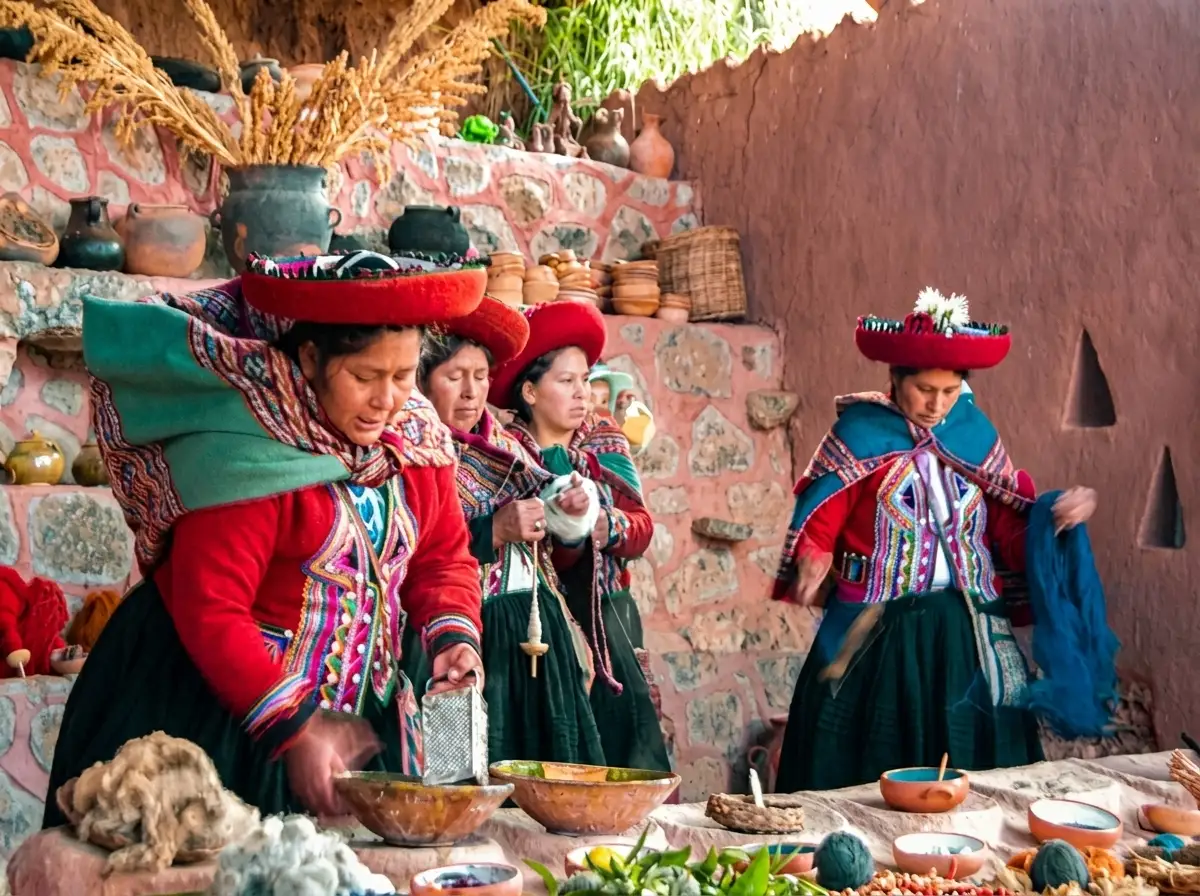
Quechua is not a single relic of the past but a living linguistic system, spoken today by millions of people across the Andean region of South America. It functions as a first language in households, as a medium of oral tradition, and increasingly as a subject of academic study, government policy, and digital preservation efforts. Far from being confined to historical records or museum displays, Quechua continues to evolve and adapt within contemporary society.
This guide examines Quechua from a linguistic and historical perspective — what it is, who speaks it and where, how it developed over time, its distinctive phonetic features, and the current state of its use and preservation.
What Is Quechua? A Linguistic Overview
The term "Quechua" refers to one of the most extensively documented Indigenous language families in the Americas. It designates simultaneously a linguistic family, a set of speech communities, and a broader cultural tradition rooted in the Andean region of South America. From a strictly linguistic standpoint, Quechua constitutes the most widely spoken Indigenous language family on the continent, with an estimated speaker population of between 7 and 10 million.
A Language Family, Not a Single Language
Quechua does not constitute a uniform language comparable to French or Japanese. It is a family of related languages and dialects distributed across a broad geographic corridor of South America. Although these varieties share a common ancestor known as Proto-Quechua, they have diverged sufficiently over the centuries that mutual intelligibility between speakers of distant regions is limited or, in some cases, absent. Linguists classify this group as the Quechuan language family, and current scholarship identifies between 20 and 45 distinct varieties, depending on the classification criteria applied to distinguish a "language" from a "dialect."
Typologically, Quechua is characterized as an agglutinative and suffixing language, meaning that grammatical relations and semantic nuances are expressed primarily through the concatenation of suffixes onto invariant root morphemes.
The Origin of the Name "Quechua"
Historically, native speakers did not refer to their language as "Quechua." The endonym is Runasimi, translated as "the language of the people" or "human speech" (runa = person; simi = mouth, speech). According to the prevailing linguistic consensus, the term "Quechua" derives from qichwa, an Andean word designating a mid-altitude ecological zone. Sixteenth-century Spanish chroniclers adopted the term to identify the language spoken by the inhabitants of that zone, and it subsequently became consolidated in academic literature and international usage.
Two valid designations therefore coexist, each with a distinct origin: Runasimi, the endonymic term used by native speakers, and Quechua, the exonymic term derived from an ecological toponym.
Geographic Distribution of Quechua Speakers
Countries with Documented Quechua-Speaking Populations
Quechuan varieties are documented across an extensive Andean corridor, although their distribution is uneven in demographic and geographic terms. The following table summarizes the principal regions with an established Quechua-speaking presence:
| Country | Regions of Concentration | Sociolinguistic Notes |
|---|---|---|
| Peru | Cusco, Ayacucho, Apurímac, Puno, Huancavelica, Junín | Contains the largest Quechua-speaking population globally; recognized as an official language under the Peruvian Constitution |
| Bolivia | Cochabamba, Potosí, La Paz, Chuquisaca | Officially recognized alongside Spanish and Aymara under the Plurinational State framework |
| Ecuador | Chimborazo, Imbabura, and other highland provinces | Locally designated as Kichwa, with orthographic and phonological features distinct from Southern Quechua varieties |
| Colombia | Southern departments bordering Ecuador | Numerically smaller speech communities, primarily of the Inga variety |
| Argentina & Chile | Northern border regions | Small residual communities, generally bilingual with Spanish |
Beyond South America, Quechua-speaking diaspora communities have been documented in metropolitan centers such as New York, Madrid, and Buenos Aires, where cultural associations and community-based educational programs contribute to the preservation of the language outside its region of origin.
Sociolinguistic Dynamics in Contemporary Quechua-Speaking Communities
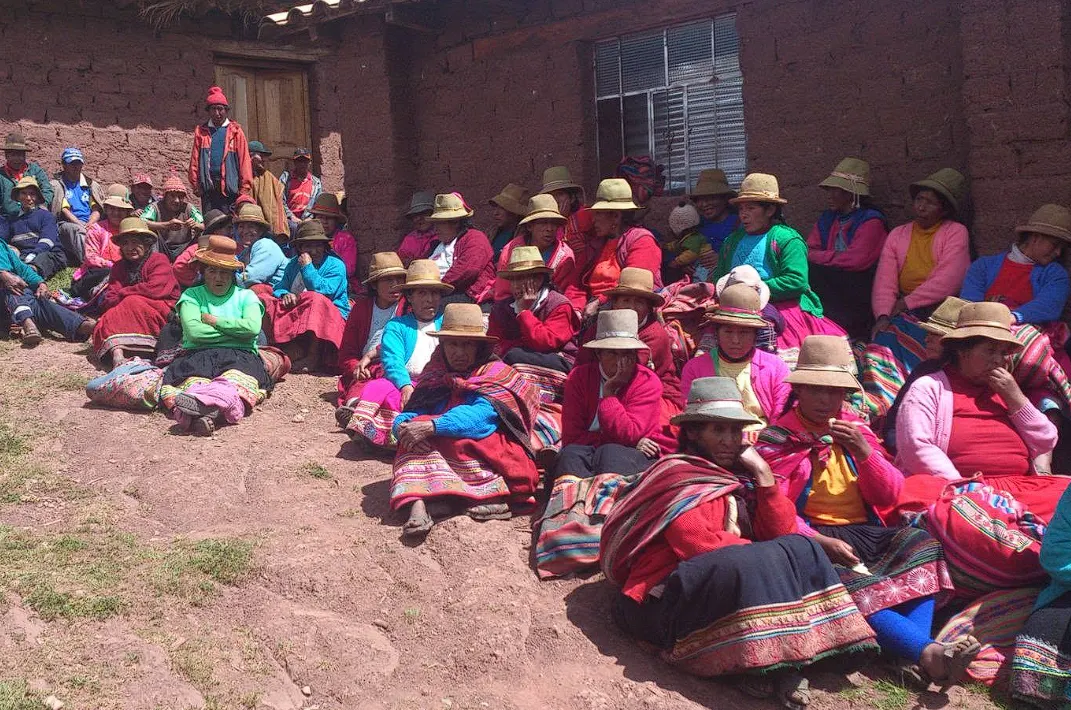
In rural areas of Peru and Bolivia, Quechua functions as the primary language of domestic and community life, while Spanish occupies the domains of formal education, government administration, and inter-community communication. This distribution reflects a classic diglossic pattern in which each language is associated with distinct social functions and levels of prestige.
In urban centers, this configuration has undergone significant transformation. Younger generations frequently exhibit passive competence in Quechua, acquired through familial exposure, but show a marked preference for Spanish in daily interaction. This pattern reflects a broader phenomenon of intergenerational language shift, in which the transmission of Quechua as a first language is no longer systematically guaranteed.
Vitality and Preservation Status of Quechua
Speaker Population and Endangerment Assessment
Quechua remains, by a considerable margin, the most widely spoken Indigenous language family in the Americas. Estimates derived from linguistic research and national census data place the total speaker population between 7 and 10 million, concentrated primarily in Peru and Bolivia.
Despite these figures, UNESCO classifies several Quechuan varieties as "vulnerable" or "definitely endangered." This classification reflects not the absolute number of current speakers but rather the declining rate of intergenerational transmission, particularly in urban environments where Spanish predominates in education, media, and public life.
Institutional Revitalization Efforts
Over the past decade, several institutional initiatives have been implemented to reverse the tendency toward linguistic shift:
- Peru's Ministry of Education has expanded intercultural bilingual education programs in Quechua-speaking regions, incorporating the language as a medium of instruction in primary schools.
- Universities and cultural institutions have promoted the presence of Quechua in mass media, musical production, and official government communication.
- Younger generations, including urban populations with partial linguistic competence, have shown renewed interest in the acquisition and public use of the language, driven in part by digital media, contemporary musical production, and cultural visibility.
These initiatives do not guarantee the long-term stability of the language, but they represent measurable positive developments in comparison with previous decades.
Quechua and the Inca Empire: A Historical Clarification
The Pre-Incaic Origin of Quechua
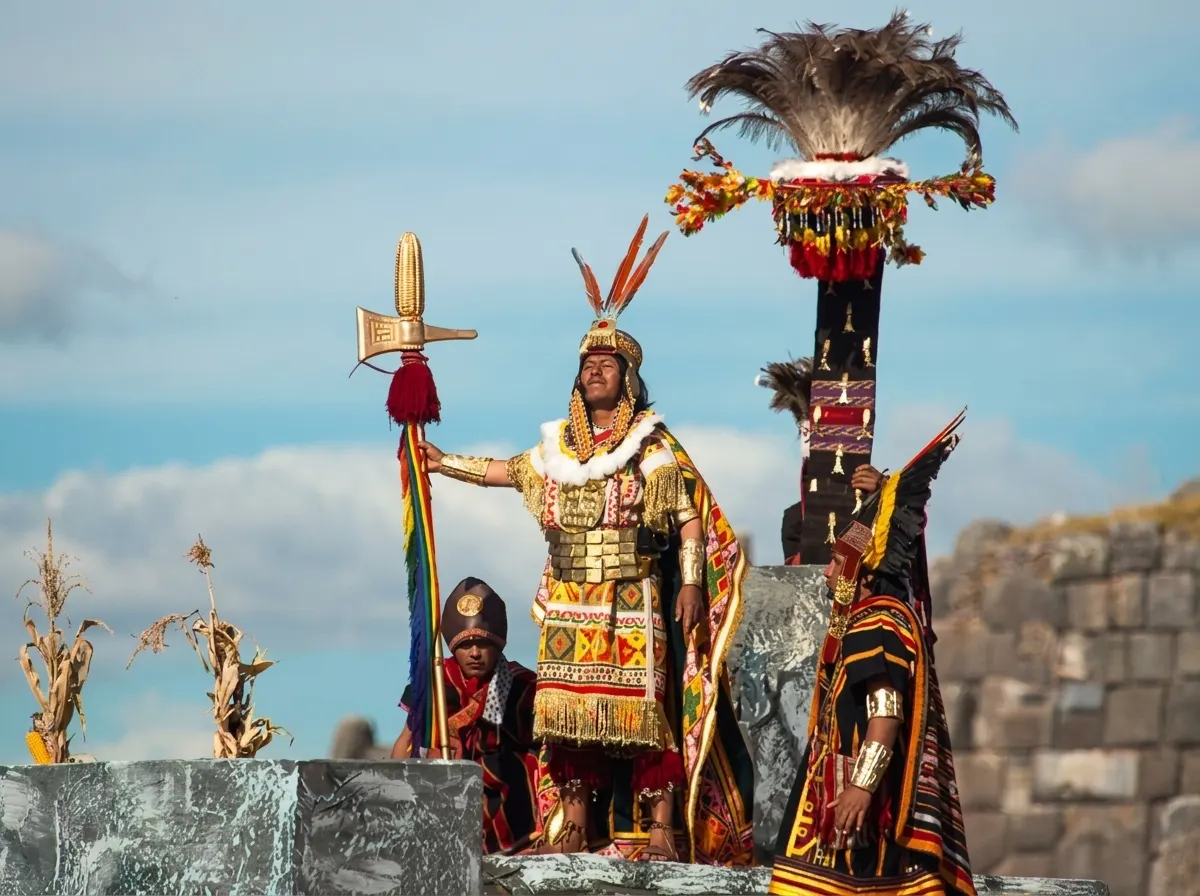
A widely disseminated misconception attributes the origin of Quechua to the Inca Empire. Historical and linguistic evidence indicates the opposite: Quechua predates the Inca state by several centuries. Various communities in the central Andes spoke Quechuan varieties well before the Incan territorial expansion. The Inca administration subsequently adopted Quechua as the administrative language of the empire due to its already extensive geographic distribution and its practical utility for governing a linguistically heterogeneous territory.
This process parallels the role of Latin within the Roman Empire: Quechua did not originate with the ruling class but was instead employed as an administrative and communicative instrument that facilitated cohesion across culturally and linguistically diverse populations.
Impact of the Spanish Conquest on the Language
Following the Spanish conquest in the sixteenth century, Quechua paradoxically continued to expand its territorial reach. Spanish missionaries employed the language as an instrument of religious evangelization, which contributed to its orthographic standardization and its written documentation for the first time. Prior to this period, the Inca administrative system relied on oral tradition and on the quipu—a mnemonic device consisting of knotted cords used to record numerical and administrative information—rather than on an alphabetic writing system.
Over the following centuries, Spanish progressively displaced Quechua in institutional domains, restricting its use primarily to the private and community spheres. This distribution largely persists in the present, although it coexists with contemporary revitalization efforts oriented toward reintegrating the language into public and institutional life.
Phonological Characteristics of Quechua
The Three-Vowel System
One of the most distinctive typological features of Quechua is its three-vowel phonological system, consisting exclusively of the phonemes a, i, and u. This system contrasts with the five-vowel systems of Spanish and English. The sounds that Spanish speakers perceive as "e" or "o" correspond in fact to allophonic variants of /i/ and /u/, conditioned by the phonetic context of surrounding consonants, particularly uvular consonants.
This structural characteristic explains the orthographic variability observable in texts influenced by Spanish, in which vowel sounds that do not exist phonemically in the original system are frequently transcribed.
Distinctive Consonants Absent from English and Spanish
The Quechuan consonantal system includes phonemes that lack direct equivalents in English or Spanish:
- Aspirated consonants: characterized by the release of a puff of air following the articulation of certain consonants, producing minimal pairs that alter lexical meaning.
- Glottalized (ejective) consonants: produced by a brief closure of the glottis, present in several varieties, particularly in the Southern Quechua dialects of Bolivia and southern Peru.
- Velar and uvular "q" consonants: articulated further back in the vocal tract than a standard velar /k/, constituting one of the most distinctive auditory markers of the language.
The presence or absence of these consonantal series constitutes one of the principal criteria used to classify and differentiate the various Quechuan varieties.
Basic Lexicon of Quechua
Frequently Used Greetings and Expressions
The following table presents a selection of common expressions in Southern Quechua, including their approximate pronunciation and their semantic equivalents in English:
| Quechua | Approximate Pronunciation | Meaning |
|---|---|---|
| Napaykullayki | nah-pie-koo-YAH-key | Formal greeting equivalent to "hello" |
| Rimaykullayki | ree-my-koo-YAH-key | Standard greeting; literally "I speak to you" |
| Añay / Añaychayki | ah-NYIGH / ah-nyie-CHAI-key | Expression of gratitude |
| Allinllachu? | ah-yeen-YAH-choo | Interrogative form: "Are you well?" |
| Allinmi, ancha añay | ah-YEEN-mee, AHN-cha ah-NYIGH | Affirmative response: "I am well, thank you" |
| Tupananchiskama | too-pah-NAHN-chees-kah-mah | Farewell expression: "until we meet again" |
Additional High-Frequency Lexical Items
Beyond formulaic greeting expressions, certain high-frequency lexical items appear systematically in everyday communication:
- Yanapariway — imperative form meaning "help me" or "assist me."
- Ima sutiyki? — interrogative construction meaning "what is your name?"
- Sumaq — adjective denoting "beautiful," "pleasant," or "good," with broad semantic applicability in aesthetic, ethical, and evaluative contexts.
These lexical items illustrate the morphological structure of Quechua, in which grammatical relations such as person, tense, and modality are encoded through the systematic addition of suffixes to lexical roots.
Quechua Loanwords in English and Spanish
Lexical Contributions of Quechua to the Global Vocabulary
A significant number of terms in common use in English, Spanish, and other languages are derived from Quechua. These lexical items
Quick Answers to Common Questions
What does "Quechua" actually mean?
The name likely originated from a term for a geographic or ecological zone in the Andes, later applied to the language by outsiders. Speakers themselves traditionally call it Runasimi, meaning "the people's language."
Is Quechua the same as Aymara?
No. Aymara is a separate, unrelated Indigenous language spoken primarily around Lake Titicaca in Peru and Bolivia. The two languages have coexisted and influenced each other for centuries, but they belong to different language families entirely.
How do you say "hello" in Quechua?
The most common options are "Napaykullayki" (a respectful greeting) or the simpler "Rimaykullayki." Both are widely understood in the Cusco region.
Is Quechua hard to learn?
It has a very different grammatical structure from English or Spanish — notably, it builds meaning by adding suffixes onto root words rather than using separate words for tense, possession, or emphasis. This makes early learning feel unfamiliar, but the sound system (especially the three-vowel structure) is often easier for beginners than expected.
Do people in Cusco still speak it every day?
Yes, especially in surrounding rural communities and among older residents in the city itself. Many younger urban Cusqueños understand it well but default to Spanish day-to-day — a pattern common across much of the Andes right now.