
 en
en
 es
es


As soon as you arrive in the Peruvian Amazon, you’ll notice jungle animals all around you. The air smells like wet earth, sounds come from every direction, and each leaf seems to hide something special.
This rainforest is one of the most biodiverse places on Earth and is part of the larger Amazon Rainforest. Here, you’ll find some of the most interesting jungle animals in Peru. You can spot key species, learn about their important roles in the ecosystem, and pick up tips for identifying wildlife during your visit.
When you explore the Peruvian Amazon, you step into a living sanctuary where nature is at its best and jungle animals set the pace of life in the forest.
Most Representative Peruvian Jungle Animals
Peruvian jungle animals are central to the Amazon experience. This tropical rainforest, part of the Amazon Basin, is home to thousands of species and is among the most biodiverse places on Earth. Exploring the Peruvian Amazon reveals wildlife that shapes the identity and balance of this unique ecosystem.
Most Representative Mammals of the Peruvian Jungle
Jaguar – Otorongo (Panthera onca)
The jaguar is the most powerful and iconic predator in the Peruvian rainforest. It has a striking ochre coat with golden shades and honey or brown eyes that are always alert.
The jaguar’s back and sides have yellow rosettes with black outlines, while its legs, tail, and face often show darker markings. Its belly and the inside of its limbs are white with black spots, helping it blend into the jungle.
As a top predator, the jaguar helps keep the Peruvian jungle in balance by controlling prey numbers and supporting the health of the ecosystem. Its presence represents the strength and wild beauty of the region’s animals.
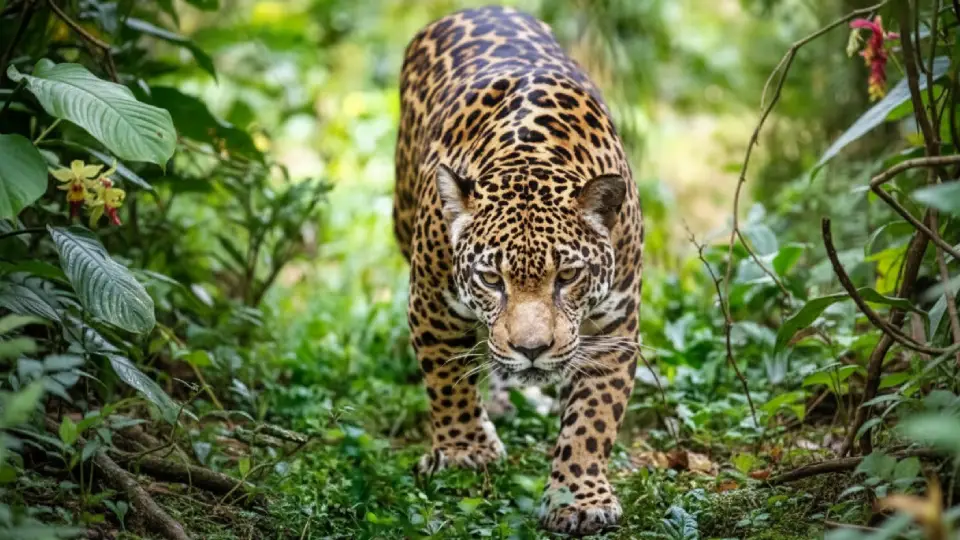
Important Facts About the Jaguar
Jaguars usually weigh between 22 and 50 kilograms.
Illegal wildlife trafficking is a major threat to jaguars. People capture them to sell as exotic pets, use their skins, or display them as trophies.
Protecting jaguars keeps the ecosystem stable. They regulate prey populations and maintain balance among other animals in the Peruvian jungle.
Black Jaguar (Panthera onca)
The black jaguar is a rare jaguar found mostly in the dense forests of the Peruvian Amazon. Its dark coat helps it hide in thick vegetation, but its rosette patterns are still visible in some lighting.
The black jaguar is strong and muscular, making it one of the top predators in the Peruvian jungle. It hunts alone, swims well, and adapts to different situations. By controlling prey numbers, it keeps the rainforest ecosystem balanced and healthy.
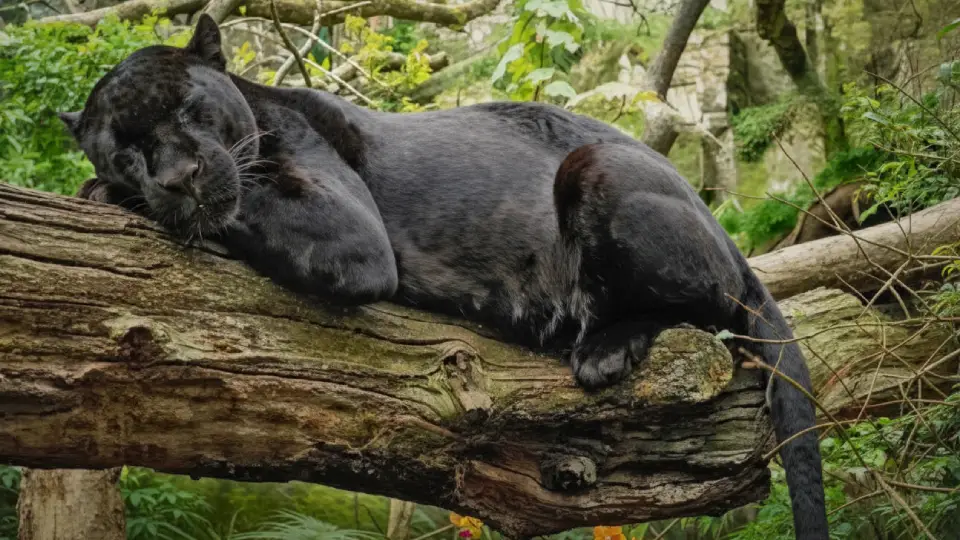
Weight: Between 45 and 100 kg.
Ocelot or Tigrillo (Leopardus pardalis)
The ocelot, also called tigrillo, is one of the most fascinating animals in the Peruvian jungle. Its yellowish-gray fur has bold black stripes on the head and long spots along the sides, thighs, and chest. The markings on its back, legs, and face are more rounded.
The underside of its neck, body, tail, and inner legs is white, which helps it blend into the rainforest. This medium-sized wild cat is alert and moves quietly, making it a skilled night-time hunter.
The ocelot is an important part of the Peruvian jungle. It helps keep the balance in the Amazon by controlling the numbers of small mammals, birds, and reptiles.
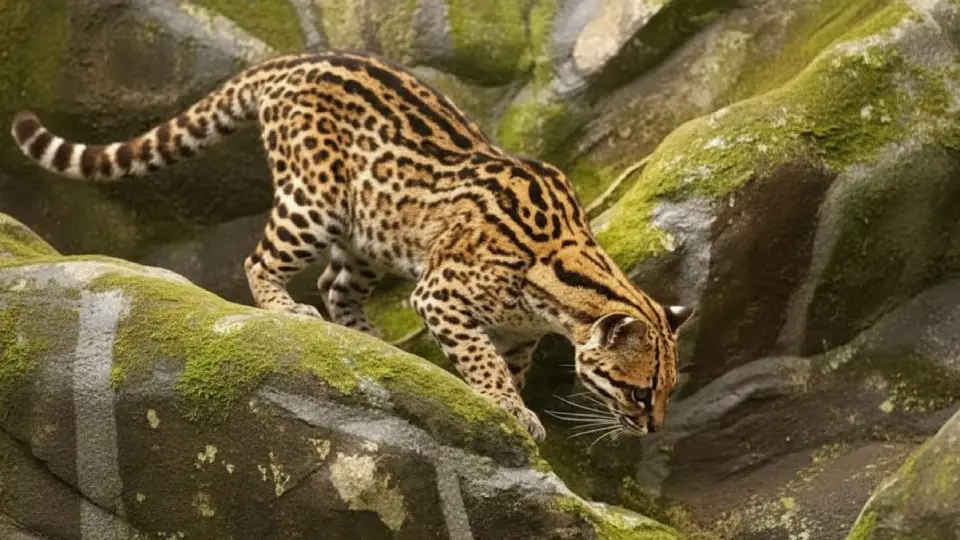
Important Facts About the Ocelot
The ocelot is larger than the common tiger and the margay (Leopardus wiedii), and its coat has a unique pattern.
- Ocelots usually weigh between 8 and 12 kilograms.
- Ocelots face threats from illegal pet trade and hunting for their fur.
- The ocelot is one of the most adaptable animals in the Peruvian jungle and helps keep the rainforest food chain in balance.
Ronsoco or Capybara (Hydrochoerus hydrochaeris)
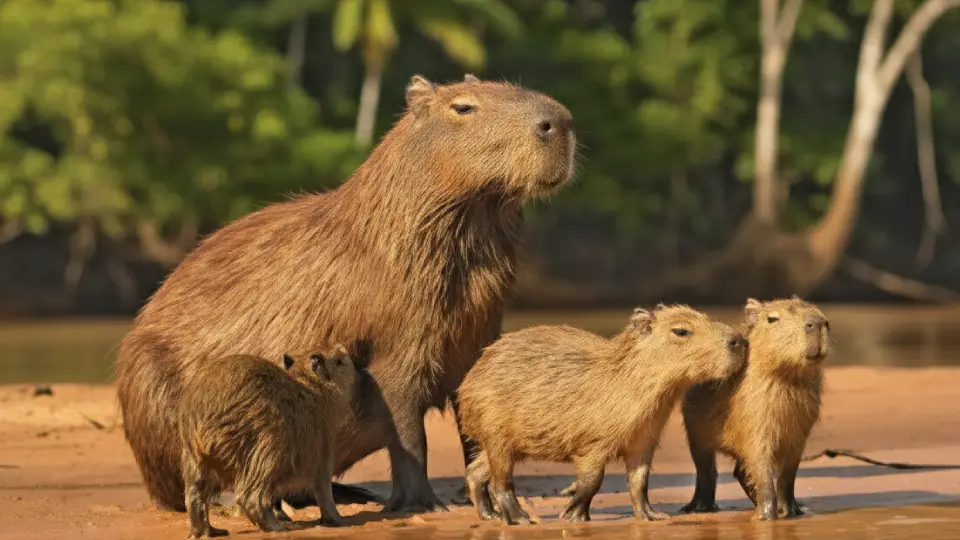
The capybara, also known locally as ronsoco, is the largest rodent among Peruvian jungle animals. Its grayish and yellow-brown fur helps it blend into riverbanks and flooded forest areas.
The capybara’s blunt snout and the high position of its eyes, nose, and ears help it stay alert while most of its body is underwater. Its webbed feet and strong back legs make it a good swimmer.
Capybaras are social and often gather in groups near rivers and lagoons. They help control vegetation and are an important food source for large predators like jaguars in the Peruvian Amazon.
Important Facts About the Capybara
- Weight: Between 50 and 60 kg.
- Length: Approximately 1 to 1.3 meters.
- Threat: Hunted for bushmeat and for its skin.
The capybara is one of the largest animals in the Peruvian jungle. It plays an important role in the Amazon ecosystem as a plant-eater and a food source for other animals.
Paca, Picuro, or Majaz (Cuniculus paca)
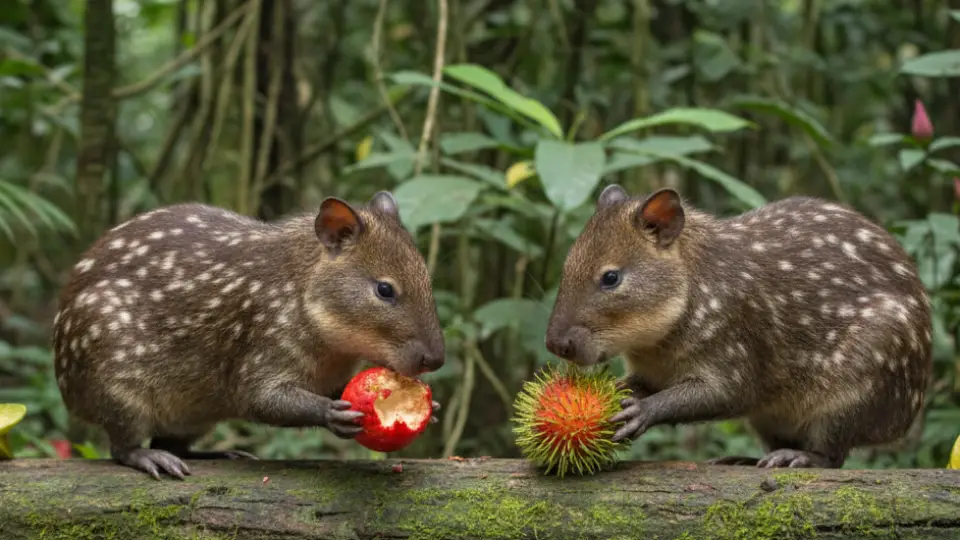
The paca, also called picuro or majaz, is another interesting animal from the Peruvian jungle. It has short legs, big eyes, and small ears, giving it an alert look.
Its fur can be reddish, orange, or dark brown, with thin white lines or spots along its sides. The white belly helps it blend in with the rainforest.
The paca is mostly active at night. It helps spread seeds, supporting new plant growth and keeping the Peruvian Amazon diverse.
Important Facts About the Paca
- Weight: Between 7 and 10 kg.
- Length: 60–80 cm; tail 2–3 cm.
- Threat: Hunted for bushmeat, captured as a pet, or killed for its skin.
The paca looks like the smaller mountain paca but has grayer fur and a longer tail. Although less known, the paca helps the forest by spreading seeds and supporting new plant growth.
Manatee or Amazonian Manatee (Trichechus inunguis)
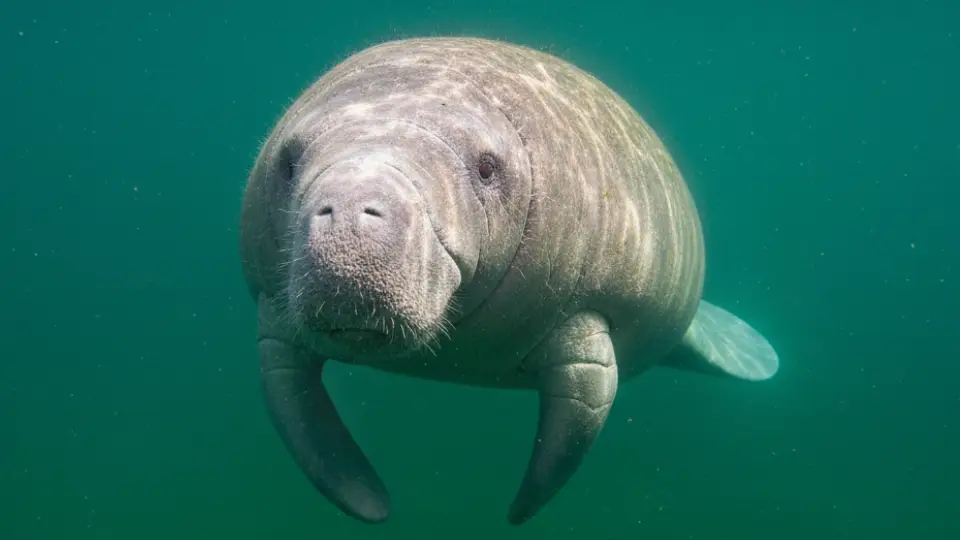
The Amazonian manatee, or “sea cow,” is a unique aquatic animal found in the Peruvian jungle. It has a strong body and dark gray skin with lighter spots on its belly and chest, giving it a calm, strong appearance.
The manatee has flippers without nails, big flexible lips, small eyes, and a strong body that help it move easily through rivers and flooded forests. It is suited to freshwater and eats aquatic plants, helping keep river ecosystems healthy in the Peruvian Amazon.
Important Facts About the Amazonian Manatee
- Weight: 300–500 kg.
- Length: Up to 3 meters.
- Threat: Captured for illegal zoos, hunted for meat, or exploited for fat.
The Amazonian manatee is one of the largest aquatic animals in the Peruvian jungle. It keeps freshwater ecosystems healthy by eating aquatic plants and supporting the natural balance.
Pink River Dolphin, Boto, or Amazon River Dolphin (Inia geoffrensis)
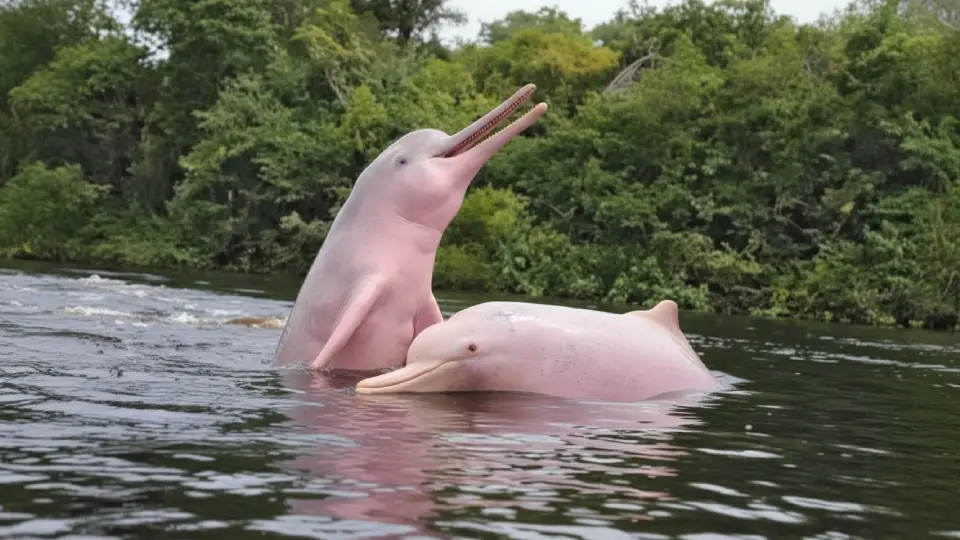
The pink river dolphin, also called bufeo or boto by locals, is one of the most iconic animals in the Peruvian jungle. Its unique pink color, brighter in males, makes it easy to spot underwater.
This dolphin has a short, triangular dorsal fin that starts in the middle of its back and goes toward the tail. Its large pectoral fins help it move through rivers and flooded forests. The dolphin’s rounded forehead, called the “melon,” and its long, thin snout give it a unique look.
This smart freshwater dolphin is an important part of Amazonian culture and folklore. It represents mystery and a strong bond with the river, and it also plays a key role in the Peruvian Amazon’s aquatic ecosystem.
Important Facts About the Pink River Dolphin
- Weight: Up to 190 kg.
- Length: Up to 2.5 meters.
- Threat: Hunted for bushmeat and for its fat and oil.
The pink river dolphin is one of the most iconic animals in the Peruvian jungle. Protecting this species is key to keeping Amazonian river ecosystems healthy.
Gray River Dolphin or Tucuxi (Sotalia fluviatilis)
The gray river dolphin, or tucuxi, is another animal found in the Peruvian jungle. Its back and fins are soft gray with hints of blue, giving it a graceful look as it swims.
You can spot the tucuxi by its tall, curved dorsal fin, short snout, and smooth shape. It is smaller and sleeker than the pink river dolphin, quick and social, and often swims in groups along the Amazon’s rivers.
This freshwater dolphin helps keep fish populations in balance, which supports the delicate harmony of life in the Peruvian Amazon.

Key Facts
- Weight: 35 to 55 kg.
- Length: up to 2.2 meters.
- Threats: Hunted for bushmeat and for fat extraction.
Protecting these species is vital to maintaining animal balance in the Peruvian jungle and preserving their delicate ecosystems.
Three-Toed Sloth or “Pelejo” (Bradypus variegatus)
The three-toed sloth is one of the most recognizable animals in the Peruvian jungle. It moves slowly and is well-camouflaged. Its thick fur, light brown, grayish, or beige, helps it blend with the treetops.
The sloth has a pale face with dark patches around its eyes, giving it a mask-like look. Its small ears, short tail, and three long, curved claws let it hang from branches for most of its life.
This tree-dwelling mammal is important for the Peruvian Amazon. Algae grow in its fur, and it helps nutrient cycles in the forest canopy.
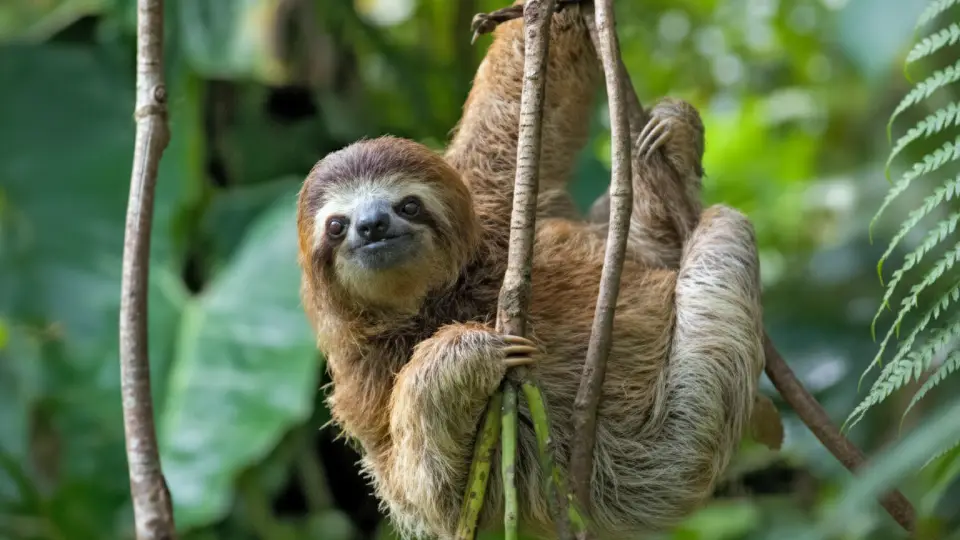
Important Facts
- Weight: Up to 4.3 kg.
- Threat: Captured for the pet trade, hunted for meat, killed for its skin, or taxidermied.
This animal looks like the darker brown two-toed sloth, but the main difference is the number of toes. Telling these species apart is important when spotting Peruvian jungle animals.
Howler Monkey (Alouatta puruensis)
The howler monkey is one of the loudest animals in the Peruvian jungle. Its powerful roar can be heard from several kilometers away. This deep call travels through the rainforest and lets other groups know the area is taken.
This monkey has a strong body and thick fur that can be dark brown or reddish. Its prehensile tail works like a fifth limb, helping it move easily through the treetops.
Howler monkeys play an important role in the Peruvian Amazon. They help spread seeds and support forest growth, which keeps the jungle ecosystem healthy.
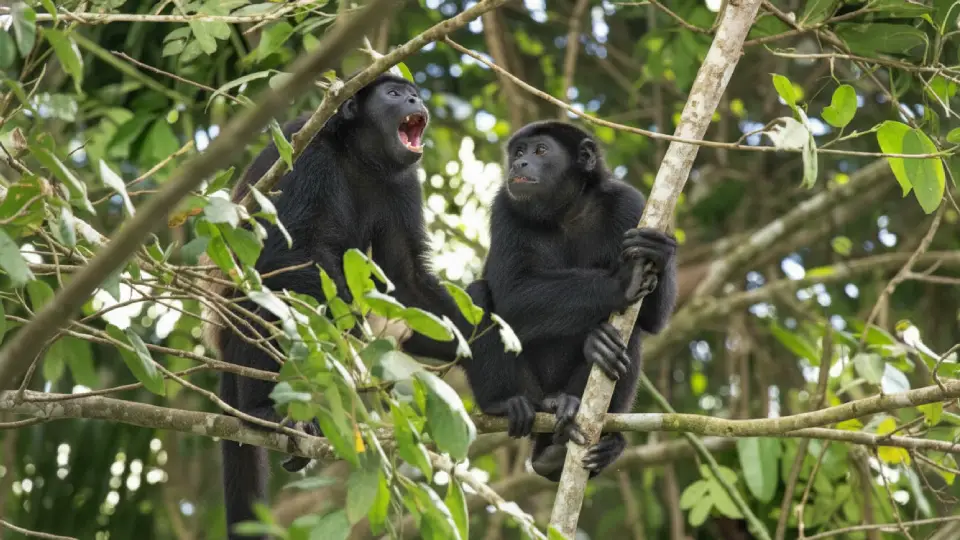
Important Facts About the Howler Monkey
- Howler monkeys usually weigh between 4 and 9 kilograms.
- Their main threat is habitat loss caused by deforestation and human expansion.
Howler monkeys play an important role in the ecosystem. They disperse seeds, support forest regeneration, and help maintain balance among animals in the Peruvian jungle.
Most Famous Birds of the Peruvian Jungle
Andean Cock-of-the-Rock (Rupicola peruvianus)
The Andean cock-of-the-rock is one of the most iconic animals in the Peruvian jungle. The male is easy to spot with bright orange feathers and black wings and tail. The female has softer brown colors that help her blend into the forest.
Both males and females have a fan-shaped crest that starts at the beak and goes over the head to the back of the neck. This gives them a unique and recognizable look.
This bird is a symbol of Peru and also helps spread seeds, which supports the biodiversity and health of the Peruvian Amazon.
Known as peruvian national bird
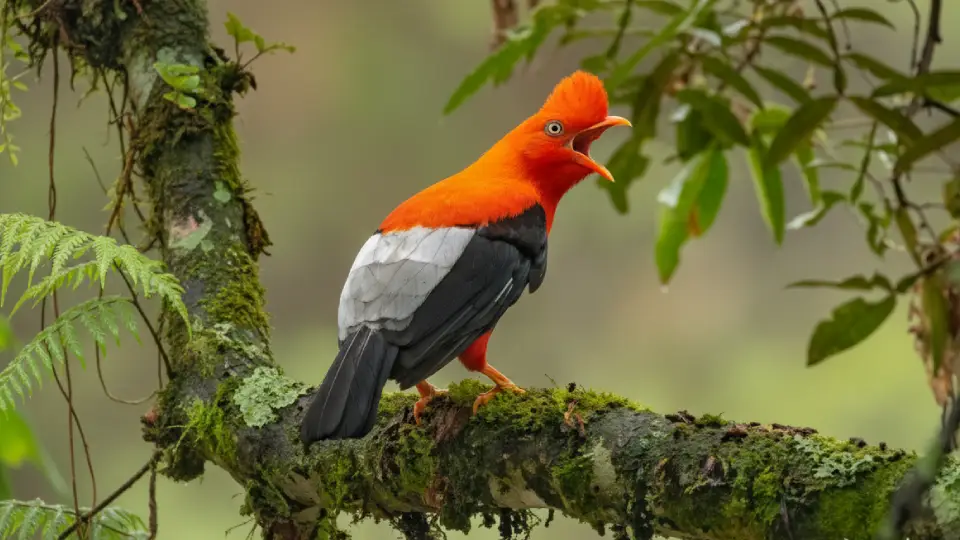
Important Facts About the Andean Cock-of-the-Rock
- It measures between 31 and 33 centimeters long.
- This bird faces threats from capture for the illegal pet trade or taxidermy display.
- It is the national bird and a symbol of Peru.
Protecting this iconic jungle bird helps safeguard Peru’s biodiversity and heritage.
Military Macaw (Ara militaris)
The military macaw is one of the most eye-catching birds in the Peruvian jungle. It lives high in the forest canopy. Most of its body is bright green, and the center of its tail is deep crimson red. The colors stand out against the bluish shades on its wings and lower back.
Its bare cheeks have fine black lines, and its matte black beak adds to its unique look. This macaw is social and intelligent. You can often spot them flying in pairs or small groups, their loud calls echoing through the rainforest.
Besides being beautiful, the military macaw is important for the rainforest. It helps spread seeds, supporting the growth and diversity of the Peruvian Amazon.
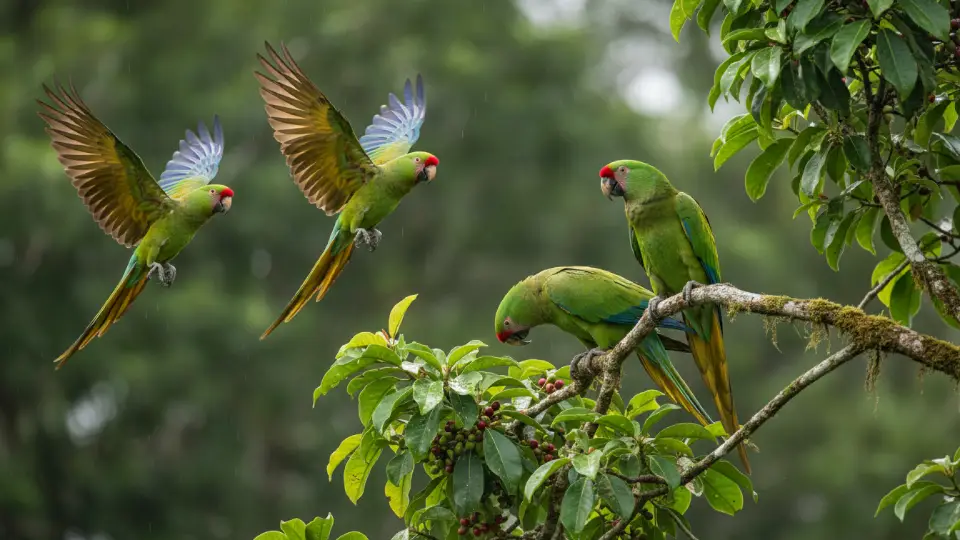
Important Facts About the Military Macaw
- Length: 65–70 cm.
As one of the largest flying animals in the Peruvian jungle, its size and bright feathers make it easy to spot in the rainforest canopy.
Blue and Yellow Macaw (Ara ararauna)
The blue-and-yellow macaw stands out as one of the most colorful animals in the Peruvian jungle. Its deep blue back contrasts with its bright yellow belly. The green forehead and black chin make its features even more striking.
The white facial skin marked with fine black lines around the eyes and its strong dark beak give it a friendly, easily recognizable expression. Often seen flying in pairs or noisy flocks, this macaw fills the Amazon sky with vibrant color and powerful calls.
Besides being beautiful, the blue-and-yellow macaw helps spread seeds, which supports the rich variety of life in the Peruvian Amazon rainforest.
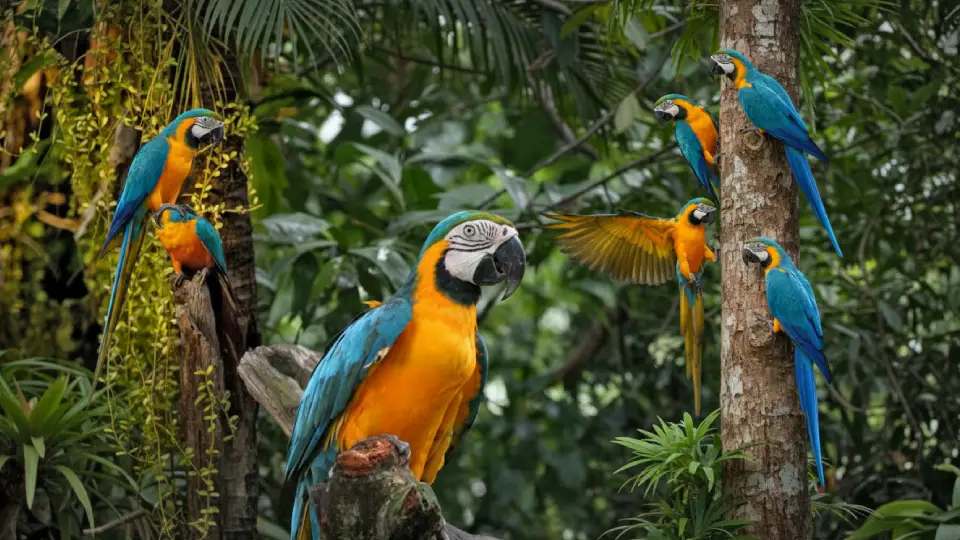
Important Facts About the Blue-and-Yellow Macaw
- Length: 80–87 cm.
This macaw is among the largest and most colorful animals in the Peruvian jungle. Its size and bright feathers make it stand out in the rainforest.
Red and Green Macaw (Ara chloropterus)
The red and green macaw is among the most well-known animals in the Peruvian jungle. Its feathers are mostly red from head to tail, with wings that show a mix of red, green, and blue.
It has bare patches on its face with fine red lines. Its strong beak is two colors: ivory white on top and black on the bottom, making it easy to recognize.
These macaws are social and usually travel in pairs or small groups. They bring bright colors and loud calls to the rainforest canopy. By spreading seeds, they help keep the Peruvian Amazon diverse and healthy.
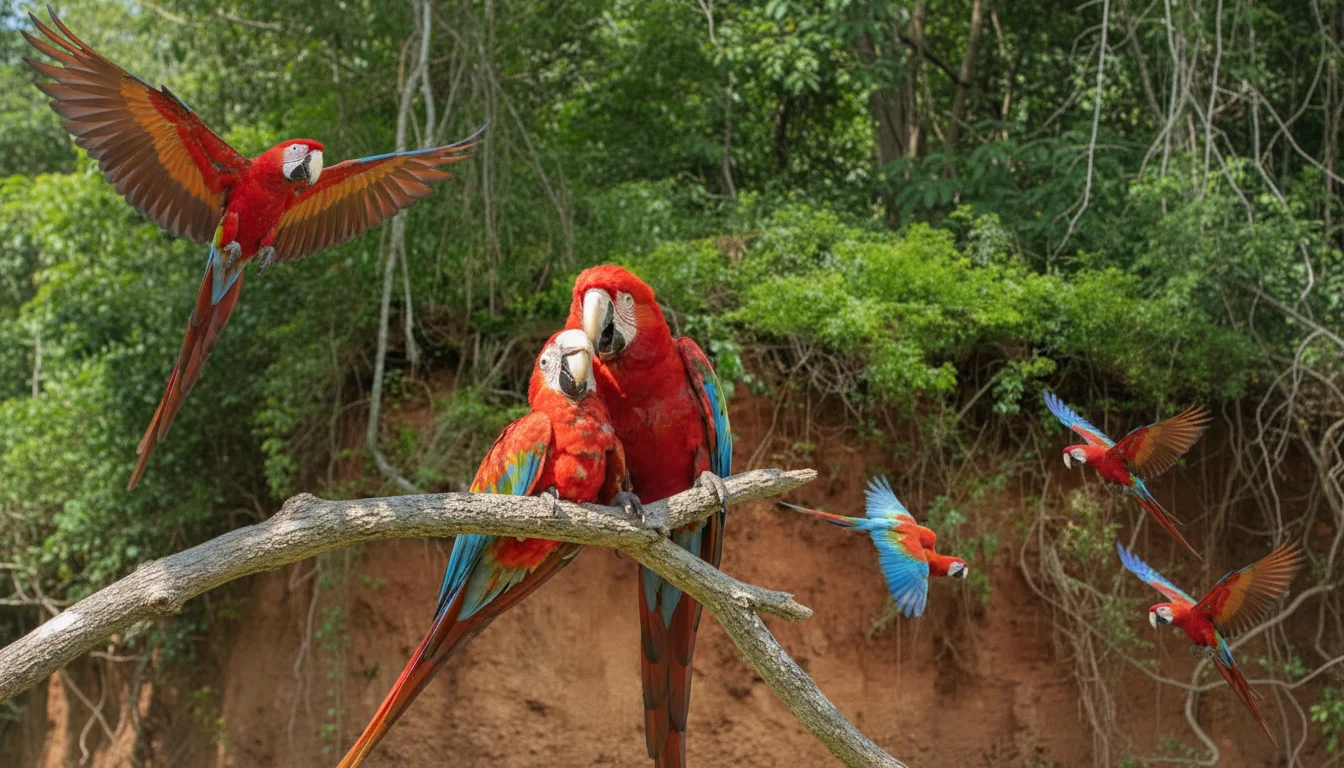
Important Facts About the Red-and-Green Macaw
- Length: 90–97 cm.
This bird stands out in the rainforest canopy for its large size, bright feathers, and unique social habits. It is among the most colorful and impressive animals in the Peruvian jungle.
Huallaga Toucan (Aulacorhynchus huallagae)
The Huallaga toucan is easy to spot in the Peruvian jungle because of its big, colorful bill. This bill is not just for show; it helps the toucan control its body temperature and reach fruit on distant branches, showing how well it is suited to life in the rainforest.
Though small, this fruit-eating bird is important for spreading seeds. It helps new trees grow and supports the rich variety of life in the Peruvian Amazon.
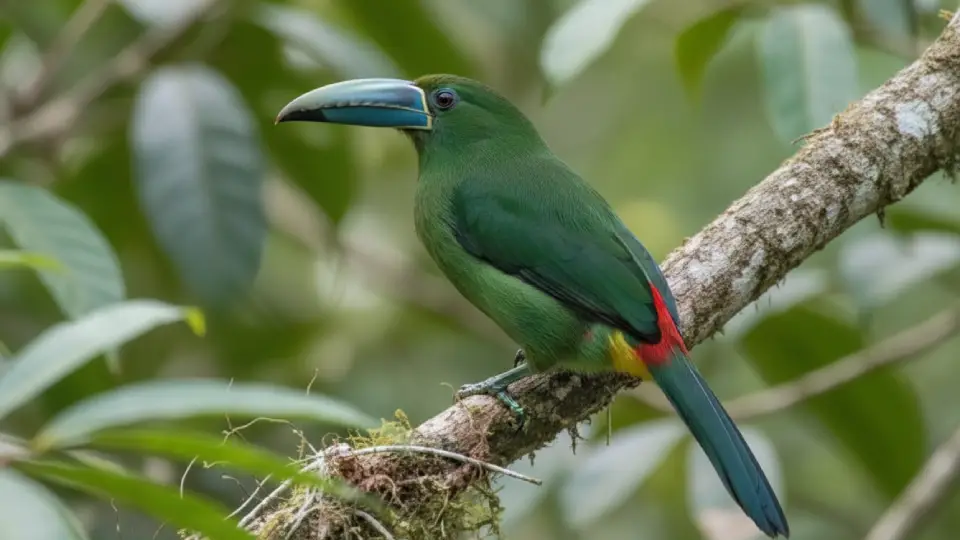
Important Facts About the Huallaga Toucan
- It measures between 42 and 46 centimeters long.
The Huallaga toucan is a small, brightly colored bird from the Peruvian jungle. It helps forests grow by spreading seeds and supporting plant variety in the canopy.
Curl Crested Aracari (Pteroglossus beauharnaesii)
The curl crested aracari is one of the most colorful animals in the Peruvian jungle and is easy to spot among the rainforest leaves. Its red back stands out against its dark green wings and upper back. Its yellow chest and belly have a red band along the sides and back.
This bird has a black crown with small white spots and a white throat marked with dark lines, making it easy to recognize. Its two-toned bill helps it move through branches and eat fruit. By spreading seeds, it helps keep the Peruvian Amazon rainforest healthy and diverse.
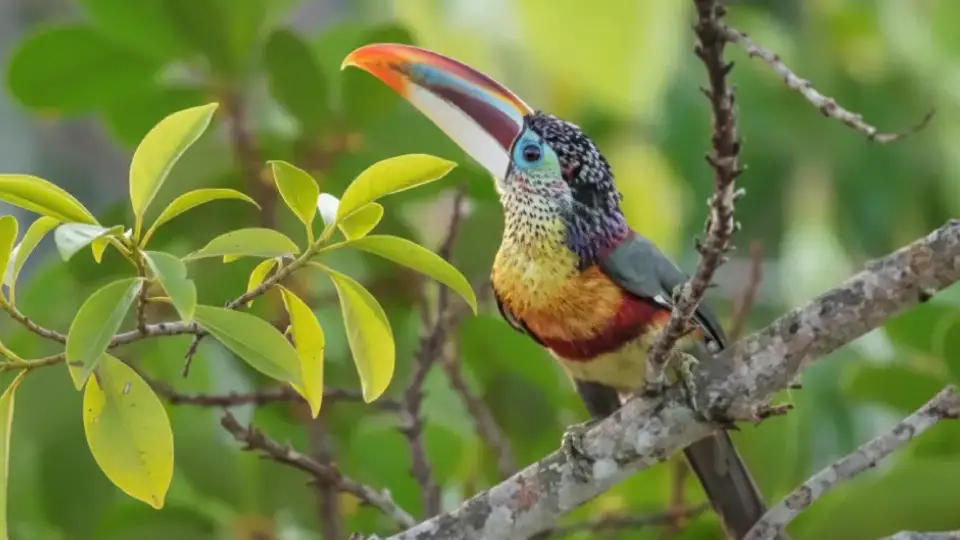
Important Facts About Seed-Dispersing Toucans
- These toucans typically measure 42 to 46 centimeters in length.
- The Peruvian jungle is home to the Yellow-throated Toucan, Chestnut-mandibled Toucan, and White-throated Toucan.
Toucans contribute to the Amazon rainforest by dispersing seeds over long distances, which promotes forest growth and maintains ecosystem health and diversity.
King Vulture (Sarcoramphus papa)
The king vulture stands out in the Peruvian jungle with its large size and bright, bare head and neck. It flies high over the Amazon rainforest and helps keep the forest clean by eating carrion, which benefits the ecosystem. Its white chest and wings contrast with its black body, making it easy to spot.
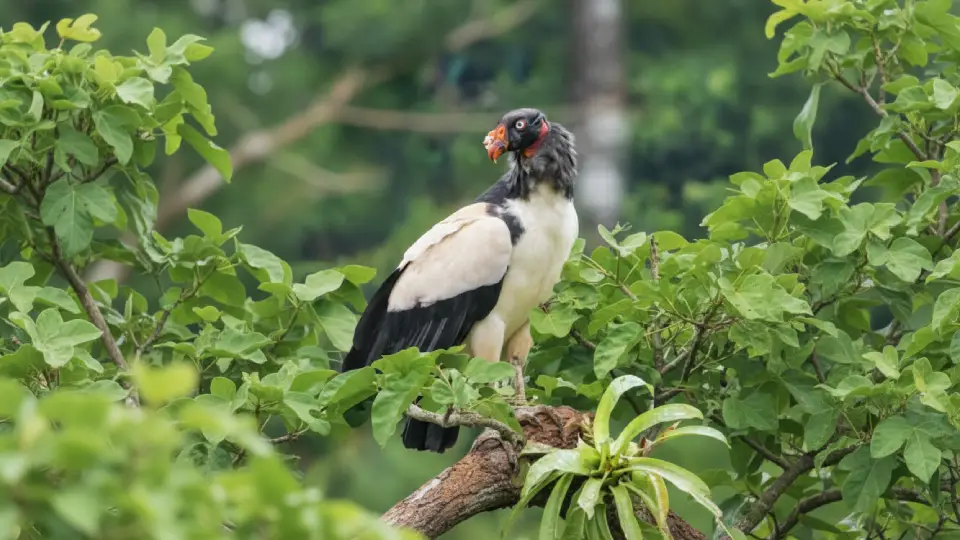
Key Facts:
- Length: 70–75 cm
- Threat: Hunted for taxidermy or display
- Distinctive Features: Bare multicolored head and neck, orange beak with fleshy gular caruncle, black body and tail
Black Caiman (Melanosuchus niger)
The black caiman is one of the biggest animals in the Peruvian jungle and rules the rivers of the Amazon. Its strong body and quiet movements make it a top predator, helping keep the aquatic ecosystem balanced. It has special crests above its eyes and a bony bridge between them, giving it a look similar to glasses.
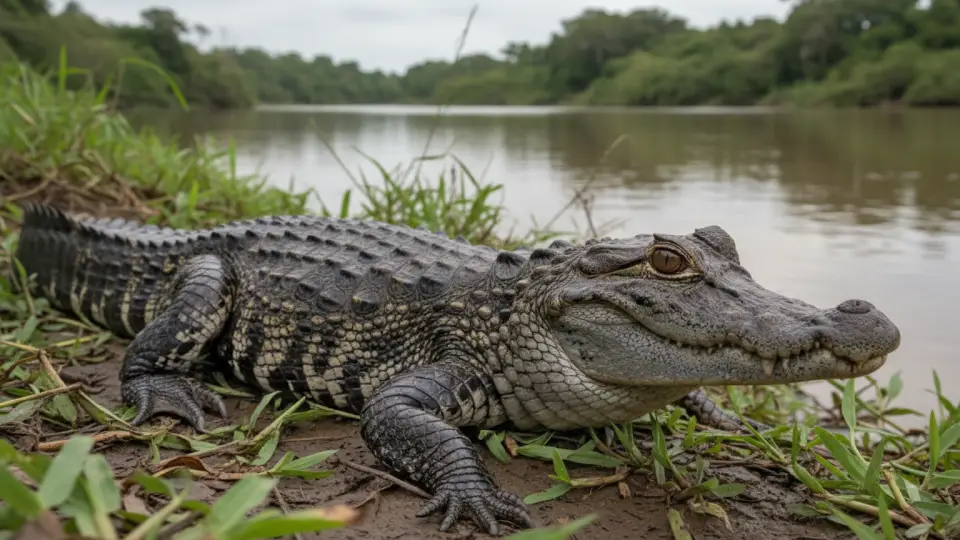
Key Facts:
- Length: 4–5 m
- Habitat: Rivers of the Peruvian Amazon
- Distinctive Features: Small eye crests, interorbital bridge, dorsal scale rows, webbed feet, black stripes on lower jaw
Spectacled Caiman / White Caiman (Caiman crocodilus)
Smaller than the black caiman, the spectacled caiman is an adaptable Peruvian jungle animal found in rivers and wetlands. Its name comes from the bony ridge above the eyes resembling glasses. This species helps control prey populations and maintain the health of Amazonian aquatic ecosystems.
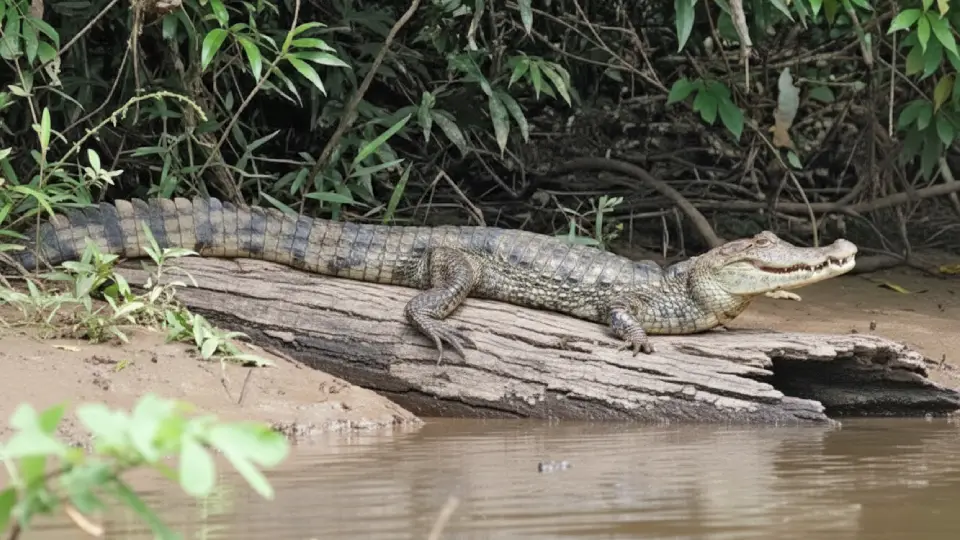
Key Facts:
- Length: 1.5–2 m
- Threats: Hunted for meat and eggs; skins, teeth, and heads used for decoration or rituals
- Distinctive Features: Eye crests, ossified interorbital bridge, 1–2 rows of post-occipital scales, 4 rows of dorsal scales on hind legs, clear lower jaw
Anaconda (Eunectes murinus)
The anaconda is a large, quiet animal found in the Peruvian jungle. It moves smoothly through rivers and swamps. Its dark green body has black and yellow markings along the sides, and its small head is covered with big scales. Its eyes, round or vertical, help it see well underwater.
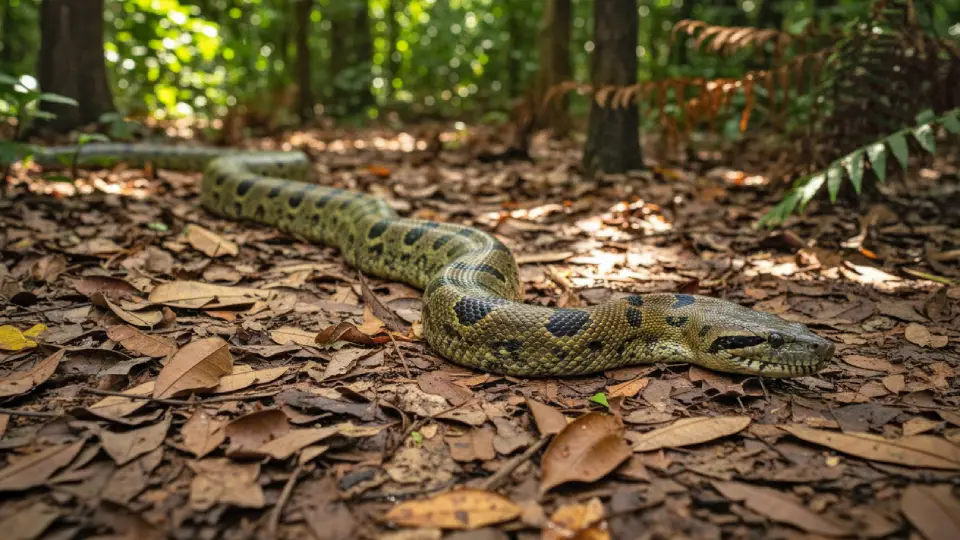
Key Facts:
- Length: up to 9 m
- Threats: hunted for skin, kept as pets, or used in rituals
- Habitat: rivers and swamps
Boa Constrictor (Boa constrictor)
The boa constrictor is well-camouflaged in the Peruvian jungle. Its body fades from gray on the head to blue and ochre near the tail, with brown and black markings along its length. Lines run from its eyes down its cheeks.
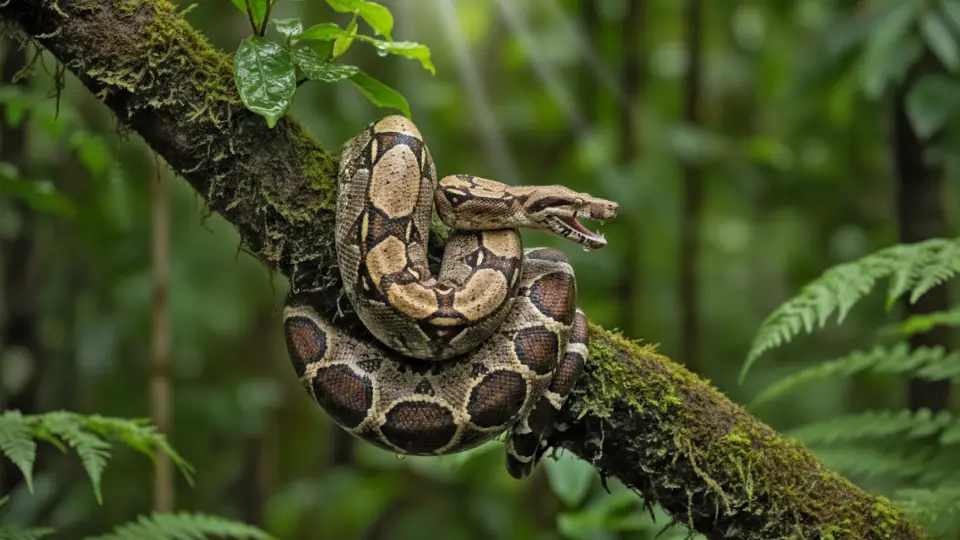
Key Facts:
- Length: 3 - 4 m
- Threats: hunted for skin or the pet trade
Yellow footed Tortoise (Chelonoidis denticulatus)
The yellow footed tortoise is a strong animal from the Peruvian jungle. It has a shell with hexagon shapes and legs covered in yellow scales that look like elephant feet. Scales between its eyes and above its nose make it easy to recognize.
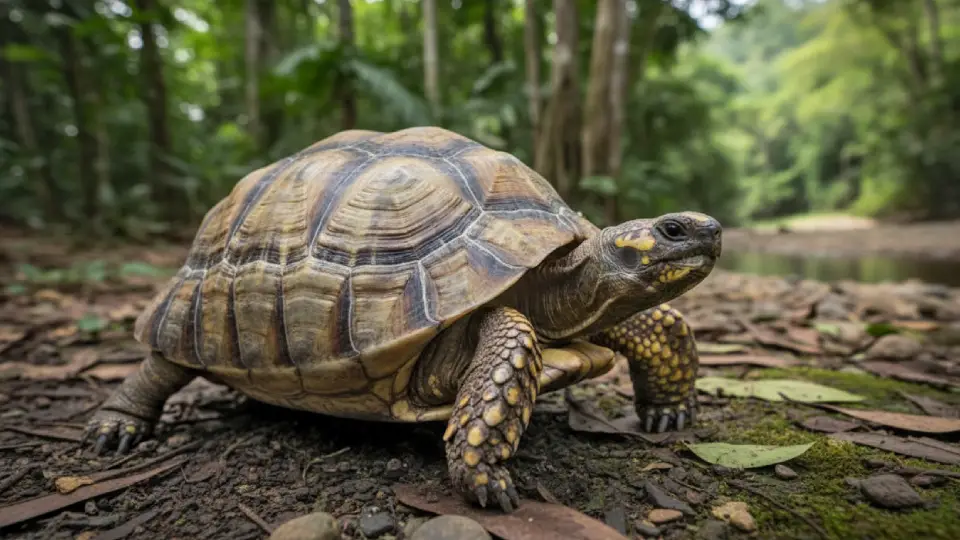
Key Facts:
- Threats: hunted as pets, for shell ornaments, or for meat
- Culinary Use: commonly eaten in Iquitos, Pucallpa, and Puerto Maldonado
Green Iguana (Iguana iguana)
The green iguana stands out in the Peruvian jungle. It has quick, scaly legs and a crest running down its back and tail. Its throat flap and sharp claws help it climb well.
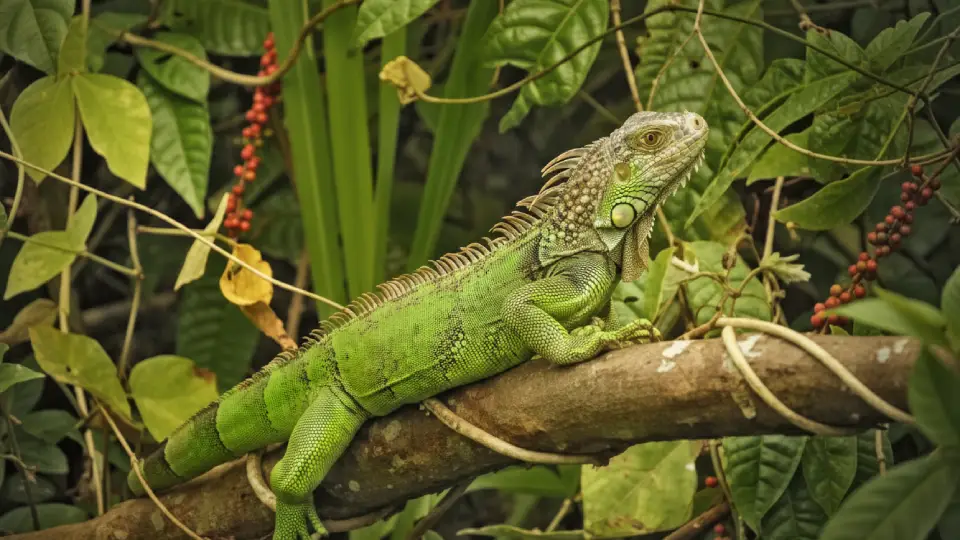
Key Facts:
- Length: up to 1 m
Red Headed Caiman Lizard (Dracaena guianensis)
The caiman lizard is a unique animal from the Peruvian jungle. It has a red head and a green, scaly body that resembles a caiman. Folds in its throat and neck help it move easily, and its flat tail helps it swim.
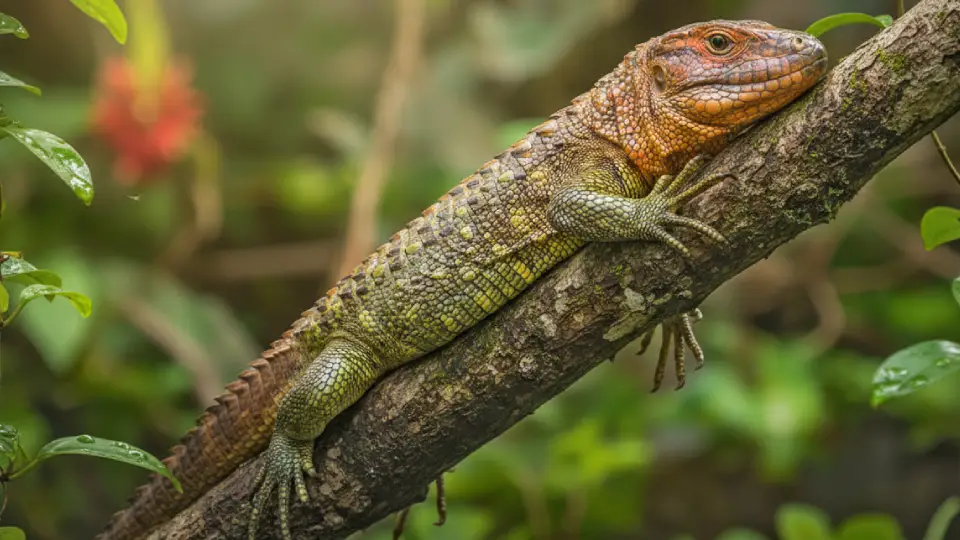
Key Facts:
- Weight: up to 4.5 kg
- Length: up to 1.2 m
Piranha (Serrasalmus spp., Pygocentrus spp.)
These small but famous Peruvian jungle animals inhabit rivers and lakes. Species include the red piranha, white piranha, and black piranha. The white piranha reaches up to 35 cm, while the others grow to about 15 cm.
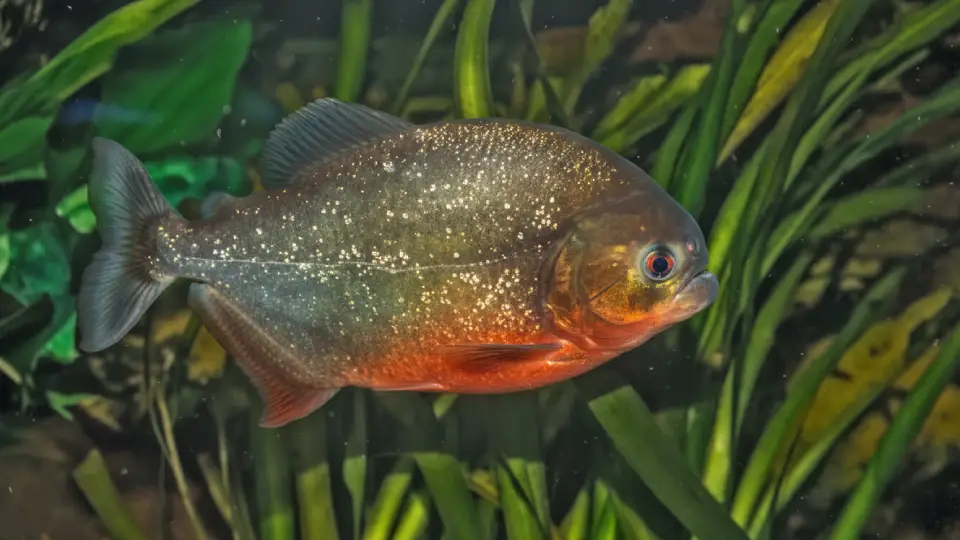
Key Facts:
- Size: up to 35 cm
- Threats: teeth used by natives as blowgun tips (“pucuna”)
Electric Eel (Electrophorus electricus)
The electric eel is a long fish from the Peruvian jungle. Its back is blue, its sides are lighter, and its head is orange. It can produce strong electric shocks to catch prey and protect itself.
Key Facts:
- Length: up to 3 m
Arapaima / Paiche (Arapaima gigas)
The paiche is an enormous Peruvian jungle fish that breathes air using a modified swim bladder. This lets it easily navigate slow-moving rivers and flooded forests.
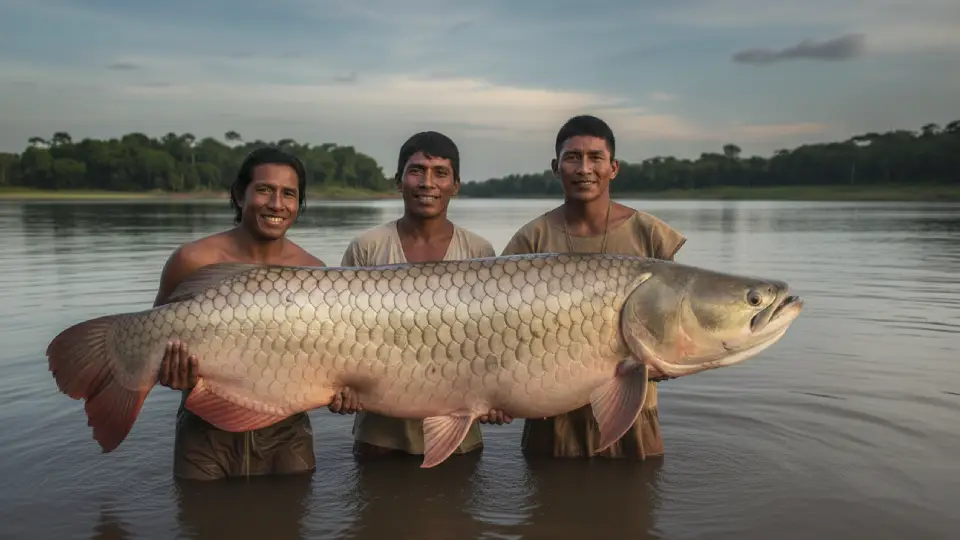
Key Facts:
- Weight: up to 250 kg
- Length: up to 5 m
- Threats: hunted for meat or fat
Gamitana (Colossoma macropomum)
The gamitana is one of the biggest scaled fish in the Amazon. It is important for the ecosystem because it reproduces well and plays a key part in the food chain.
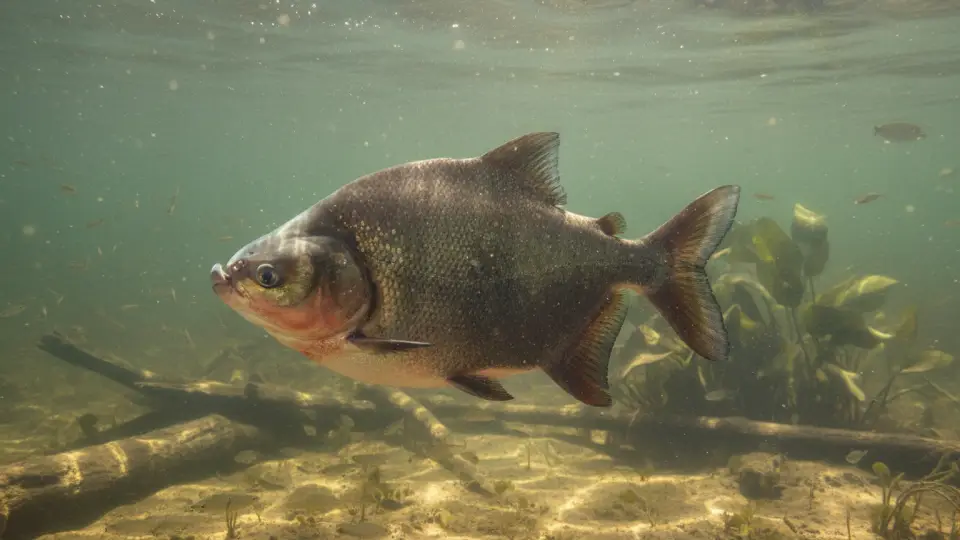
Key Facts:
- Weight: over 28 kg
- Length: up to 1 m
- Threats: hunted for meat
- Lifespan: up to 25 years
Carachama (Leporinus sp.)
The carachama looks ancient and lives in the Peruvian jungle. People use it in traditional Amazonian cooking, especially in soups. Its body is used for crafts, and its eggs are called “Amazonian caviar.”
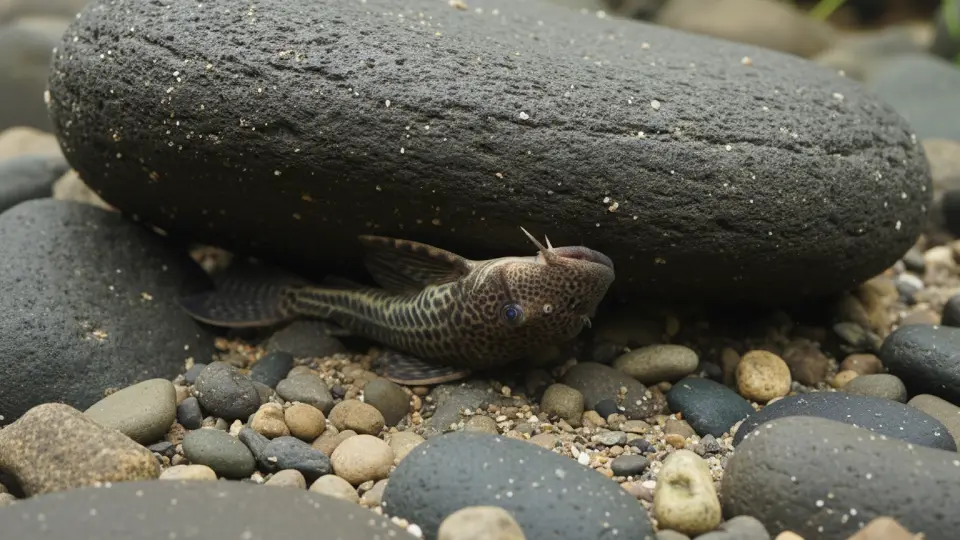
Key Facts:
- Distribution: Loreto, San Martín, Huánuco, Ucayali, Madre de Dios
Tiger Catfish (Pseudoplatystoma tigrinum)
Recognizable by its elongated head and silver, black, and beige body, this Peruvian jungle animal thrives in rivers, lakes, swamps, and flooded forests.
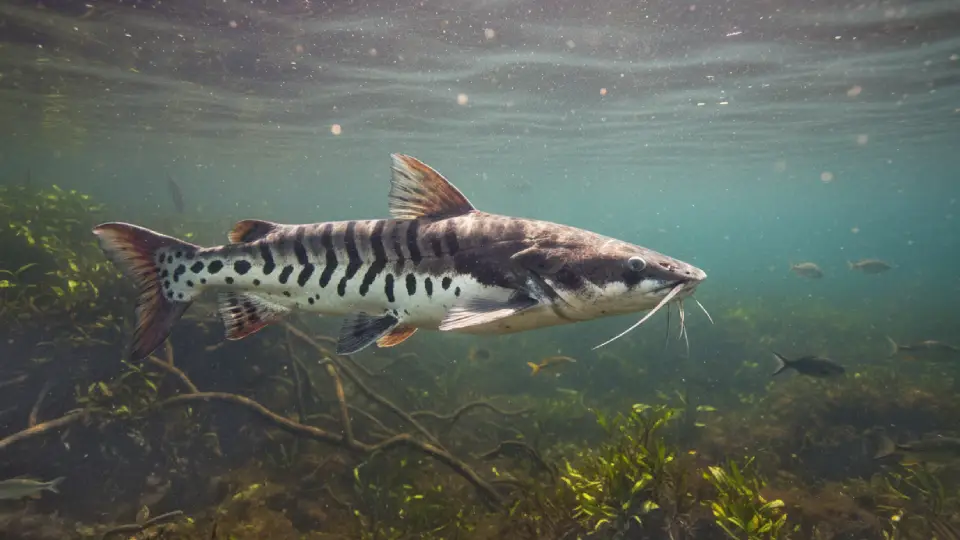
Key Facts:
- Length: up to 110 cm
Poisonous Frogs of the Peruvian Jungle
The Peruvian Amazon hosts a variety of poisonous frogs, each distinguished by unique colors and survival strategies. These frogs control insect populations and are recognized for their vivid appearance and potent toxins.
Blue Poison Dart Frog (Ranitomeya aetherea)
This small frog from the Peruvian jungle stands out with its bright blue body and copper legs. Its back has light blue stripes on a dark base, and the copper legs are covered in brown spots.
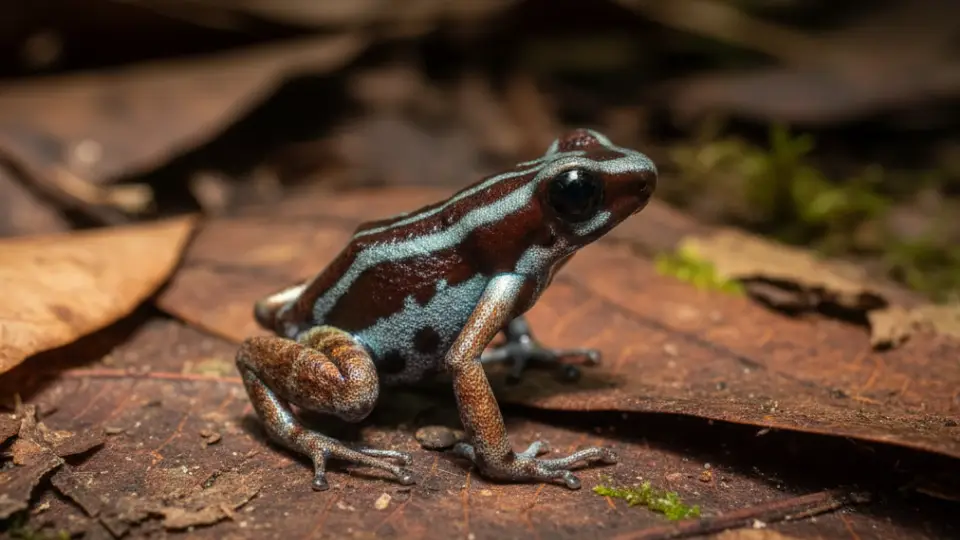
Key Facts:
- Threats: collected illegally due to its toxicity
- Defense: secretes toxins for protection
Ranitomeya hwata
This is one of the smallest frogs in the Peruvian jungle, reaching 15 millimeters long. It has a slender body with yellow stripes on its back and a mottled underside.
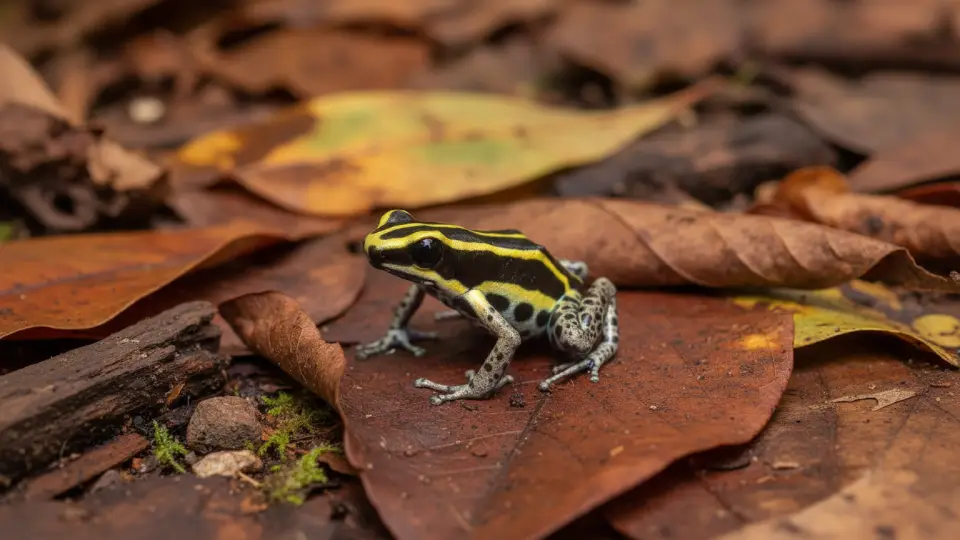
Key Facts:
- Length: 15 mm
- Threats: illegally collected for the pet trade
Ameerega shihuemoy
This tiny frog from the Peruvian jungle is less than 3 centimeters long and has shimmering colors. When threatened, it releases toxins to keep predators away.
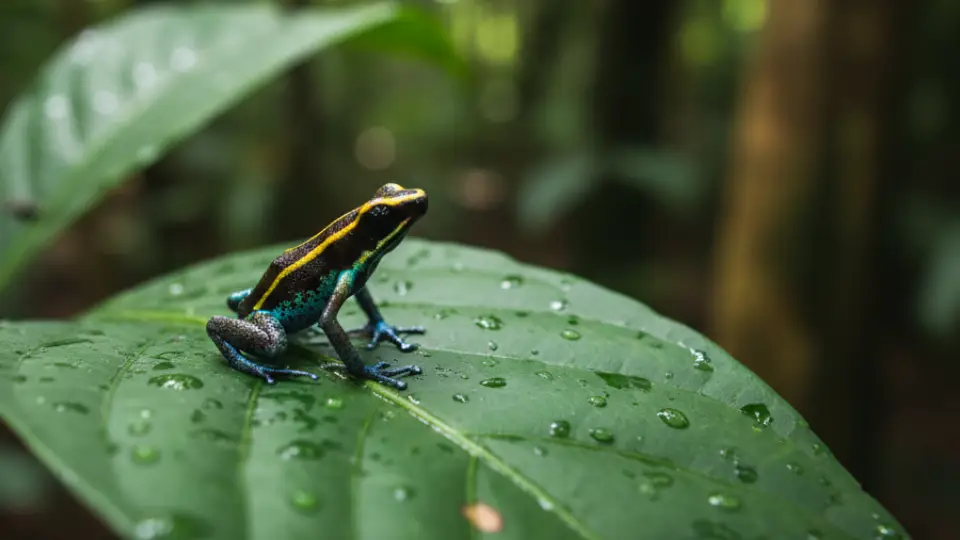
Key Facts:
- Length: under 3 cm
- Threats: defensive toxins; protected in Manu National Park
Carrikerella simpira (Peruvian Endemic Mantis)
This mantis is a unique animal from the Peruvian jungle, endemic to Peru, with tibias modified into trident-shaped structures for piercing prey directly.
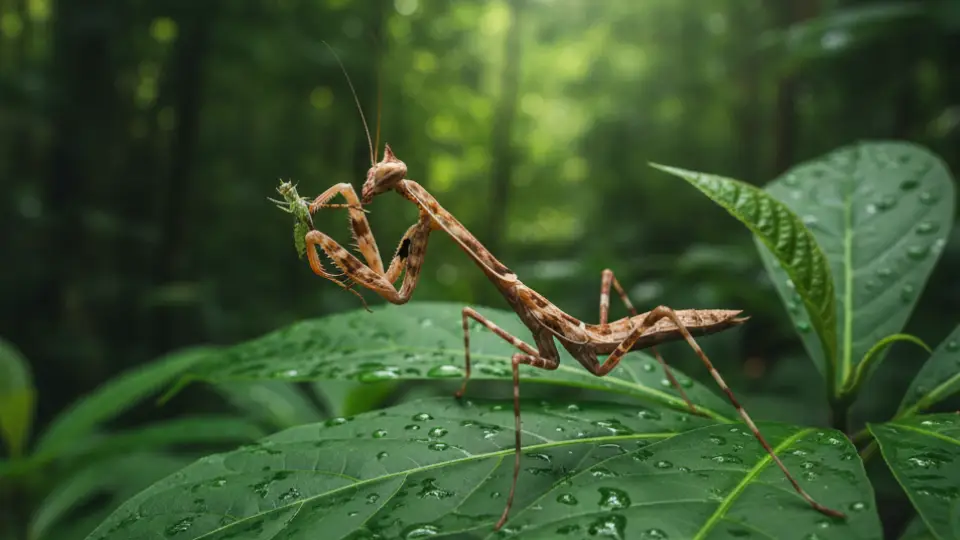
Key Facts:
- Unique Feature: trident-shaped tibias for capturing prey
- Distribution: endemic to Peru
Most Dangerous Animal in the Peruvian Jungle
Many people think of big predators, but experts say the most dangerous animal in the Peruvian Amazon is the mosquito. It spreads diseases like dengue, malaria, and yellow fever.
Potentially Dangerous Species of the Peruvian Jungle
Bushmaster or Shushupe (Lachesis muta)
The bushmaster is the longest venomous snake in the Americas. It lives in humid forests and is mostly active at night. Though its venom is strong, it usually stays away from people.
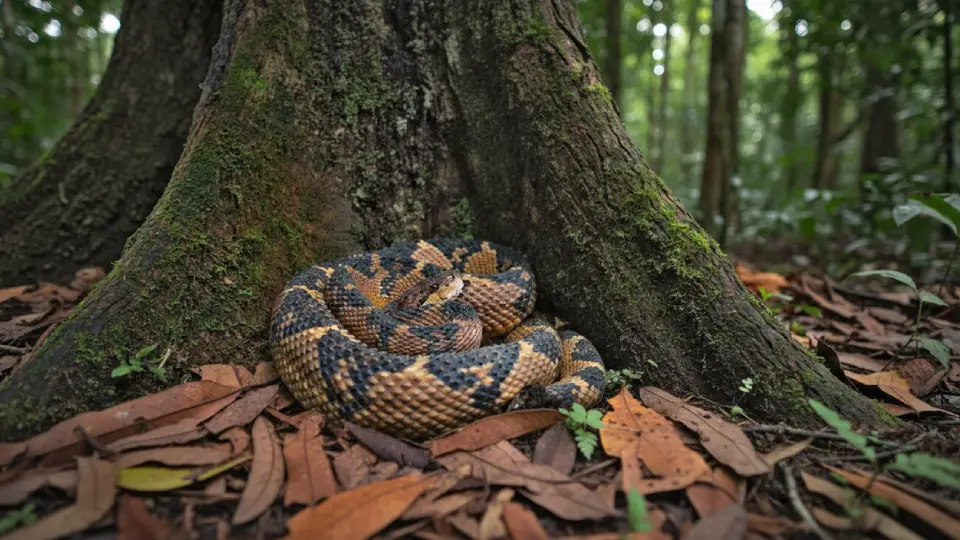
Key Facts
- Length: up to 3 m (rarely longer)
- Color: light brown with dark diamond-shaped markings
- Behavior: shy and defensive, not aggressive
Amazonian Black Scorpion (Tityus obscurus)
This scorpion hides under logs and leaves in wet areas. Its sting is painful and can cause nerve problems.
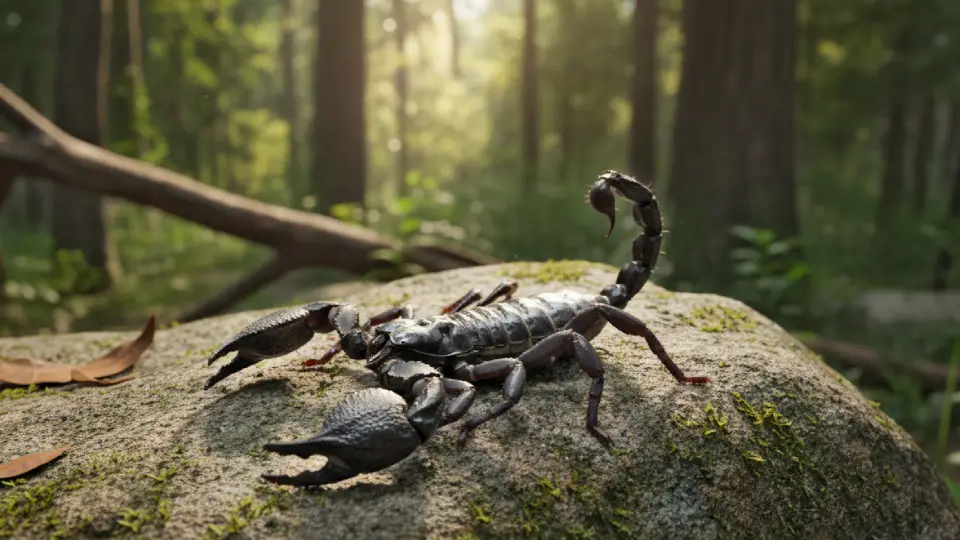
Key Facts
- Size: 8.5 – 10 cm
- Color: black or very dark brown
- Habitat: logs, leaf litter, and humid zones
Bullet Ant or Congo Ant (Paraponera clavata)
The bullet ant is known for having one of the most painful stings in the world. It lives in nests at the base of trees and is used in traditional ceremonies.
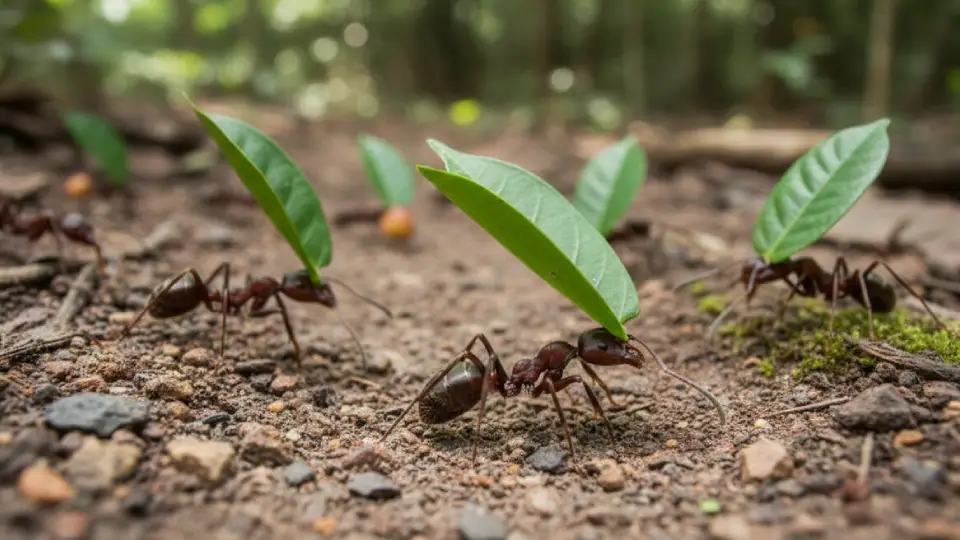
Key Facts
- Size: up to 3 cm
- Venom: neurotoxic and extremely painful
- Cultural use: used in traditional initiation rituals
Tarantula Hawk Wasp (Pepsis spp.)
This wasp has a bluish-black body and bright orange wings. It is known for hunting spiders with great skill.
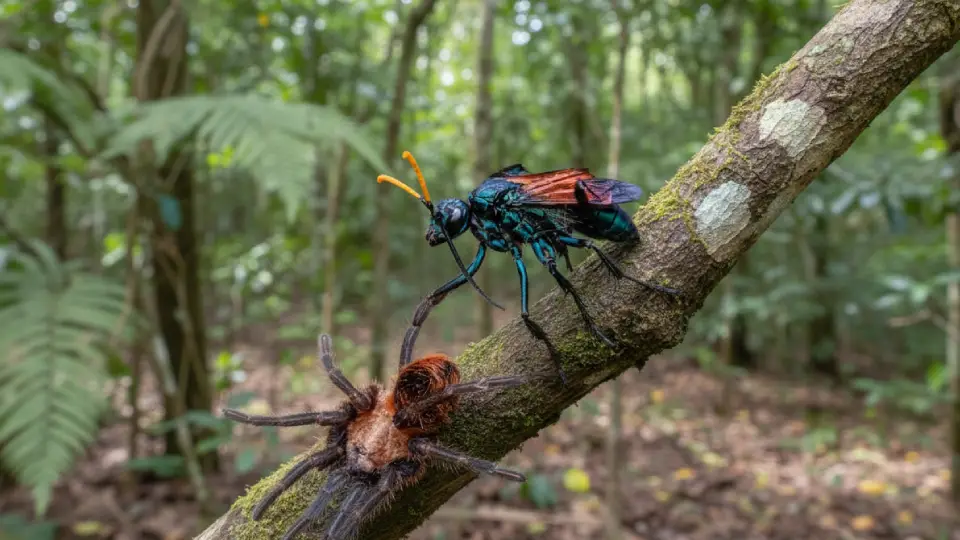
Key Facts
- Size: up to 5 cm
- Behavior: solitary; non-aggressive if undisturbed
Native Animals of the Peruvian Jungle
Hoatzin or Shansho (Opisthocomus hoazin)
This unusual Amazonian bird looks like something from prehistoric times and has a digestive system similar to cows.
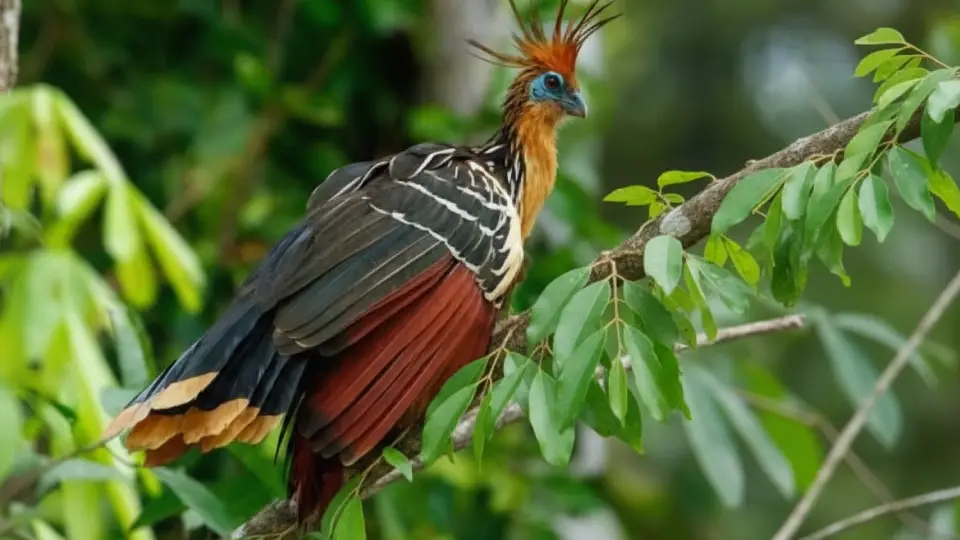
Key Facts
- Height: up to 60 cm
- Weight: 700 – 900 g
- Habitat: riverbanks and lake edges in the Amazon
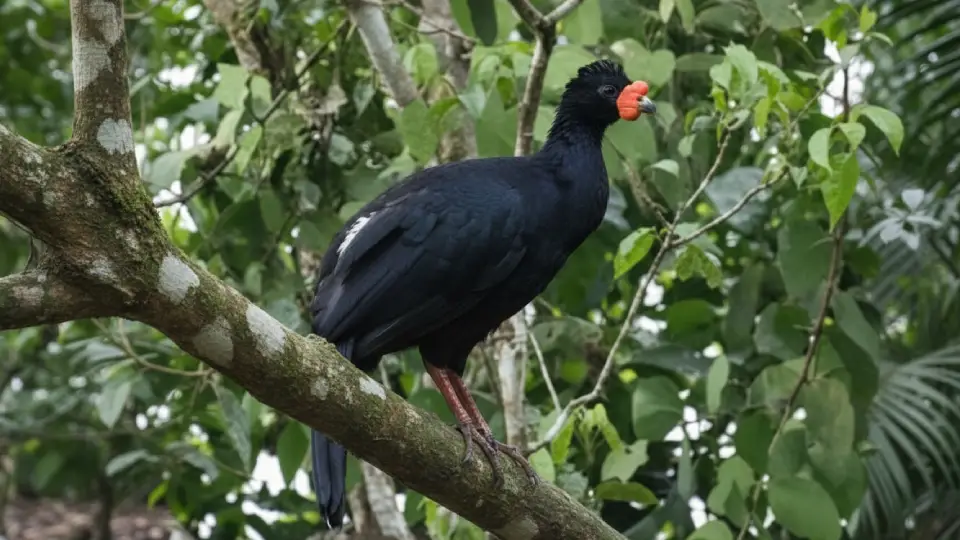
Wattled Curassow (Crax globulosa)
A rare and threatened Amazonian bird, mainly found in regions such as Loreto and Ucayali. Its presence indicates a healthy forest ecosystem.
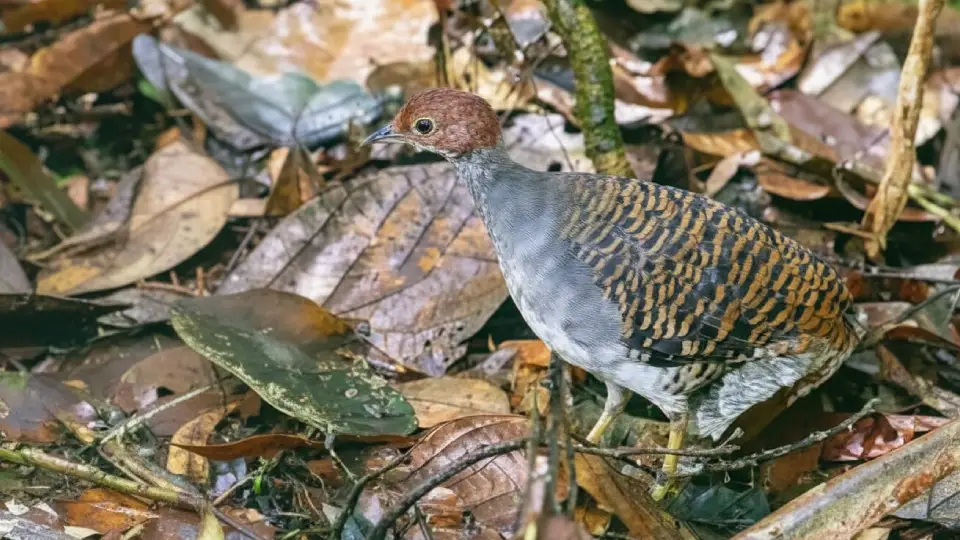
Striated Tinamou (Crypturellus casiquiare)
This bird lives mainly in the white sand forests of northern Peruvian Amazonia, showing special adaptation to its environment.
Notable Endemic Frogs
- Ameerega planipaleae: Found only near Oxapampa in humid montane forests.
- Atelopus andinus: Lives in high river valleys in the northern Peruvian Amazon.
- Atelopus epikeisthos: Known only in an area near Chachapoyas.
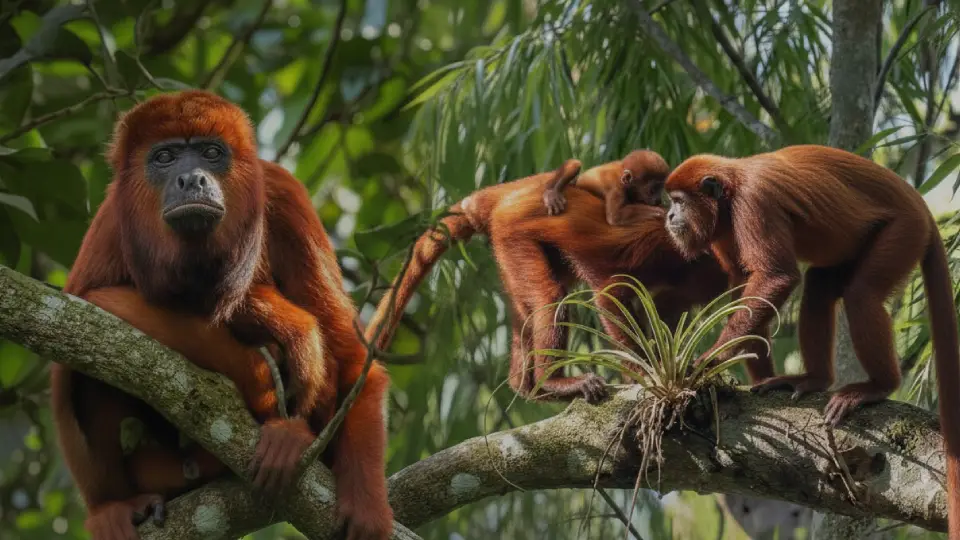
Red Howler Monkey, Cotomono (Alouatta seniculus)
This primate is famous for its loud calls heard from far away. It helps the forest by spreading seeds and supporting new growth.
Key Facts
- Weight: approx. 4 – 9 kg.
- Threat: habitat loss
- Role: seed disperser and forest regenerator
Comparative Table of Peruvian Jungle Animals
| Animals | Approx. Size | Diet | Ecological Role | Frequency of Sight |
| Jaguar | 2.5 m | Carnivore | Population regulator | Common |
| Macaw | 90 cm | Fruits and seeds | Seed disperser | Uncommon |
| Harpy Eagle | 1 m | Carnivore | Apex predator | Poco comun |
| Anaconda | 5 - 7 m | Carnivore | Aquatic control | Rare |
| Perezoso | 60 cm | Leaves | Plant recycler | Frequent |
Estimated Total Biodiversity in the Amazon Rainforest 2025
The Peruvian Amazon is one of the most biodiverse areas in the world, home to a wide range of living things.
Key Facts
- Plants: 40,000 species
- Birds: 1,701 species
- Reptiles: 297 species
- Amphibians: 315 species
- Mammals: 460 species
- Insects: 2,500 species
Additional Key Fact
- Each year, scientists find new species in the Amazon, so these numbers keep rising.
Sacred Animals in the Amazonian Worldview
Cultural and Spiritual Significance in the Peruvian Jungle
For centuries, communities have seen animals as living symbols. Through traditional stories, people share ecological knowledge and ancestral wisdom.
Otorongo or Jaguar
The jaguar stands for spiritual power and protection. It represents strength and is seen as the guardian of the jungle and a link between the physical and spiritual worlds.
- The jaguar is believed to balance nature and spiritual life in the Amazon.
Anaconda or Yacumama
Known as the “Yacumama,” the guardian of the Amazon Basin, this sacred serpent represents wisdom, fertility, and creation.
- Considered the “mother of water,” it symbolizes the union of sky, earth, and water.
Pink Dolphin
Legend says the pink dolphin turns into a handsome blond man at night to charm women. It is seen as a river guardian who connect worlds.
- In riverside communities, this legend often explains unexpected pregnancies.
Harpy Eagle – Symbol of Vision and Wisdom
The harpy eagle is sacred, guarding the land and acting as a messenger between worlds. It completes the spiritual trio with the jaguar and anaconda.
Coto Monkey – Messenger Between Worlds
Coto monkeys are the jungle’s gardeners. Their loud howls are seen as sacred sounds that set the rhythm of the forest.
Relationship Between Peruvian Jungle Animals and Humans
Deforestation and illegal hunting threaten the balance, while responsible ecotourism contributes to conservation.
Loreto
Pacaya Samiria National Reserve
Pacaya Samiria is the largest reserve in Peru, recognized for its flooded forests and pink dolphins.
Pucacuro National Reserve
Protects forests in the central Napo region and supports rare monkeys and birds.
Matsés National Reserve
Preserves pristine jungle and the traditional lands of the Matsés people.
Yaguas National Park
Famous for its huge variety of fish and healthy aquatic ecosystems.
Madre de Dios
Tambopata National Reserve
Recognized for its macaw clay licks and abundant wildlife like jaguars and giant otters.
Manu National Park
Considered one of the most biodiverse places in the world and a Natural Heritage site.
San Martín
Río Abiseo National Park
Protects cloud forests and pre-Hispanic sites such as Gran Pajatén.
Important Fact
A single hectare of the Amazon rainforest can contain more tree species than entire countries elsewhere.
Travel Tips for Exploring the Peruvian Jungle
Which Regions Does the Peruvian Jungle Cover?
The jungle spans the eastern regions of Amazonas, San Martín, Loreto, and Ucayali.
Main Regions
- High Jungle: Mist-covered mountains and cloud forests.
- Low Jungle: Warm landscapes, winding rivers, and vast plains.
Climate and Best Time to See Animals
Temperatures remain between 24°C and 32°C throughout the year.
Seasons:
- Rainy season (November to March): Best for amphibians and reptiles.
- Drier season (April to October): Ideal for hiking and wildlife observation.
How to Reach the Peruvian Jungle
- Flights are available from Lima to major cities in the Amazon region.
- Adventurous travelers may choose to combine river and road routes.
Main Access Points:
- Iquitos: Accessible only by air or water.
- Puerto Maldonado: Starting point for exploring the main forests.
How the Amazon Landscape Changes Throughout the Day
- Sunrise: Mist covers the forest and birds sing in chorus.
- Midday: Temperatures rise and many animals become less active.
- Sunset: Insect and amphibian activity increases.
- Night: Filled with the sounds of predators and nocturnal species.
Activities in the Peruvian Jungle
- Take a guided hike to find medicinal plants.
- Explore rivers to observe dolphins and birds.
- Participate in a night tour to spot frogs and caimans.
- Visit clay licks (collpas) to observe parrots and macaws.
- Enjoy Local Jungle Cuisine.
Tips for Wildlife Observation
- Plan excursions early in the morning or late in the afternoon.
- Move quietly and wear neutral-colored clothing.
- Bring binoculars, insect repellent, and waterproof boots.
- Maintain a safe distance and do not feed wildlife.
Safety Recommendations
- Always keep a safe distance from wildlife.
- Observe wildlife without interference to ensure your safety.
Visiting the Peruvian Amazon is more than a journey—it’s a chance to learn, appreciate, and help protect this unique place.
Frequently Asked Questions About Peruvian Jungle Animals
What is the best time to see animals in the Peruvian jungle?
Wildlife is most active early in the morning and late in the afternoon, when temperatures are cooler. Many animals hunt, feed, or explore during these times. At dawn, you may hear tropical birds and see monkeys, while evenings bring out nocturnal animals, insects, and amphibians. Visiting during these periods offers the best opportunity to observe natural animal behaviors.
Which is the most dangerous animal in the Peruvian jungle?
Jaguars and large reptiles such as anacondas and caimans are top predators in the Amazon, but close encounters are rare. Jaguars avoid people, and reptiles attack only if threatened. Following your guide’s instructions and keeping a safe distance ensures safe wildlife observation.
Which animals are easiest to see on a tour?
Monkeys, tropical birds, caimans, and sloths are commonly seen during guided tours, often near riverbanks, trails, or canopy openings. Seasonal changes affect sightings; rainy seasons increase amphibian and insect activity, while fruiting seasons attract more monkeys and birds. Experienced guides help spot wildlife and explain their behaviors.
What is the best time for wildlife observation?
For optimal wildlife viewing, explore at dawn or dusk when animals are most active. Early mornings are ideal for observing birds, while evenings reveal nocturnal species such as frogs, caimans, and insects. Visiting at different times provides a fuller understanding of jungle life and animal interactions.
Which animals are most frequently seen?
On guided tours, travelers often see squirrel and capuchin monkeys, colorful birds such as parrots and macaws, caimans along riverbanks, and sloths in the trees. Each species plays a role in the ecosystem, from seed dispersal to predator-prey relationships, providing insight into the Amazon’s complex web of life.
Is it dangerous to observe animals in the jungle?
No, as long as visitors follow the guide’s instructions and maintain a respectful distance. Observing wildlife without interference allows animals to behave naturally and minimizes risk. Guides teach how to read animal signs, avoid hazards, and recognize danger, making excursions educational and safe. Respecting the environment ensures personal safety and protects wildlife.
Why is the Peruvian jungle considered a natural laboratory?
Scientists call the Amazon a living laboratory because it is home to thousands of species, many of which haven’t even been discovered yet. The jungle’s rich genetic diversity helps species adapt to changes, and its complete food chains show how energy moves from plants up to top predators. For example, fruits feed rodents, rodents are eaten by snakes, and snakes are food for jaguars. By studying these connections, we learn about evolution, how ecosystems work, and how human actions affect biodiversity.
Why is the Peruvian jungle so biodiverse?
Amazon’s exceptional biodiversity results from its stable climate, abundant water, diverse soils, and many habitats. These conditions allow thousands of species, from plants and insects to birds and mammals to live together in complex food webs. Every species has a job, like spreading seeds, pollinating flowers, controlling other populations, or keeping the soil healthy. This balance makes the Peruvian jungle one of the richest places for wildlife on Earth, and every visit can teach you something new about nature.