
 en
en
 es
es


The religious ceremony of Corpus Christi in Cusco is a Catholic church festival that celebrates the Eucharist. Its main purpose is to proclaim and increase the number of faithful who pay homage to Jesus Christ.
Along with Christmas and Easter, it is one of the greatest liturgical events of the year. The celebration was instituted by Jesus Christ himself on the night of Holy Thursday, when he was with his disciples at the Last Supper. For this reason, the ceremony is celebrated this June 4, 2026. Join us to discover its history and how it achieved such renown locally, acquiring unique characteristics through colonization and the mixture of indigenous and Spanish traditions.
History of how it originated
Several studies indicate that the syncretism of this traditional festival dates back to pre-Hispanic religious traditions, where indigenous people worshipped the mummies of their ancestors. During the Inca era, a rite called Mallquis was practiced; these celebrations of the mummies were mostly to thank the gods for the fruits of the earth (the Pachamama).
To stop these adorations, Viceroy Francisco de Toledo in 1572 established replacing them with images of the holy sacrament, saints, and virgins.
Over time, Corpus Christi in Cusco has become a space of Catholic reaffirmation of tradition and identity for locals, becoming part of world heritage.
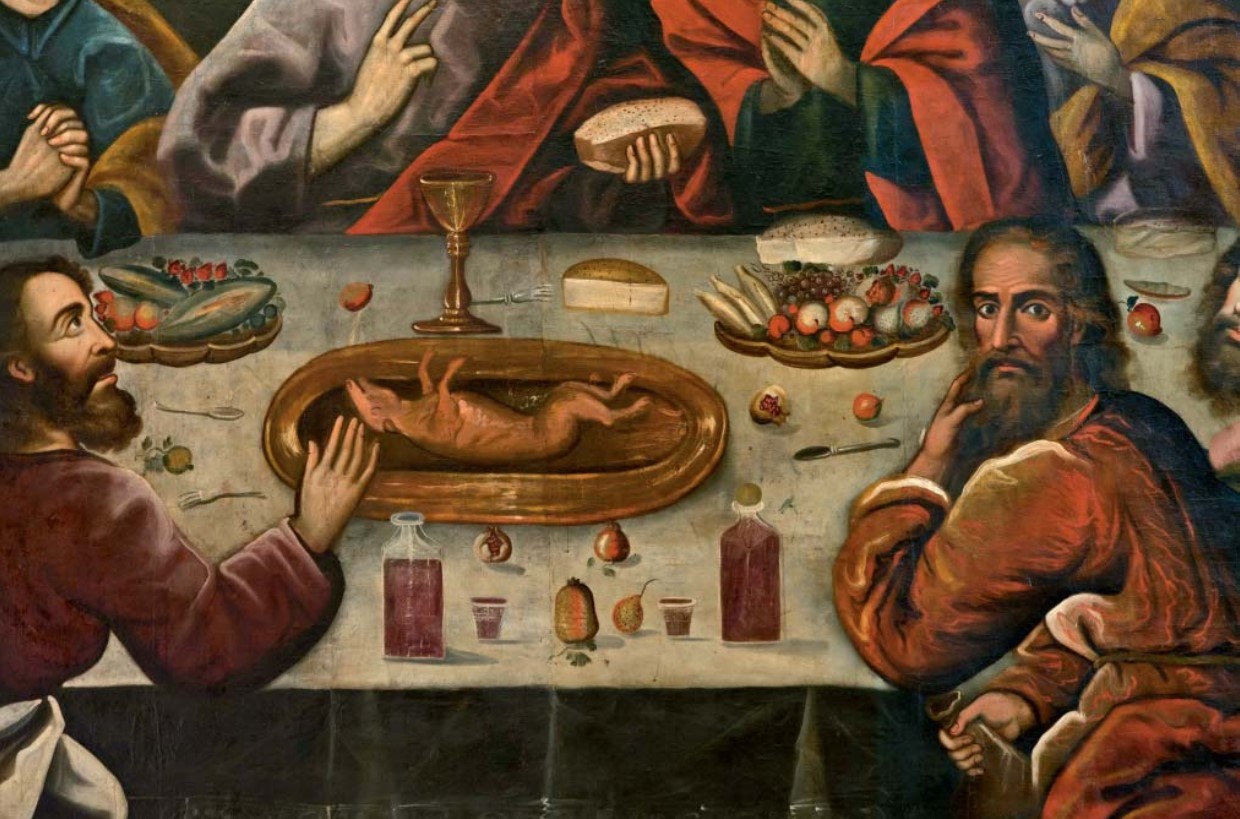
A curious fact is that in the local cathedral, there is a depiction of Jesus Christ with his apostles at the last supper where the main dish is a guinea pig (cuy). This dish is associated with the popular meal eaten by locals, the chiri uchu.
Corpus Christi today
During the nine days of celebration in the city, it attracts thousands of people, even from different provinces or departments of Peru.
The festivities of the images that participate in the procession in the main square last for several days of social activities. Congregations and groups are in charge of organizing the parties for each image. All these activities are not regulated by formal authorities; they are covered by the regulations of the Catholic church.
Many national and foreign visitors who come, for example, for the festival of the sun, are surprised by the prevailing spirit of the devotees.
Corpus Christi is always celebrated on a Thursday in the months of May or June.
A curious note from our beloved Peruvian writer Ricardo Palma in one of his traditions: a bride demands that her suitor marry her since it is time, and he responds that the marriage will be celebrated when Corpus Christi falls on a Friday, meaning never.
Start of Corpus
Images like the Virgin of Bethlehem begin their preparations in advance from December with the Epiphany novena on January 6; until recently, this included the race of the three wise men.
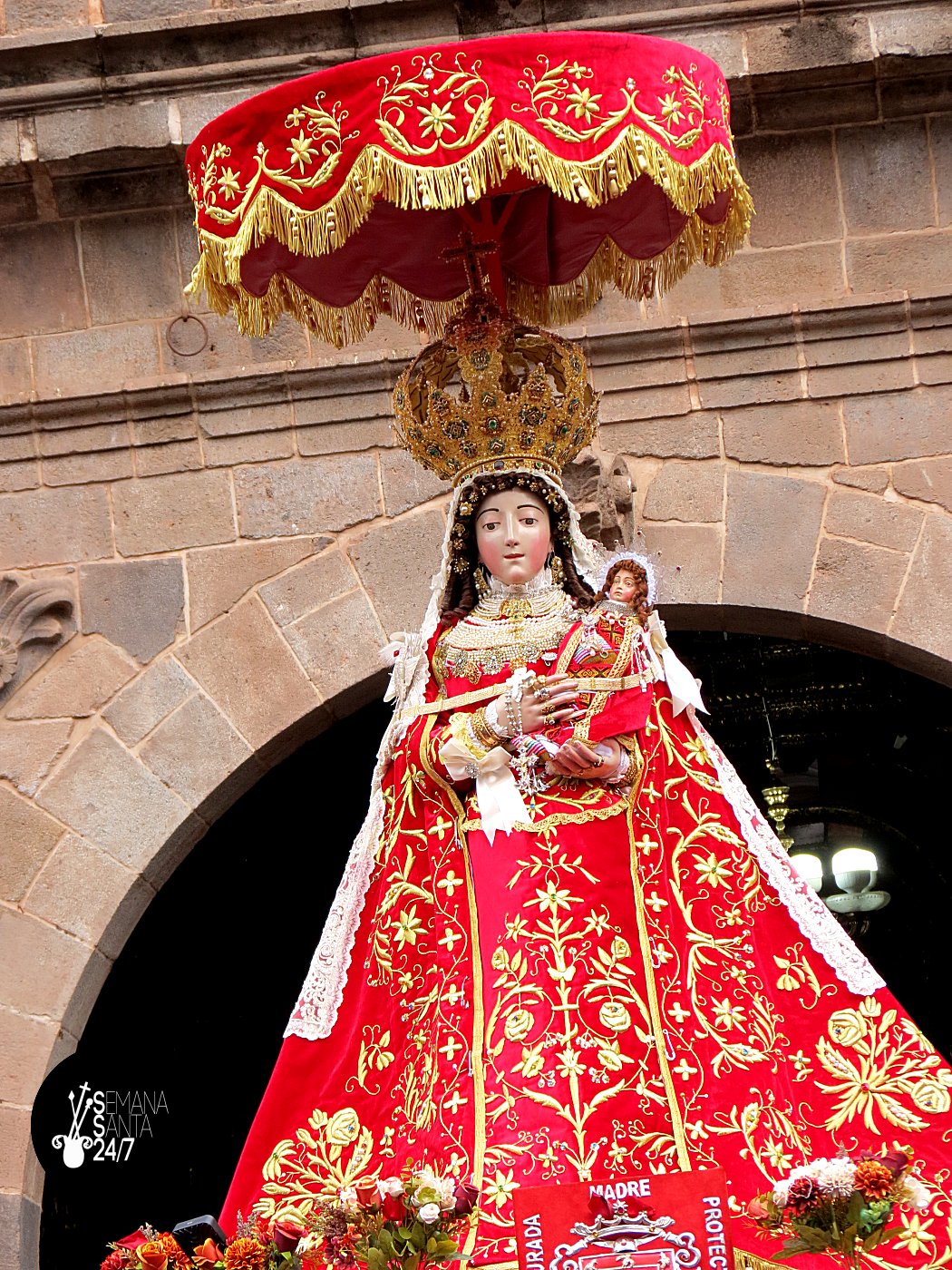
The descent of the Virgin of Belen
On Pentecost Sunday, eleven days before Corpus Thursday, the Virgin of Bethlehem leaves her temple heading to Santa Clara. The descent is the public beginning, where a multitude of the Cusco Corpus is already present. The Virgin of Bethlehem is located in the Santa Clara temple until the Entrance procession on the Wednesday before Corpus.
The descent is the Sunday before Thursday. The virgin leaves her temple surrounded by faithful and devotees accompanied by dancers, who perform local dances. Almost at nightfall, she enters her temple of Santa Clara, where she remains until the Wednesday before Corpus; during her stay, masses are offered where her devotees go to pray.
Huñunakuy and the entrance
In local Quechua, Huñunakuy means gathering of people for matters of common interest, from a political riot to simply eating or drinking. It is also the gathering of the images of saints and virgins in the pampa that today is Santa Clara avenue, as a concentration point for the images that will head to the cathedral.
This route is known as "The Entrance". On the Wednesday eve of Corpus day, the participating images in the grand procession gather in the Santa Clara pampa in front of the temple of the same name; from there is where they leave towards the cathedral.
Participating saints in the procession:
San Antonio Abad
He is the first to enter the Cathedral. It is said that he is "in charge" of clearing the way. His image always carries a small pig at his feet, which locally has generated popular anecdotes about his protection of farm animals.
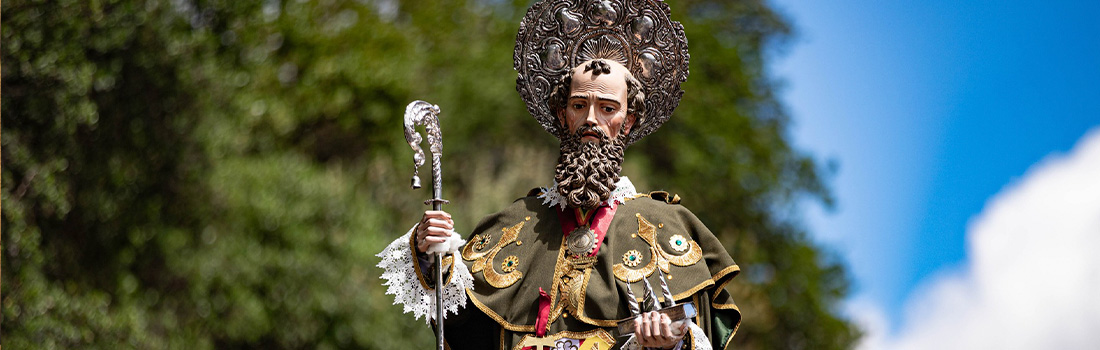
San Jerónimo and San Sebastián (The Rivals)
These two saints star in one of the most vivid traditions:
San Jerónimo: Comes from the homonymous district. He is known as "the doctor" for the book he carries (the Vulgate).
San Sebastián: He is a young martyr, represented with arrows in his body.
The competition: There is a historical rivalry to see which parish arrives first to the city from their respective districts, which are at opposite ends of the valley.
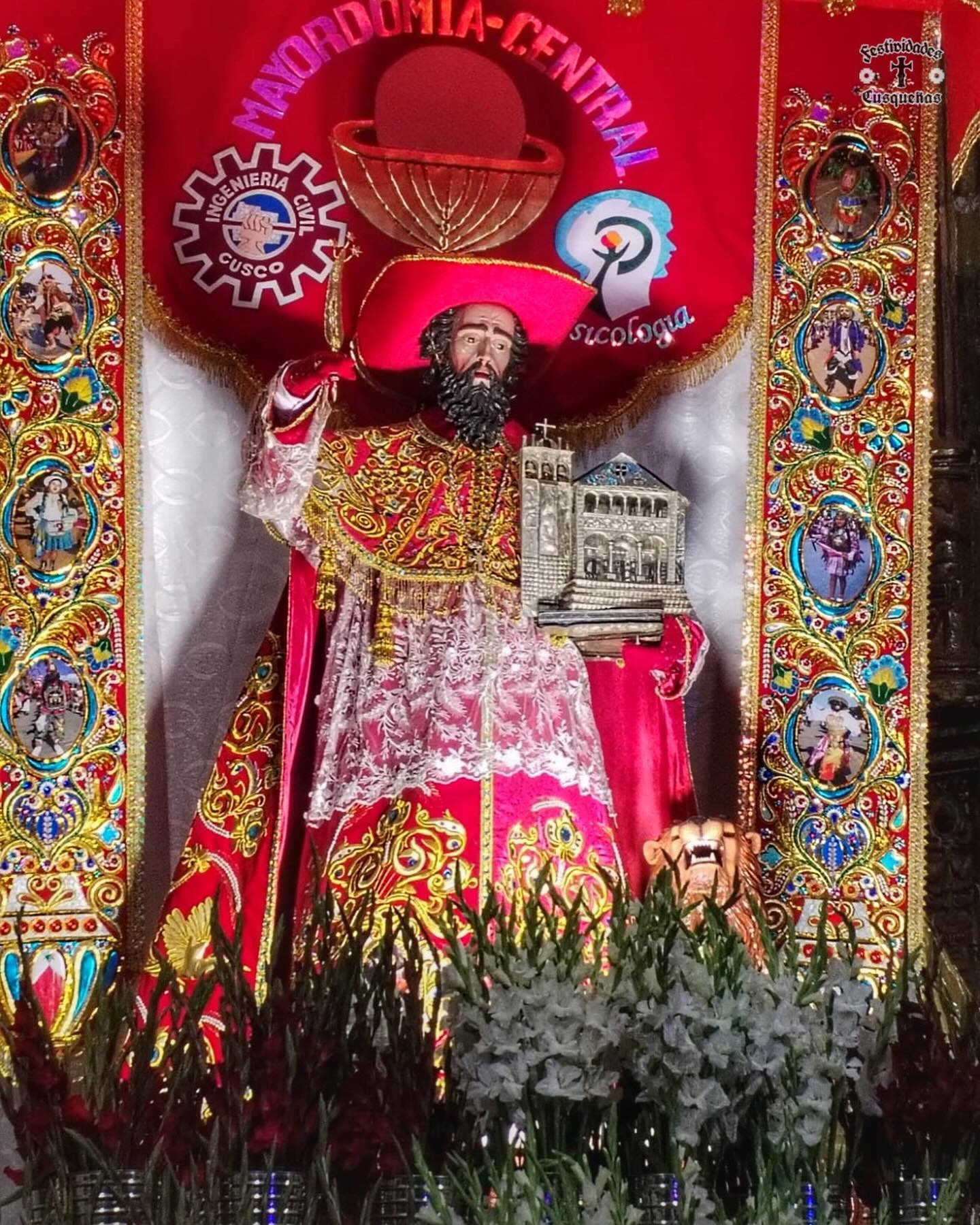
San Cristóbal (The Giant)
He is the patron of the parish that dominates the city from the heights. His image is imposing and heavy, representing the giant who carried the child Jesus to cross a river. In local tradition, he is associated with the strength of the ancient Inca carriers.
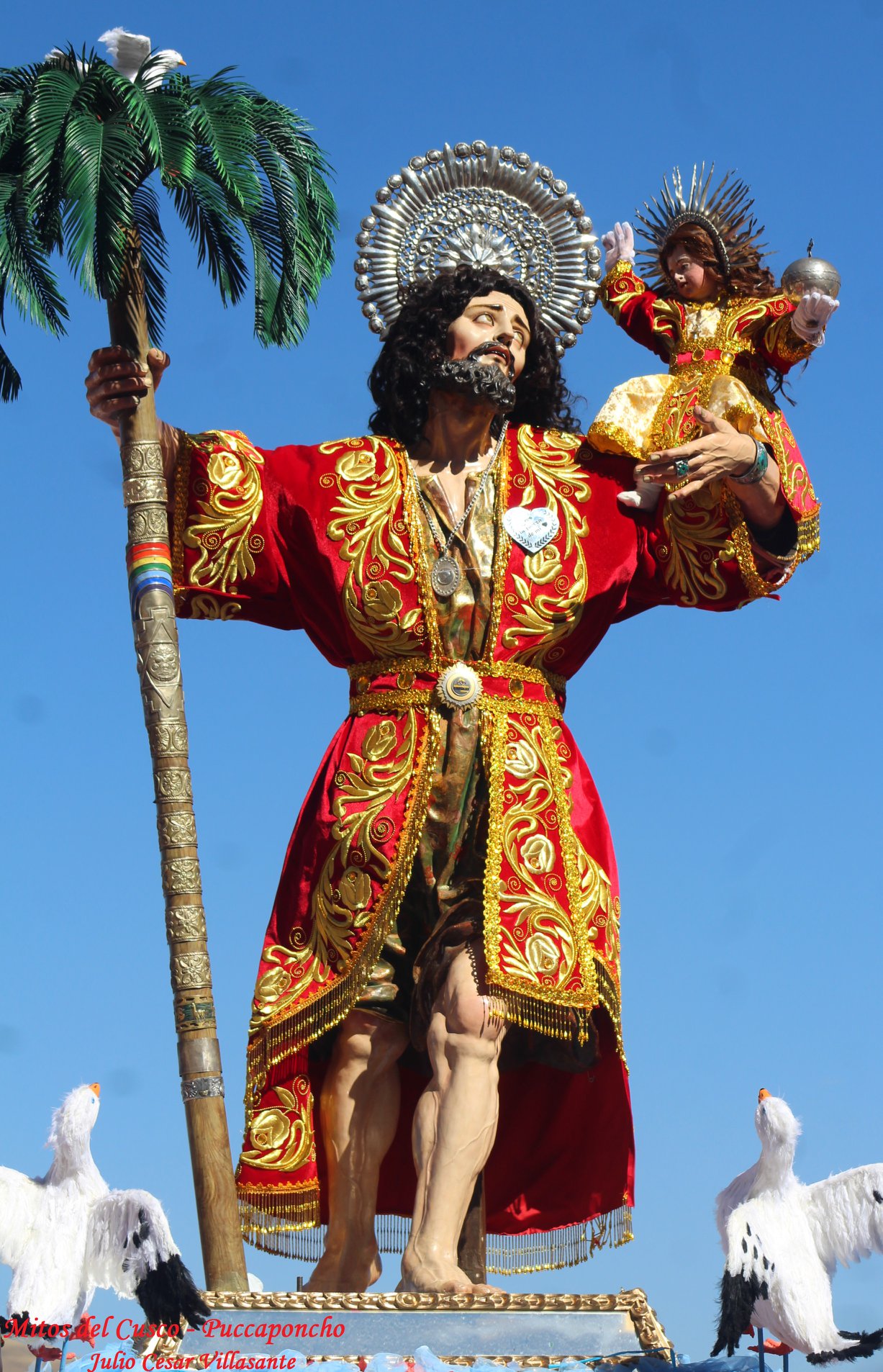
San Blas (The Patron of Artisans)
Coming from the famous artisan neighborhood, his image is very detailed. It is said that he is an "elegant" saint and protector of those who work with their hands. His litter is one of the most beautiful and worked.
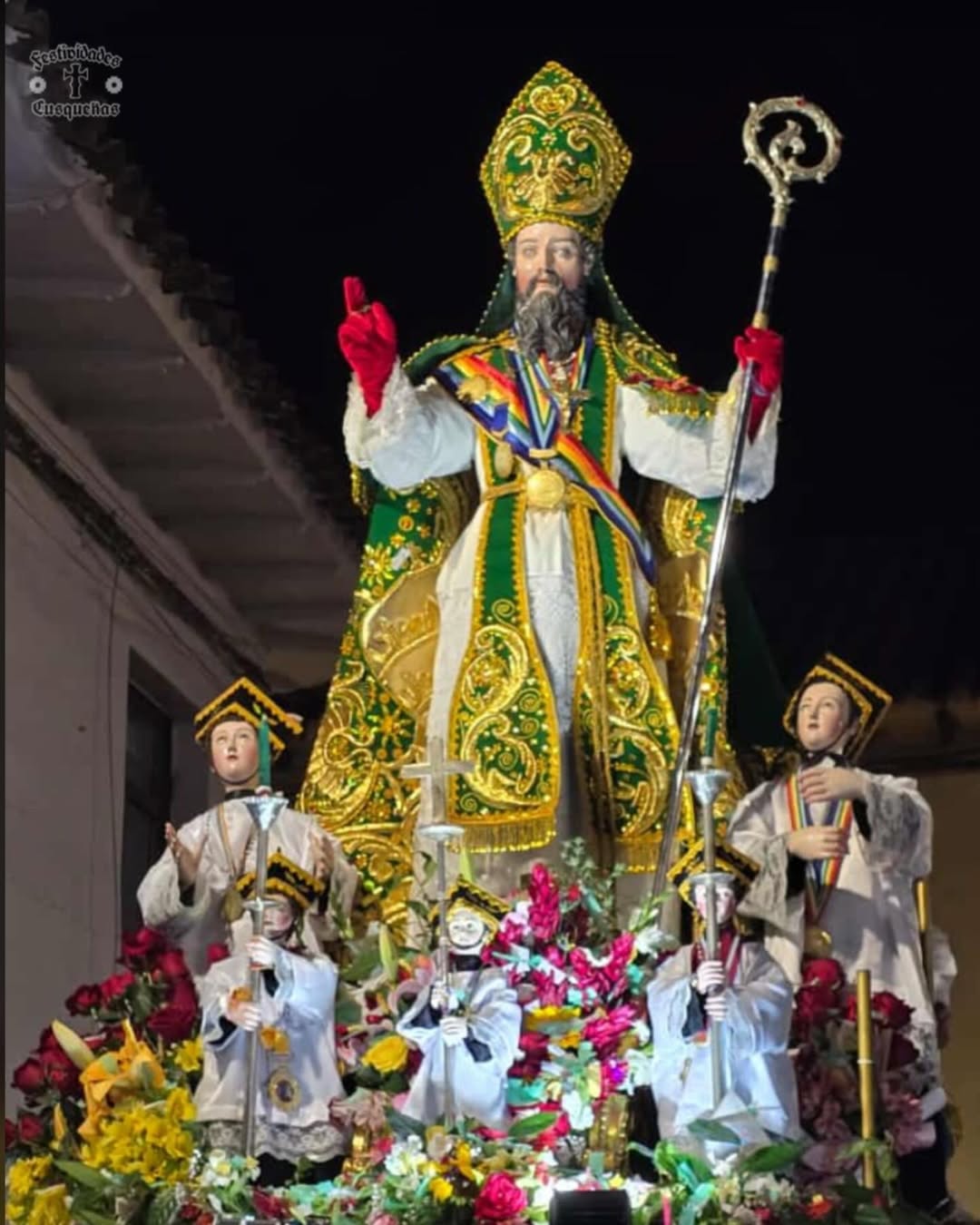
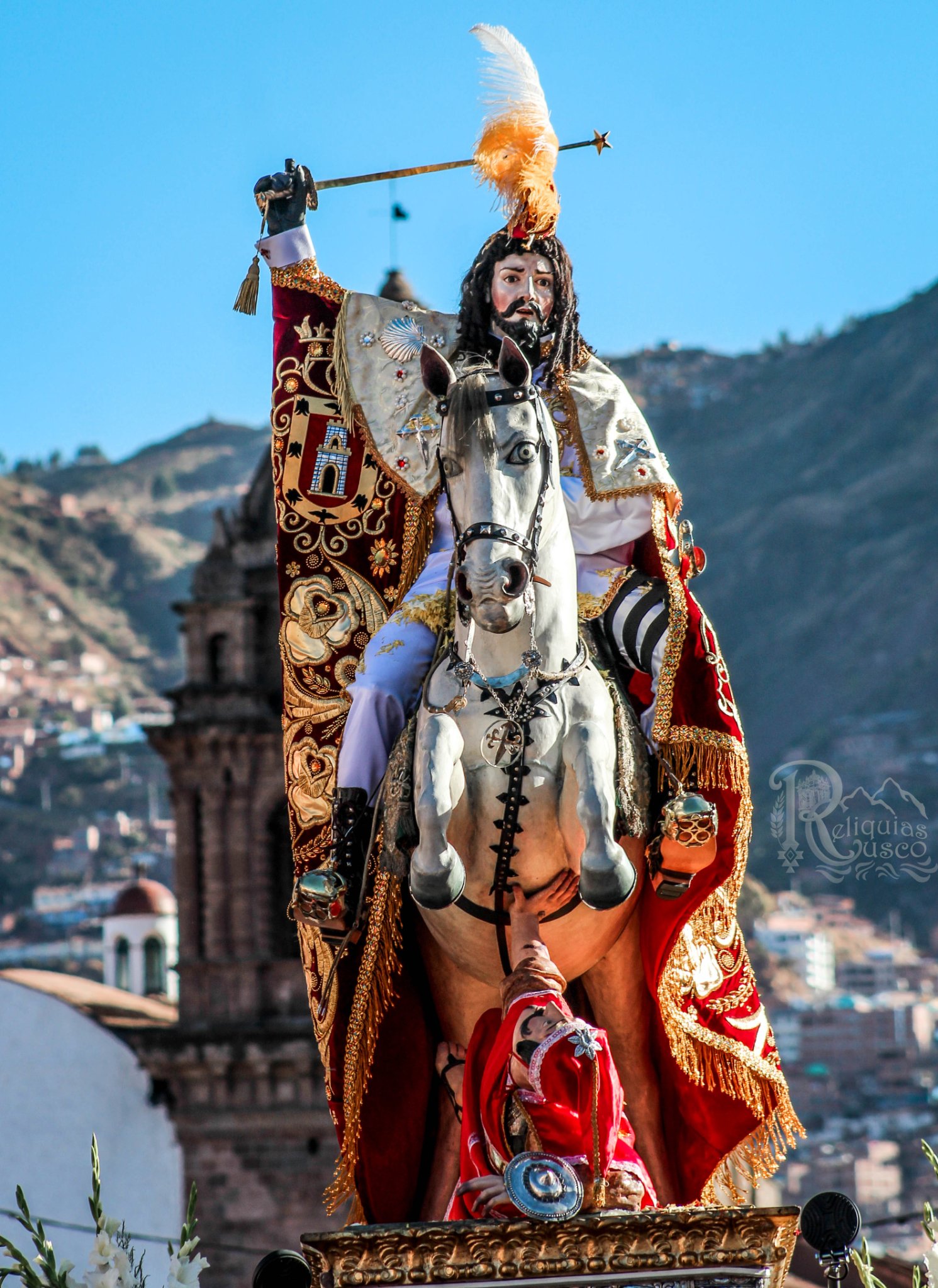
Santiago Apóstol (The "Matamoros" turned into "Illapa")
During the colony, Santiago was used to replace Illapa (the god of lightning and thunder). His image on horseback, with his sword held high, resonated with the Andean vision of the roar and power of the sky.
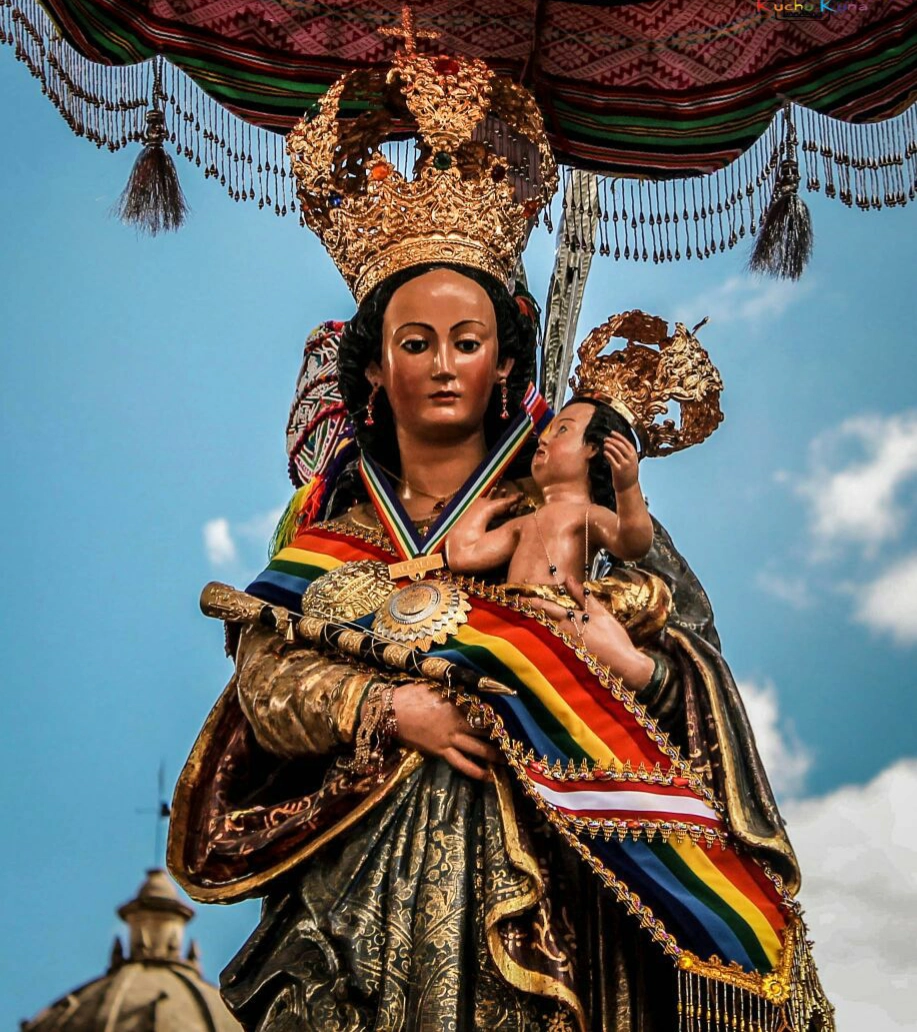
The Virgin of Belen (The "Patroness of Cusco")
She is one of the most beloved images. According to legend, her image was found floating in a box in the sea of Callao with a note that said "For the city of Cusco". She is known for her expensive jewels and serene face.
The Virgin of the Almudena (The "Nativity")
She has a history closely linked to local identity; she was ordered to be carved by Bishop Mollinedo and reflects the art of the local school. It is said that she is the "mother" who cares for the sick and defenseless.
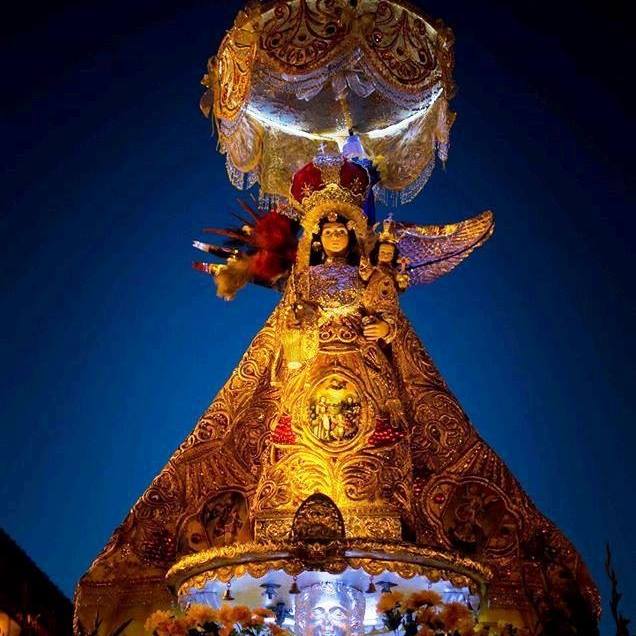
The Virgin of the Purified (The "Candelaria")
She comes out of the San Pedro church and is linked to the market merchants. She carries two turtledoves in her hand, symbolizing Mary's purification after childbirth.
What to Expect at the Cathedral Entrance
If you are wondering about the exact time the saints enter the Basilica Cathedral of Cusco... well, honestly, it is almost impossible to give a strict minute-by-minute schedule! The celebration is a massive, beautiful chaos. Every group moves at its own pace, but there is one rule they never break, and that is the strict order of arrival at the main doors of the Cathedral in the Plaza de Armas.
Schedule of activities for the saints on Corpus Christi
Midday (12.00 PM – 3.00 PM) The Journey Begins
The 15 saints and virgins start leaving their own parishes. Some have a really long walk ahead, like San Jerónimo and San Sebastián, so they hit the road early. You will start hearing the brass bands playing from far away.
Late Afternoon (3.00 PM – 5.00 PM) The Big Meetup
Everyone starts gathering around Plaza San Francisco and the Santa Clara Arch. This is where the real party vibe kicks in. There are bands everywhere, traditional dancers, and the devotees sweating to carry those incredibly heavy wooden litters.
Heading to the Cathedral (4.00 PM – 6.00 PM) The Strict Lineup
This is where they start moving into the Plaza de Armas to finally enter the Cusco Cathedral. The funny thing is, even if a saint arrives super early, they cannot just go in. They have to wait for their turn in this specific historic order.
Order of entry of the saints into the Cusco Cathedral
- San Antonio Abad always opens the path, carrying his little pig statue at his feet.
- San Jerónimo is next, known as the doctor of the church.
- San Cristóbal enters carrying the baby Jesus.
- San Sebastián follows as the young martyr.
- Santa Bárbara represents the protector against lightning.
- Santa Ana is the grandmother of Jesus.
- Santiago Apóstol arrives riding his horse.
- San Blas is the patron of the artisans.
- San Pedro comes carrying the keys to heaven.
- San José is the earthly father of Jesus.
- Virgen de la Natividad comes all the way from the Almudena temple.
- Virgen de los Remedios arrives from Santa Catalina.
- Virgen Purificada carries her two little birds.
- Virgen de Belén is the beloved "Mamacha Belén", wearing her finest jewels.
- Virgen de la Inmaculada Concepción is known affectionately as "La Linda", and she officially closes the parade.
Nighttime at the Cathedral
Once the last virgin makes it inside, the huge main doors of the Cusco Cathedral are shut. There is an old Andean story that says once the doors close, the saints spend the night talking to each other, debating about how the people have behaved this year.
Frequently Asked Questions About the Corpus Christi Festival in Cusco, Peru
How can I book tickets for Corpus Christi celebrations in Cusco online?
You don't actually need to book tickets for the main Corpus Christi celebrations because the parades and festivities in the Plaza de Armas are totally free and open to the public! If you want a balcony seat at a restaurant, you'd have to message the restaurants directly.
What hotels near the Corpus Christi parade route in Cusco have good reviews?
Hotels located right on the Plaza de Armas or along the streets of Santa Clara and San Pedro generally have great reviews for watching the parade. You'll want to check booking sites for the latest ratings, but anything near the main square puts you right in the action.
Are there any shuttle services from Cusco airport to Corpus Christi festival sites?
There aren't really official shuttle buses that go directly from the airport to the festival sites, but you can easily grab a registered taxi right outside the baggage claim. The ride to the historic center where the festival happens only takes about 15-20 minutes.
What local cuisine and food vendors should I try during Corpus Christi in Cusco?
You definitely have to try "Chiri Uchu," which is the traditional cold dish served specifically for Corpus Christi! You'll see tons of vendors selling it around the Plaza San Francisco, and it's a crazy mix of guinea pig, chicken, cheese, and corn.
Can I rent traditional clothing for Corpus Christi events in Cusco?
I'm not entirely sure if tourists usually rent the traditional clothing for the festival itself, since it's mostly the local dance groups who wear them. However, there are photo studios near the main square where you can dress up in traditional Andean clothes for a quick photoshoot.
Are there any mobile apps that offer maps and schedules for Corpus Christi in Cusco?
I don't think there's a dedicated app just for Corpus Christi, but checking the local municipality's Facebook page is usually the quickest way to get the schedule. For maps, downloading the offline version of Google Maps for Cusco is a lifesaver.
What are the top souvenir shops near Corpus Christi festival locations in Cusco?
The San Pedro Market and the artisan markets in the San Blas neighborhood are fantastic places to find souvenirs. You can find all sorts of alpaca sweaters, textiles, and ceramics there.
Where can I find photography tours or services for Corpus Christi in Cusco?
You can usually find freelance photographers or specialized photo tours by searching on Airbnb Experiences or Instagram using Cusco related hashtags. It's a colorful festival, so having someone show you the top spots to shoot is a great idea before taking your camera up to Machu Picchu.