
 en
en


The Short Inca Trail (also called the 2 Day Inca Trail) is a 12 km, two-day trek from KM 104 to Machu Picchu that ends with a walk-in arrival through the Sun Gate (Inti Punku) - a shorter alternative to the classic 4-day Inca Trail. It's a great choice for travelers who want to enjoy the Inca Trail and reach Machu Picchu through the Sun Gate but don't have time for the full 4-day trek. Along the way, you'll see breathtaking Andes views, visit ancient Inca sites, walk through cloud forests, and experience one of the most memorable ways to arrive at Machu Picchu, all in one unforgettable two-day adventure.
This route, also called the 2 day Inca Trail hike, is perfect for travelers looking for both adventure and comfort. It is easier to access than the classic 4-day trek, but still gives you a real hiking experience and the chance to see amazing archaeological sites like Wiñay Wayna.
A major highlight of this trek is arriving at Machu Picchu on foot through Inti Punku, the Sun Gate. From here, you get your first wide view of the citadel from above. This experience makes the short Inca Trail truly memorable.
This guide includes everything you need to plan your Short Inca Trail adventure, with a detailed itinerary, trail difficulty, a complete packing list, best time to visit, costs, permits, maps, and expert tips to help you make the most of your experience.
Short Inca Trail Quick Facts
- Duration: The Short Inca Trail is a 2 days / 1 Night trip. Hike on day one and visit Machu Picchu on day two.
- Distance: 12 km ( 7 miles), all covered on the first day.
- Difficulty: Moderate, with 6–7 hours of hiking on day one and a 2-hour guided tour of Machu Picchu on day two.
- Route: Begin at Km 104, pass through Chachabamba and Wiñay Wayna, then continue to the Sun Gate for your first view of Machu Picchu.
- Permits: Only 250 permits are available each day for the Short Inca Trail, and they frequently sell out months in advance.
- Altitude: The highest point on the Short Inca Trail is 2,720 m (8,923 ft) at Intipunku, also known as the Sun Gate.
- Best Time to visit: The optimal time to visit is from April to October, when dry weather and clear skies provide ideal hiking conditions.
- Closed Period: Closed every February for annual maintenance.
What is the Short Inca Trail?
The Short Inca Trail is a two day version of the well-known Inca Trail to Machu Picchu. It’s made for travelers who want to see the main highlights of this ancient route but have less time. Even though it’s shorter than the classic four-day trek, you still walk on part of the original Inca road and get a real hiking experience in the Andes.
This route brings together history, nature, and adventure in a shorter trip, which is why it’s so popular with visitors to Peru. On the way, you’ll walk on original stone paths, go through cloud forests, and visit impressive archaeological sites before arriving at Machu Picchu.
Unlike other ways to reach Machu Picchu, the short Inca Trail lets you arrive on foot through the Sun Gate (Inti Punku). This gives you a unique, panoramic first view of the citadel, which many people say is the best part of the whole trip.
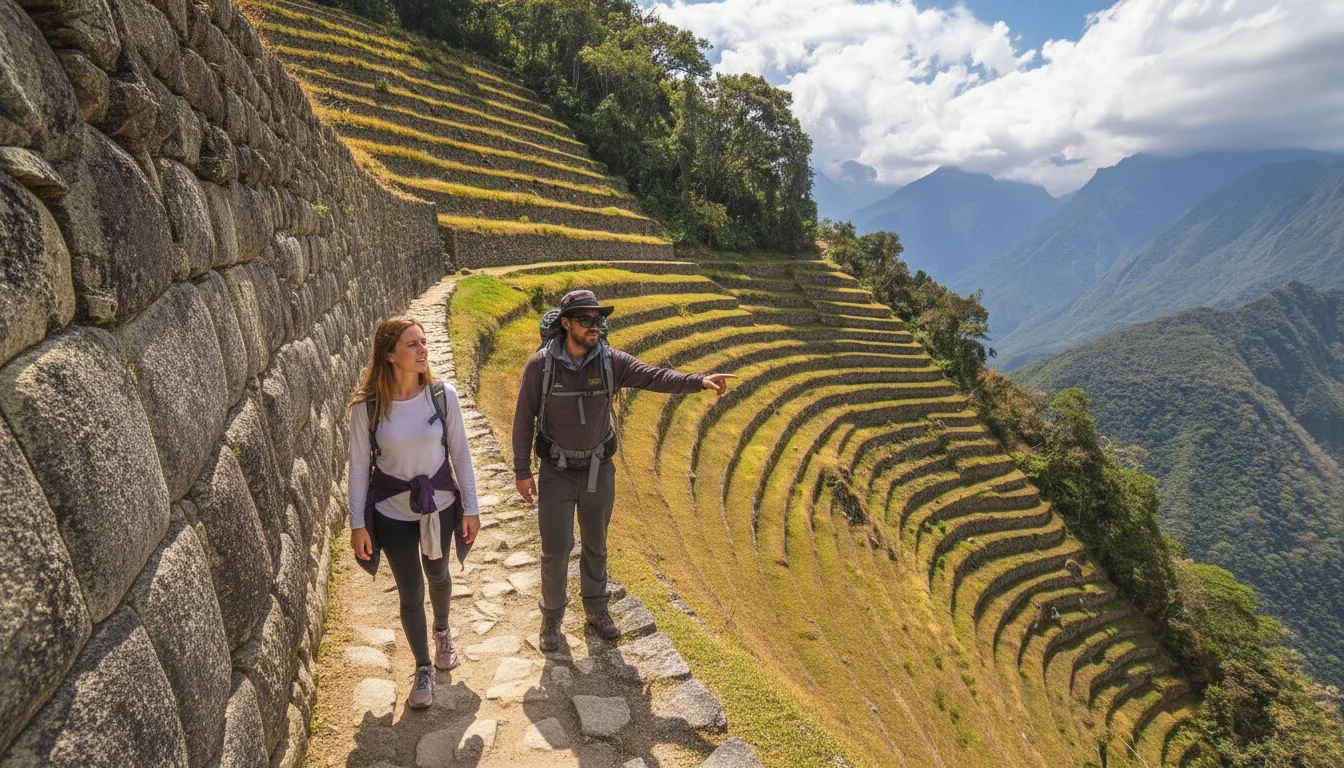
What Does “Short Inca Trail” Mean?
The “Short Inca Trail” is a shorter version of the traditional Inca Trail, which usually takes four days. Instead of camping for 03 nights, you hike for one day and then have a guided visit to Machu Picchu on the second day.
Even though it’s a shorter trip, you still get to see many of the best parts of the full trek, like Inca ruins, mountain views, and the famous entrance through the Sun Gate.
This makes it a great choice for travelers who don’t have much time but still want a memorable trekking experience.
How Long is the 2 Day Inca Trail?
The two-day Inca Trail Tour covers about 12 kilometers (7 miles), all on the first day. The distance might sound easy, but there’s a steady uphill climb that makes it tougher than it looks.
The hike starts at Km 104, about 2,100 meters (6,890 ft) near the Chachabamba archaeological site. From there, the trail climbs through the cloud forest up to Wiñay Wayna (2,650 meters / 8,690 ft). This uphill section usually takes around three and a half hours at a relaxed pace.
This part is usually the hardest because of the steady climb and the increase in elevation.
After you reach Wiñay Wayna, the trail gets easier and is more moderate. From there, you walk for about two more hours toward the Sun Gate. This part isn’t as tough, but the path is narrower and follows the side of the mountain, with some open areas and steep drops.
In the rainy season, these parts of the trail can be harder because the ground gets slippery and there can be falling rocks. It’s important to be extra careful at this time.
When you reach the Sun Gate (Inti Punku), you’ve finished about 80% of the trail. After that, it’s mostly an easy 45-minute walk down to Machu Picchu, where the hike ends.
Where Does the 2 day Inca Trail start and End?
The 2 day Inca Trail Trek starts at KM 104, a small train stop between Ollantaytambo and Aguas Calientes. To get there, hikers need to take an early morning train with companies such as PeruRail or Inca Rail.
Be ready to get off the train at KM 104, as the stop only lasts a few minutes. If you miss it, you’ll have to continue to Aguas Calientes and will miss the start of the hike.
Once you get off the train, you’ll cross a bridge over the Urubamba River in the Sacred Valley. Right after the bridge, you’ll find the official checkpoint, where park rangers check passports and permits for everyone before letting you start the trail.
From here, the trail climbs gently through cloud forest, passing sites like Wiñay Wayna before heading toward the Sun Gate (Inti Punku).
Arriving at the Sun Gate is a highlight of the trek. Here, you’ll see your first panoramic view of Machu Picchu from above, a sight only Inca Trail hikers get to enjoy.
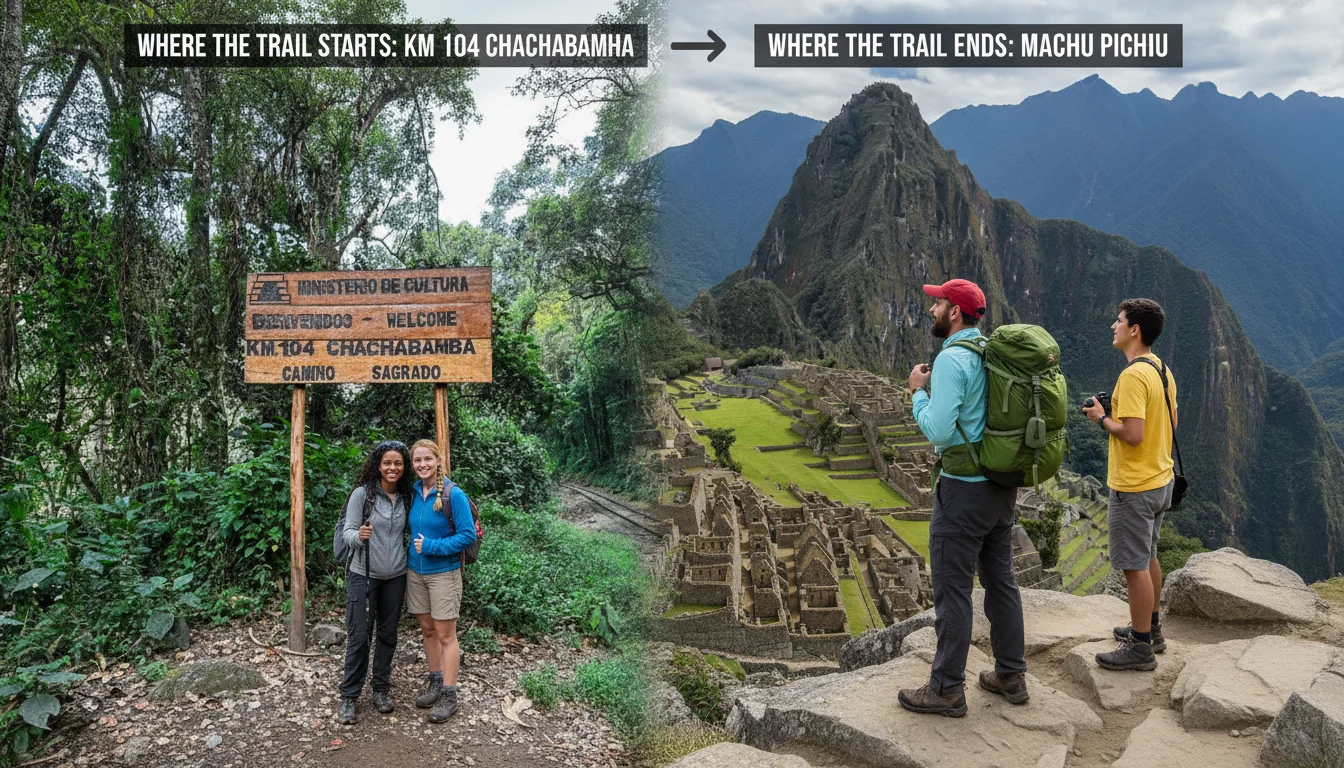
After the Sun Gate, the trail goes down gently for about 45 minutes and leads straight into the upper part of Machu Picchu. This area, called Circuit 1, is where you’ll find the classic views from postcards and travel guides.
You’ll usually have 30 to 45 minutes in this upper section to enjoy the views, take photos, and soak in the moment. This is often your only chance to see Machu Picchu from this angle
Another benefit of the 2 day Inca Trail is arriving in the afternoon, when there are usually fewer people and better light for photos.
After visiting this area, you’ll leave the citadel and take a bus down to Aguas Calientes. Most travelers spend the night there and return the next day for a guided tour of Machu Picchu.
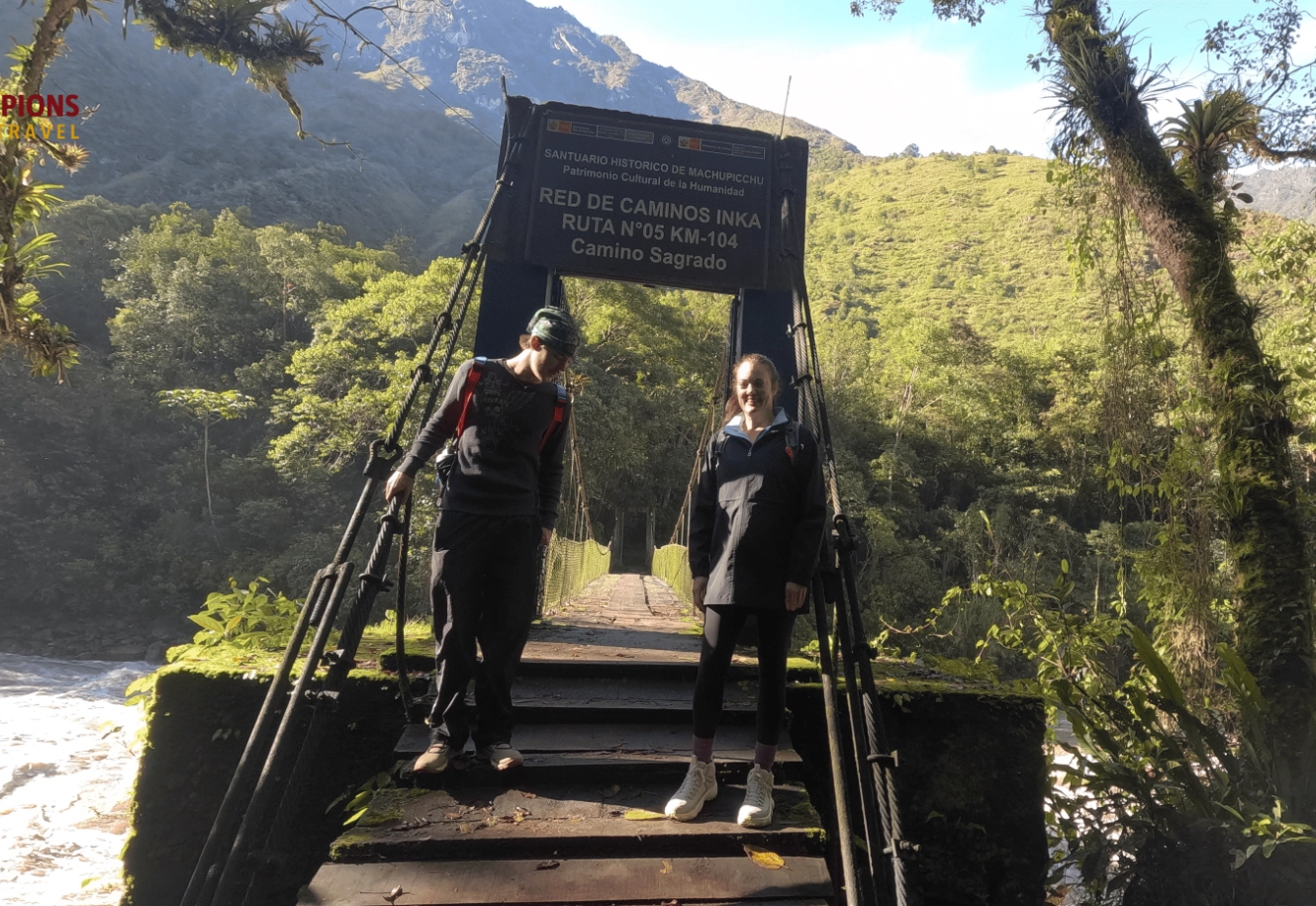
Km 104, Start point of the Short Inca Trail to Machu Picchu
2 Day Inca Trail Itinerary (Day by Day)
The 2 day Inca Trail Hike itinerary condenses the highlights of the classic Inca Trail into a two-day experience. It features hiking, archaeological sites, and a memorable arrival at Machu Picchu through the Sun Gate.
Below is a detailed day-by-day overview of the itinerary.
Day 1: KM 104 to Machu Picchu (Sun Gate Experience)
Day 1 is the most active and rewarding segment of the journey. It begins early with a train ride from Ollantaytambo to KM 104, the official starting point of the hike. Shortly after entering the trail, you will visit Chachabamba, an ancient Inca checkpoint with religious and administrative significance. This site provides valuable historical context for the route. From this point, the trail gradually ascends through cloud forest landscapes. The route includes shaded paths, stone steps, and open viewpoints overlooking the valley.
After approximately 3.5 hours of hiking gradual uphill, you will arrive at Wiñay Wayna, a significant Inca site featuring agricultural terraces, ceremonial areas, and views of the surrounding mountains. Most groups pause here for lunch.
After the break, the trail continues toward the Sun Gate. This section takes about 2 hours and includes narrow paths along the mountainside, with some exposed areas that require caution, particularly during the rainy season.
Arriving at the Sun Gate (Inti Punku) in the afternoon offers a unique experience. Unlike most visitors who arrive by bus, you will enter Machu Picchu on foot, enjoying panoramic views of the citadel from above.
After enjoying the views, you will descend for about 45 minutes into Machu Picchu, reaching the upper section (Circuit 1), where you can appreciate the scenery and take photos.
The day concludes with a bus ride to Aguas Calientes, where you will spend the night in a hotel.
Highlights of Day 1
- Hiking on original Inca stone paths
- Visiting Chachabamba and Wiñay Wayna ruins
- Walking through cloud forest landscapes
- First panoramic view of Machu Picchu from the Sun Gate
- Arrival at Machu Picchu on foot (unique experience)
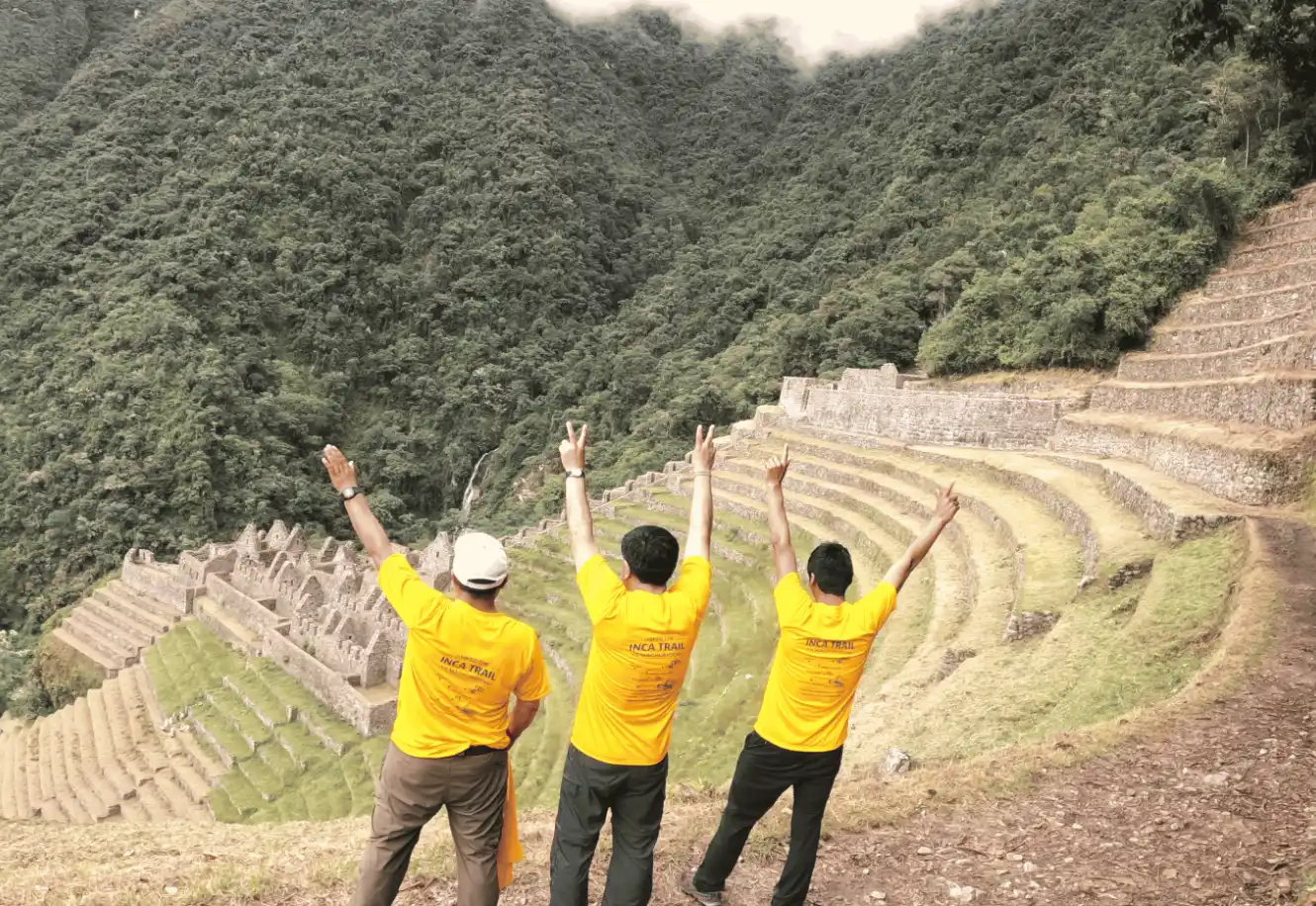
Wiñayhuayna ( forever young) a main Inca site on day 1 of the Short Inca trail
Day 2: Guided Tour of Machu Picchu and return to Cusco
Day 2 is dedicated to an in-depth exploration of Machu Picchu, providing insight into its history, architecture, and significance.
The day begins early in Aguas Calientes, with breakfast followed by a walk to the bus station. The first buses to Machu Picchu depart in the morning, and the ride takes about 30 minutes up the mountain.
Booking the 2 Day Inca Trail typically includes a Machu Picchu entrance ticket for Circuit 3, in accordance with official regulations. This ticket allows entry between 6:00 AM and 3:00 PM, with most groups arriving early, around 6:00 or 7:00 AM.
During the dry season, early visits provide an excellent opportunity to see the sunrise over Machu Picchu, typically around 7:00 AM. This is a memorable experience.
Entry & Guided Tour Experience
At the entrance, park rangers will verify your passport and entry ticket. Your guided tour begins once you enter the citadel.
Your guide will lead you through Circuit 3, covering the central and lower sections of Machu Picchu. Along the route, you will visit several significant structures, including:
- The Temple of the Sun
- The House of the Inca
- Water fountains and ceremonial channels
- The Three Doorways (Tres Portadas)
- The Sacred Rock
- The Temple of the Condor
- Agricultural terraces in the lower sector
The guided tour is paced to allow time for listening, learning, and taking photos or videos. It typically lasts 2.5 to 3 hours.
Optional: Huayna Picchu Hike
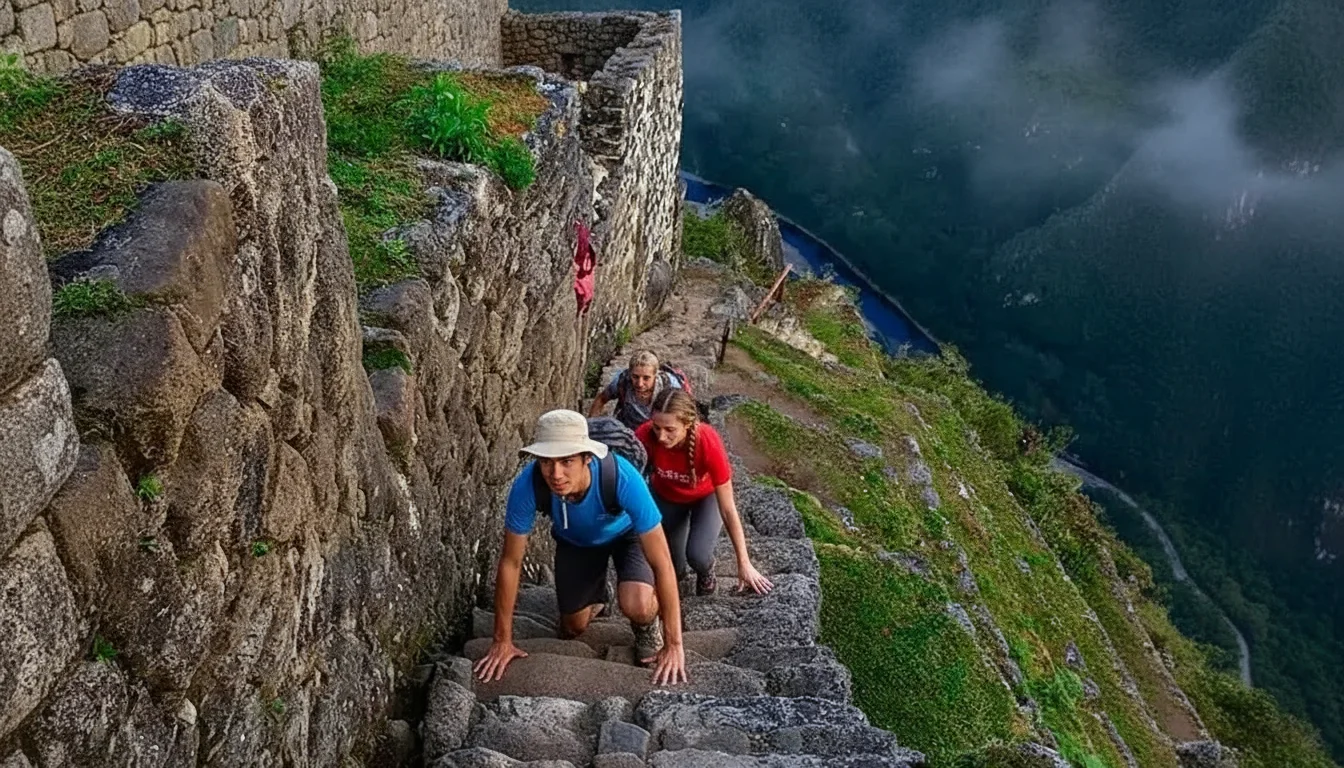
Some travelers choose to add a hike to Huayna Picchu, the iconic mountain behind Machu Picchu.
If you plan to hike Huayna Picchu, you must book a separate ticket in advance, typically with a 10:00 AM entry. The round-trip hike takes about 2 hours and offers exceptional views of the citadel.
Return to Aguas Calientes & Cusco
After your guided tour and optional hike, you will exit the citadel and board a bus back to Aguas Calientes. Consettur operates buses continuously from just outside the entrance.
From Aguas Calientes, you will board a return train to Ollantaytambo. Most tour packages include train tickets, with options such as Expedition or Vistadome, operated by PeruRail or Inca Rail.
Multiple afternoon departure times are available, generally from 1:30 PM to 7:00 PM, providing flexibility for your schedule.
The train journey to Ollantaytambo takes about 2 hours, where a private transfer will take you back to Cusco. The drive from Ollantaytambo to Cusco is approximately 1.5 hours, concluding your Short Inca Trail.
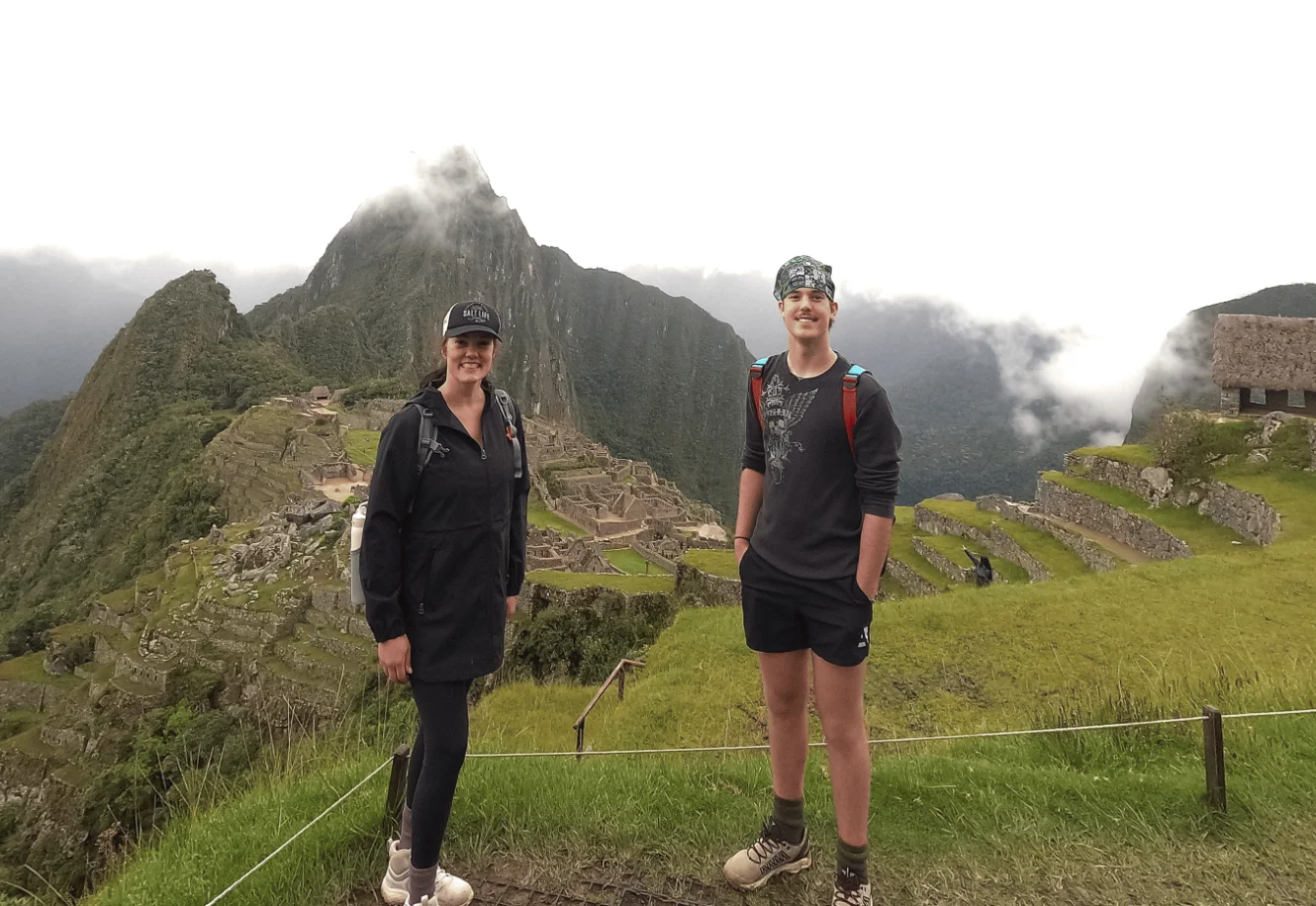
Machu Picchu panoramic views from Circuit 1 - Short Inca trail hikers have this amazing views on day 1 afternoon.
Short Inca Trail Difficulty: Is the Hike Hard?
The 2 day Inca Trail is a moderate hike, but it stands out because it is much more accessible than other treks in Peru. Unlike the classic 4-day Inca Trail or the high-altitude Salkantay route, this trail is at a lower elevation and climbs more gradually. This makes it possible for many different types of travelers to enjoy.
The real challenge of this trek comes from the elevation gain and the terrain in the first part of the trail, not the distance.
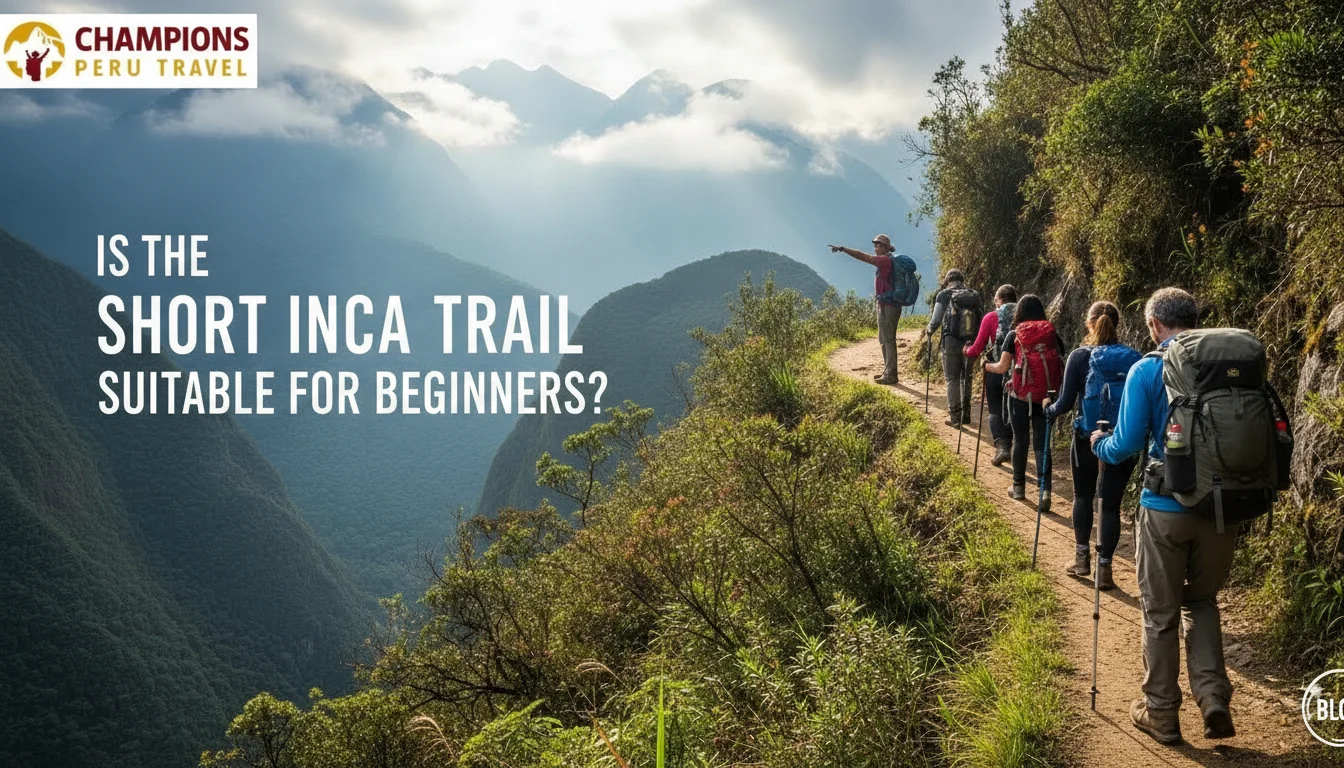
The Most Challenging Section: KM 104 to Wiñay Wayna
The hardest part of the hike starts at KM 104 (2,100 meters or 6,890 feet) and goes up to Wiñay Wayna (2,650 meters or 8,690 feet).
In this section, you will climb about 550 meters (1,800 feet), which is why it is the most physically challenging part of the trek.
The trail goes up gradually through the cloud forest, with some uphill sections and zigzag paths that make it less steep. The incline stays steady but is not too hard, so most people can finish this part at a comfortable pace.
On average, this section takes about three and a half hours, depending on your pace and how many breaks you take.
After Wiñay Wayna: The Easier Section
After you reach Wiñay Wayna, the hardest part is over. From there, the hike gets much easier and more enjoyable.
The trail to the Sun Gate has gentler paths and fewer steep climbs. There are still some narrow spots along the mountainside, but it takes much less effort.
One big difference from the classic 4-day Inca Trail is that there are fewer stone steps. This makes the hike easier on your knees and more accessible for most people.
Why It feels easier than Other Treks
One big advantage of the 2 day Inca Trail is that it is at a lower altitude than many other popular hikes in Peru.
Many treks go above 4,000 meters, but the 2 day Inca Trail stays below 2,700 meters (8,860 feet). This means you feel the effects of altitude less and it is easier to breathe while hiking.
This part of the trail is also in the cloud forest, which is a semi-jungle area. The climate here is usually warmer, greener, and more humid than in the high Andes, making it more comfortable.
All of these factors make the hike feel easier and more enjoyable overall.
Success Rate and Accessibility
From real trekking experience, nearly everyone who tries the 2 day short Inca Trail finishes it. That’s a big reason why it’s seen as a top choice for:
- Beginners with no prior trekking experience
- Families traveling together
- Older travelers looking for a manageable adventure
- Anyone with limited time but a strong interest in hiking
It’s very uncommon for hikers to have to turn back on this trail, unlike on tougher routes.
Is the 2 day Inca Trail tour Suitable for Beginners?
Yes, the 2 day Inca Trail tour is a great choice in Peru for beginners. Its shorter distance, moderate altitude, and well-paced schedule make it easy for people with little or no hiking experience.
Unlike tougher treks, you don’t need to camp or spend several days hiking on this route. Most of the challenge is in the first few hours, and after that, the trail gets much easier.
If you have a basic level of fitness and prepare a little, most beginners can finish this hike and really enjoy it.
Altitude and Acclimatization
Even though the Short 2 day inca trail is lower than many other treks in Peru, it’s still important to get used to the altitude.
The trail sits between 2,100 and 2,650 meters, which is a moderate altitude. This lowers the risk of altitude sickness, but some people might still feel mild symptoms.
To make your hike more comfortable, it’s a good idea to spend 2 or 3 days in Cusco or the Sacred Valley before you start. This gives your body time to adjust and helps you enjoy the trek without extra discomfort.
Final Difficulty Assessment
Overall, the two-day Inca Trail hike is best described as:
- Difficulty level: Moderate
- Main challenge: First 3.5 hours (uphill section)
- Altitude impact: Low to moderate
- Accessibility: Suitable for most travelers
If you pace yourself, pack light, and prepare a little, this hike is not just doable but also a lot of fun.
What to Pack for the 2-day Inca Trail hike
Packing appropriately for the 2 day Inca Trail hike ensures a comfortable and enjoyable hike, avoid heavy gear and focus on essential items.
The key is to pack light, pack smart, and prepare for changing weather conditions.
Below is a comprehensive packing guide informed by real trekking experience.
Travel Documents & Essentials
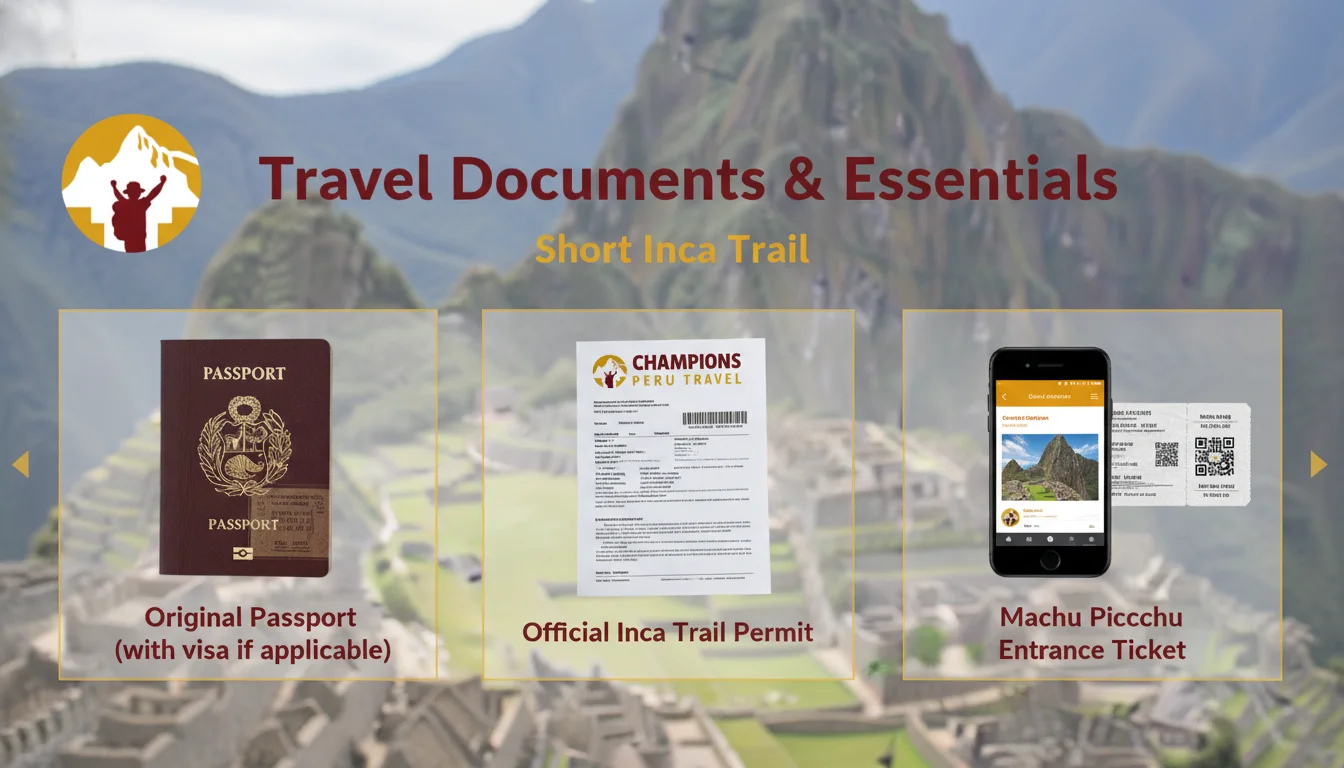
Documents are the most critical items to pack for the 2 day hike. Without the correct documents, hikers will not be permitted to begin the trail or enter Machu Picchu. Keep all documents organized, protected, and easily accessible throughout your journey.
Essential Documents Checklist
• Original passport
• Machu Picchu ticket
• Inca Trail permit
• Travel insurance
• Cash (Peruvian soles)
Passport: This is mandatory. It will be checked at KM 104 and again at Machu Picchu. I have seen travelers delayed or stressed because they did not have it ready. Always keep your passport accessible and protected.
Machu Picchu Ticket: Your entry ticket is linked to your passport details. Even if your agency manages it, keep a digital or printed copy for peace of mind.
Inca Trail Permit: This permit grants access to the trail and is strictly controlled. Your guide will manage it, but it is important to understand its significance.
Travel Insurance: While not mandatory, travel insurance is highly recommended. It provides additional security in case of unexpected events such as cancellations or minor injuries.
Cash (Peruvian soles): Cash is useful for small expenses in Aguas Calientes, tips, or snacks. Travelers consistently appreciate having cash available.
Health & Personal Care
Attention to health and personal care details can significantly enhance your hiking experience. Although the Short Inca Trail is moderate and accessible, sun exposure, insects, and extended walking may reduce comfort if you are unprepared.
Pack a small personal care kit with essential, lightweight items to maintain comfort during your hike, such as:
Health Essentials Checklist
- Personal medications
- Sunscreen (SPF 50+)
- Insect repellent
- Basic first aid kit
- Blister care (band-aids or pads)
- Hand sanitizer
- Wet wipes or toilet paper
Clothing (Layering System)
Do not underestimate the weather on the 2 day Inca Trail trek. Conditions can change quickly, shifting from warm and sunny to cool and rainy within hours.
A layering system is recommended, as it allows you to adapt easily throughout the hike.
Clothing Checklist
Upper Body:
- Breathable t-shirt
- Long-sleeve shirt
- Fleece or warm layer
- Waterproof jacket or rain poncho
Lower Body:
- Lightweight hiking pants
- Optional shorts
Accessories:
- Hat or cap
- Beanie (for early morning)
- Sunglasses
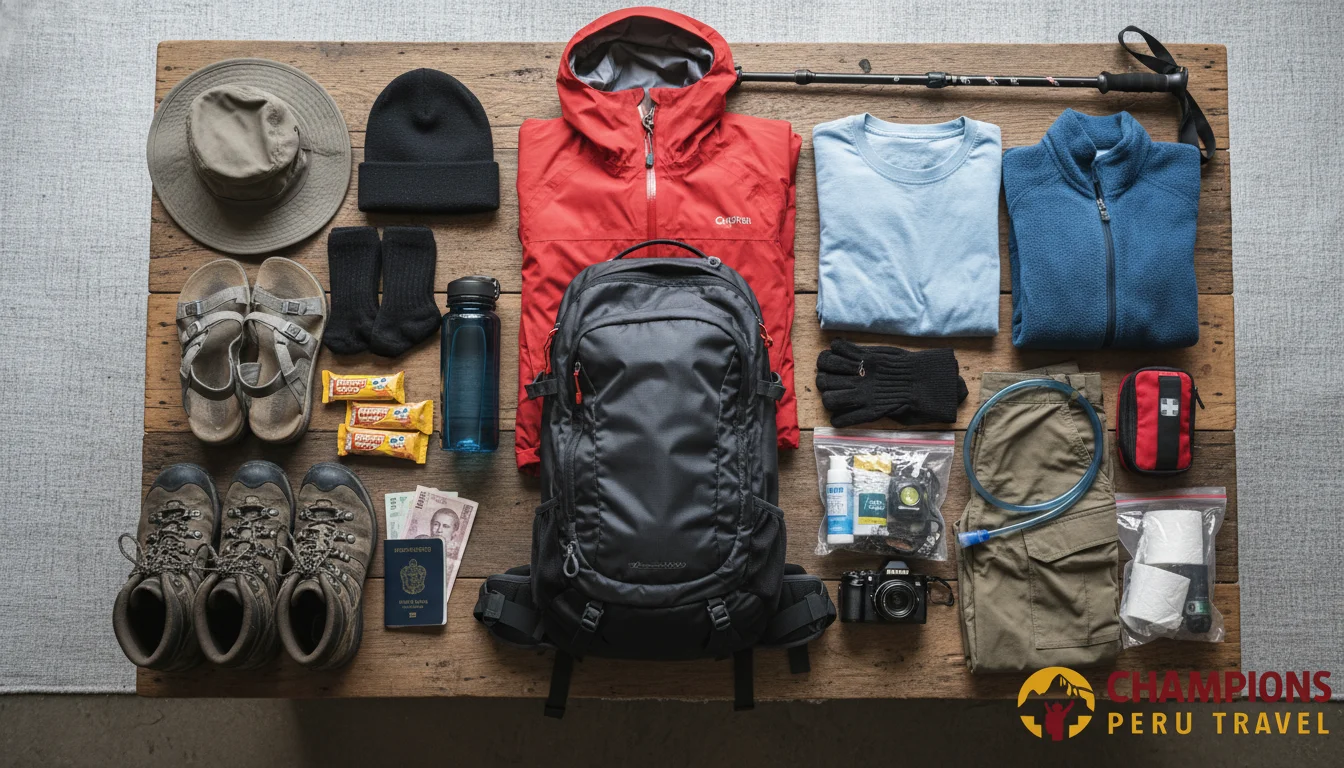
Daypack Essentials (What You Carry During the Hike)
As there are no porters on the 2 day Inca Trail hike to Machu Picchu, hikers must carry their own backpacks. Packing only essential items makes the hike easier, more comfortable, and more enjoyable.
A well-organized daypack should include:
- Water and snacks: Ensure you remain hydrated and energized during the hike.
- Rain gear: Bring a lightweight waterproof jacket or poncho.
- Warm layers: Temperatures may drop, particularly in the early morning.
- Camera or phone: Capture the views along the trail and at Machu Picchu.
- Personal care items: Include sunscreen, lip balm, insect repellent, and hand sanitizer.
- Basic first-aid items: Pack band-aids, blister pads, and pain relievers.
Best time to Hike the 2 Day Inca Trail trek to Machu Picchu
You can hike the 2 day inca trail trek to Machu Picchu almost any time of year, but picking the right season can make your trip much better. Weather, trail visibility, and crowds all change throughout the year.
The dry season is the best time to hike, offering clearer skies, better views, and safer trail conditions.
Dry Season (April to October) – Best Overall Experience
Most people agree that the dry season is the best time to hike the Short Inca Trail.
During these months, you can expect:
- Clear skies and excellent visibility
- Lower chance of rain
- Safer trail conditions
- Better panoramic views of Machu Picchu
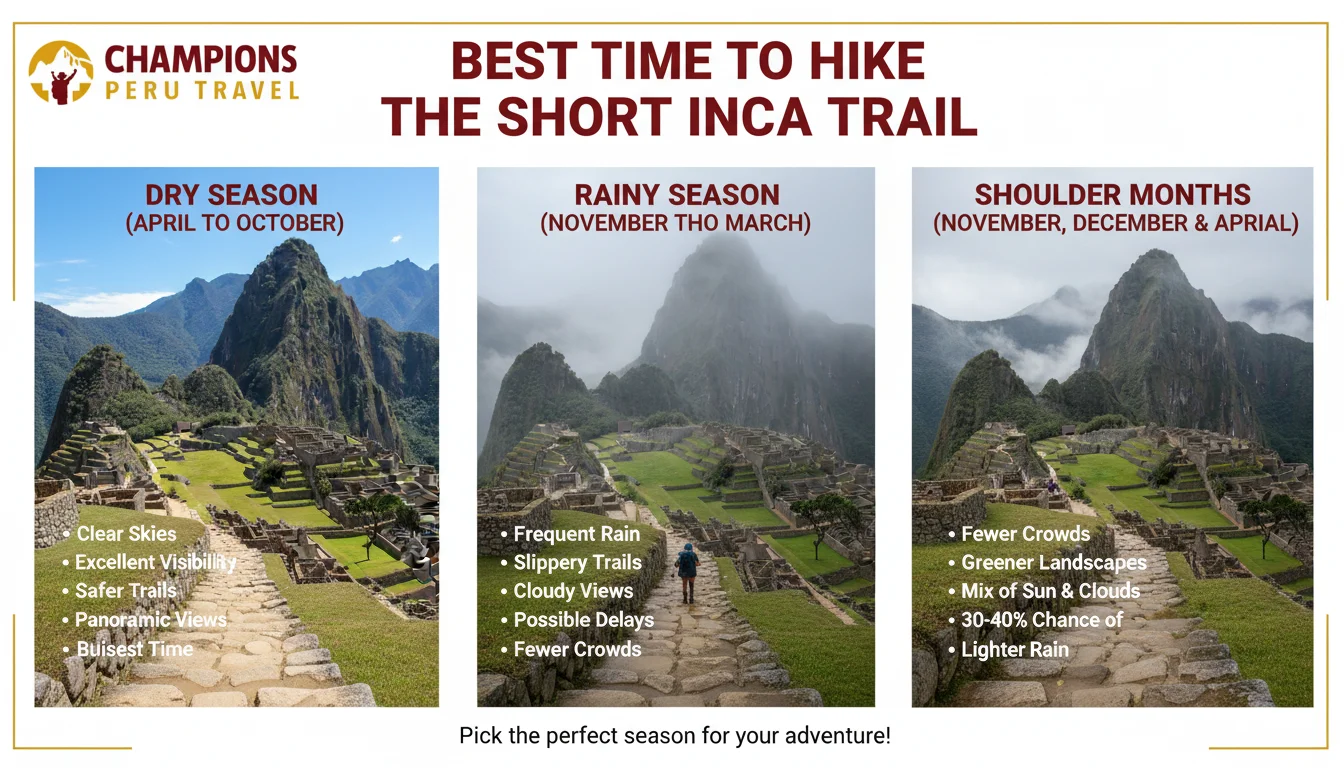
Rainy Season (November to March) – Fewer Crowds, More Challenge
The rainy season offers a different kind of hike. The scenery is greener and more vibrant, but the trail can be tougher.
During this season, expect:
- Frequent rain showers
- Slippery trails
- Cloudy or misty views
- Possible delays due to weather
Shoulder Months (November, December & April)
The shoulder months: November, December, and April, give you a good balanced experience.
From what I’ve seen, there’s about a 30 to 40 percent chance of rain in these months, but it’s usually lighter and doesn’t last as long as in the peak rainy season.
Month-by-Month Overview (Quick Guide)
- April: Transition month, occasional rain until around 20, then start of dry season, green landscapes
- May–June: Best conditions overall
- July–August: Peak season, less crowds
- September: Great balance (weather + fewer tourists)
- October: Transition month, occasional rain
- November–March: Rainy season, fewer crowds but wetter conditions
Flora and Fauna Along the 12 km Inca Trail hike
The 12 km Inca Trail hike offers both historical significance and access to one of Peru’s most biodiverse cloud forests. Hikers encounter native plants, diverse wildlife, and ecosystems that have persisted since Inca times.
Flora Highlights
Orchids: more than 200 species grow along the trail. some bloom only in the dry season, while others cover stone walls year-round with subtle color variations. the most popular one are Wiñay Wayna Orchid (Epidendrum Secundum) know as forever young, because it blooming almost whole year, we opten see along the route. then there the famous one Waqanki(Masdevalli veitchina).
Polylepis trees: Also called “paper trees,” these rare, high-altitude species are vital to the cloud forest ecosystem, protecting soil and supporting birds and insects.
Ferns and bromeliads: These plants cover cliffs, walls, and terrace edges, creating green canopies. Bromeliads collect rainwater, forming microhabitats for frogs and insects.
Medicinal plants: Andean species such as coca, chamomile, and mint grow naturally along the trail, reflecting centuries of local knowledge about health and survival.
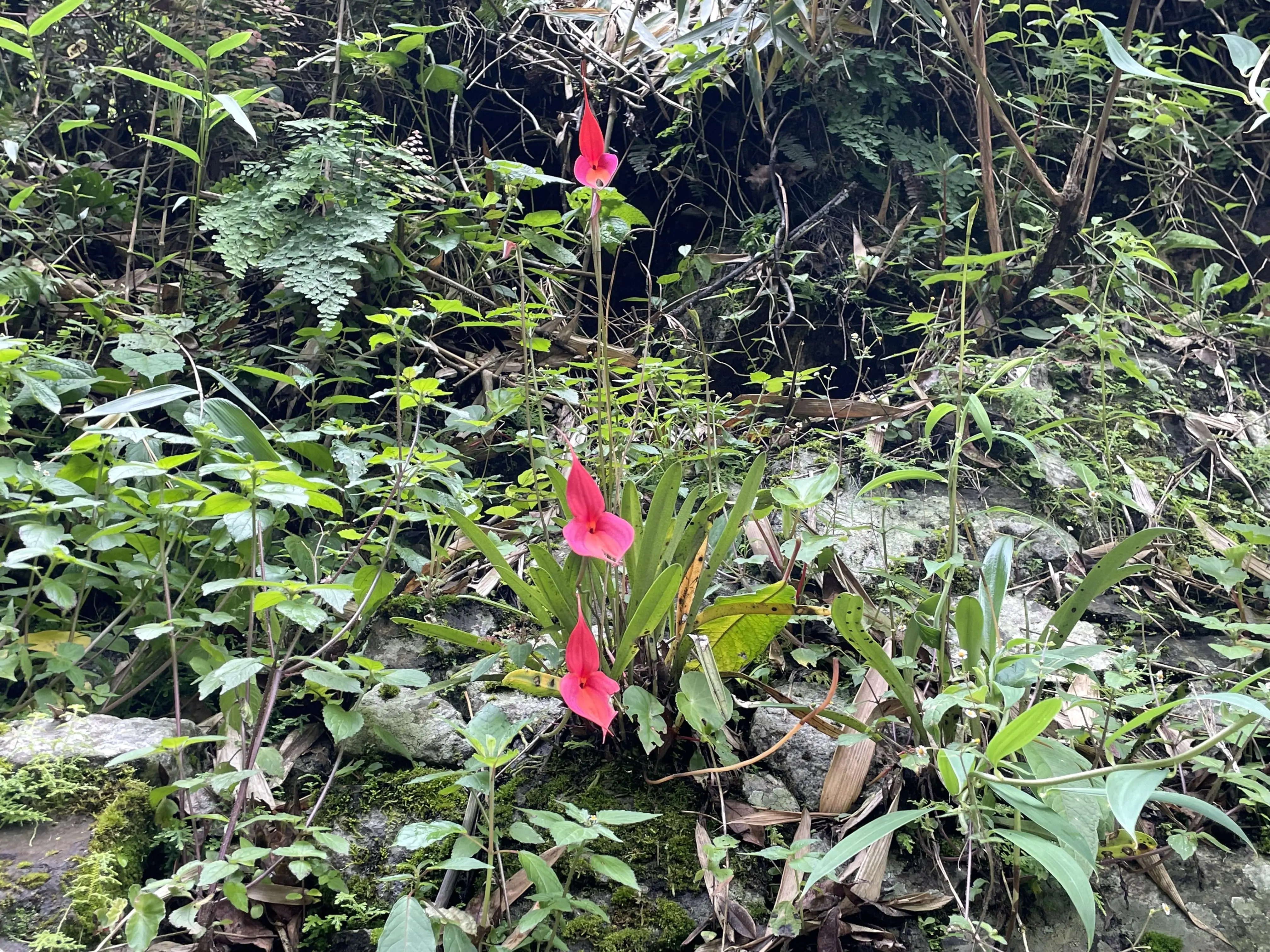
Wakanki Orchid: A Hidden Gem of the 2 day Inca Trail tour
Fauna Highlights
Birds: The trail is home to species such as hummingbirds, toucans, Andean condors, and the cock-of-the-rock, Peru’s national bird. Bird calls contribute to the distinctive atmosphere of the cloud forest.
Mammals: Llamas and alpacas graze near terraces, while vizcachas, small rabbit-like rodents, move along rocky cliffs. if we are lucky we may see some spectacled bear (Tremarctos ornatus), Observing these animals highlights the connection between wildlife and Inca architecture.
Reptiles and amphibians: Native frogs and lizards inhabit shaded areas, streams, and mossy stones. Their presence indicates a healthy ecosystem.
Insects and butterflies: Colorful butterflies and other insects add to the trail’s visual appeal, especially during sunny periods.
How to Book the Guided 2 Day Inca Trail tour
Booking the 2 day Inca Trail tour is pretty simple, but there are a few important things to know before you reserve your spot. Because of government rules, access to the Inca Trail is limited and must be booked through an authorized tour operator.
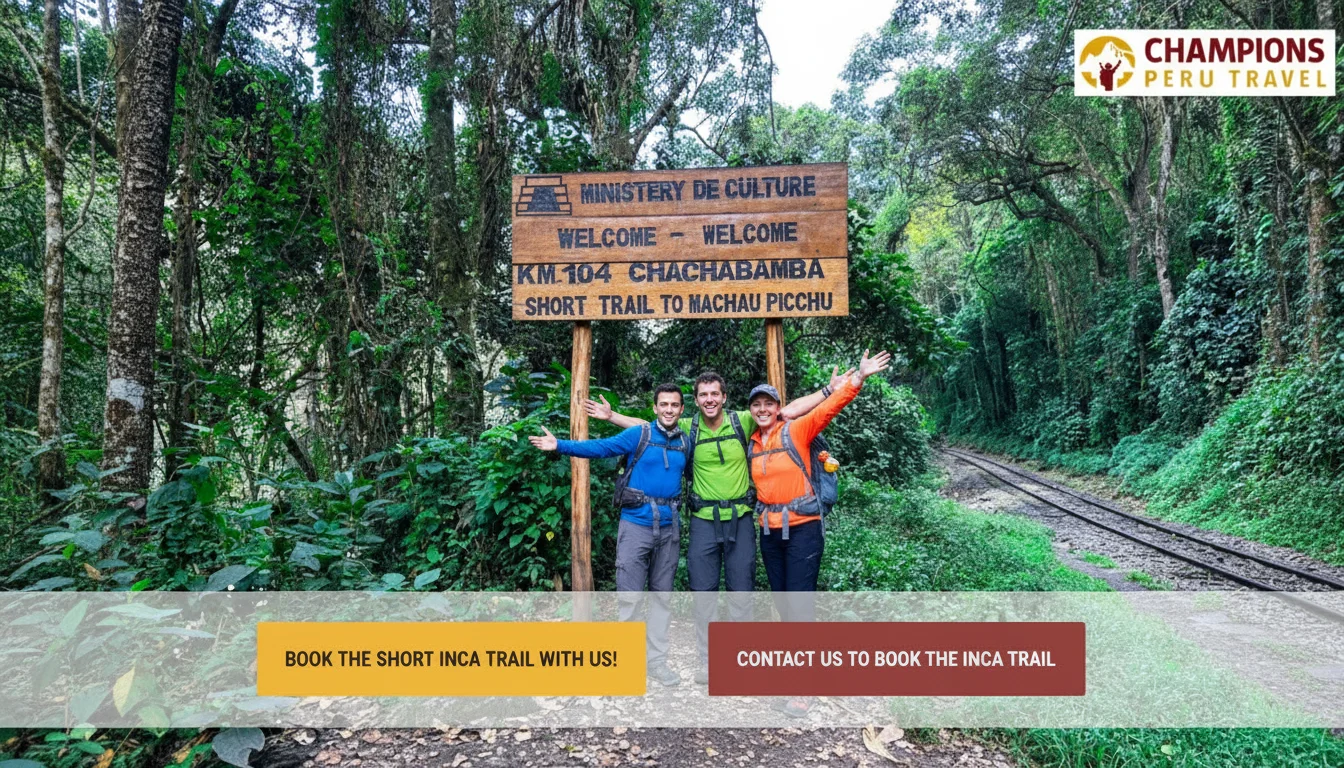
Do You Need to Book in Advance?
Yes, booking in advance is absolutely essential.
Short Inca Trail tour permits are limited, and once sold out, access is not possible. Unlike other routes to Machu Picchu, last-minute tickets are unavailable and independent hiking is not permitted.
Permits can sell out:
- 2–3 months in advance during high season (May–September)
- A few weeks in advance during low season
What’s Included in a Typical Tour?
Most 2-day Inca Trail tours include:
- Inca Trail permit
- Machu Picchu entrance ticket circuit 3
- Professional guide
- Train tickets (round trip)
- Bus tickets (Machu Picchu - Aguas Calientes)
- Hotel in Aguas Calientes (1 night)
- Meals (usually lunch Day 1 and breakfast Day 2)
- Transportation Cusco – Ollanta - Cusco
How Many Permits Are Available per Day?
Approximately 250 permits are issued daily for the Short Inca Trail hike to Machu Picchu. These permits include Tourists, Tour guides and Support staff, such as porters and a chef.
How Much Does the 2 Day Inca Trail Cost?
The cost of the 2 day Inca Trail to Machu Picchu depends on the tour operator, service level, and package inclusions. It is important to consider what each package offers in addition to the price.
The 2-day trek is typically affordable than the classic 4-day Inca Trail, while still providing the following benefits:
- Stunning Andean landscapes along the original Inca paths
- Visits to significant archaeological sites such as Wiñay Wayna
- The iconic arrival at Machu Picchu through the Sun Gate
- Professional guides and organized logistics

Average Price of the 2 Day Inca Trail
The typical price for the 2-day Inca Trail Group Service ranges from:
- $450 to $600 USD per person
2 day Inca Trail Tour Price Comparison (2026)
Below is a general price comparison of 10 well-known tour operators offering the 2 Day Short Inca Trail trek to Machu Picchu.
| Tour Operator | Approx. Price (USD) |
|---|---|
| Alpaca Expeditions | $585 per person |
| TreXperience | $560 per person |
| SAM Travel | $522 per person |
| Qoricancha Expeditions | $520 per person |
| Champions Peru Travel | $520 per person |
| G Adventures | $600 per person |
| Llama Path | $555 per person |
| AB Expeditions | $520 per person |
| Valencia Travel | $600 per person |
| Inca Trail Reservations | $595 per person |
Short Inca Trail vs Classic Inca Trail, which one is best for you?
When planning a trip to Machu Picchu, many people wonder whether to choose the Short Inca Trail or the Classic 4 day Inca Trail. Your decision will depend on how much time you have, your fitness level, and what kind of experience you’re looking for.
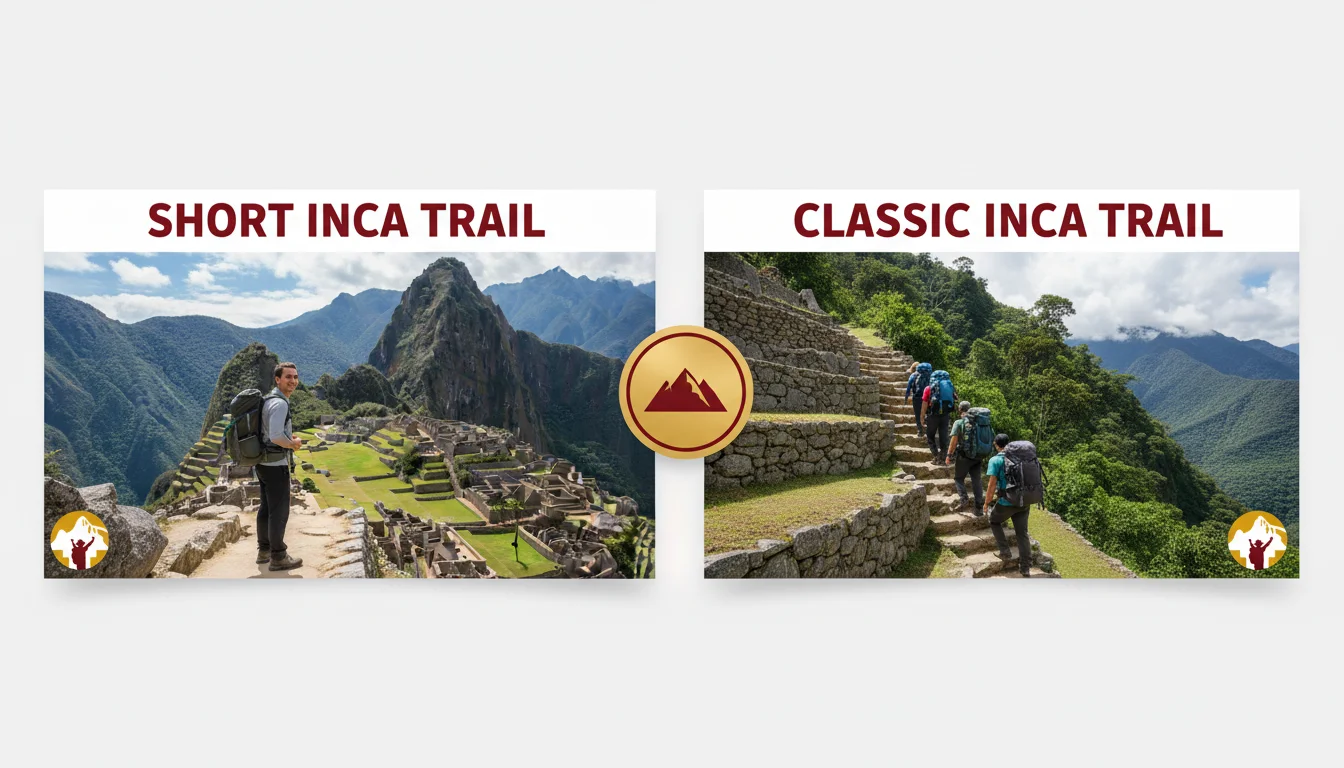
2-day Inca Trail vs. 4-day Inca Trail: Complete Overview
| Feature | Short Inca trail 2 days | Classic Inca trail 4 days |
|---|---|---|
| Duration | 2 days / 1 night | 4 days / 3 nights |
| Distance | 12 km ( 7 miles) | 43 km (26 miles) |
| Difficulty | Moderate | Moderate to challenging |
| Max Altitude | 2,700 m | 4,200 m (Dead Woman’s Pass) |
| Acclimatization Needed | Recommended (1–2 days) | Essential (2–3 days) |
| Accommodation | Hotel in Aguas Calientes | Camping 3 nights |
| Comfort Level | Higher (bed + shower) | Lower (basic camping) |
| Price Range | from $450 to $600 | from $700 to $950 |
Is the 2 day Inca Trail to Machu Picchu Worth It?
Yes, The 2 day Inca Trail is an excellent option for travelers seeking a shorter yet immersive Inca Trail experience.
What Makes the 2 Day Inca Trail Trek to Machu Picchu Special?
The 2 day inca trail trek to Machu Picchu offers more than just a hike; it provides a unique opportunity to connect with the history, natural environment, and legacy of the Inca civilization.
Unlike other routes, this trail allows you to:
- Walk on original Inca stone paths
- Visit important archaeological sites like Chachabamba & Wiñay Wayna.
- Enter Machu Picchu through the Sun Gate (Inti Punku), unique moment.
Arriving at Machu Picchu via the 2 day Inca Trail trek creates a significantly stronger emotional impact than arriving by train.
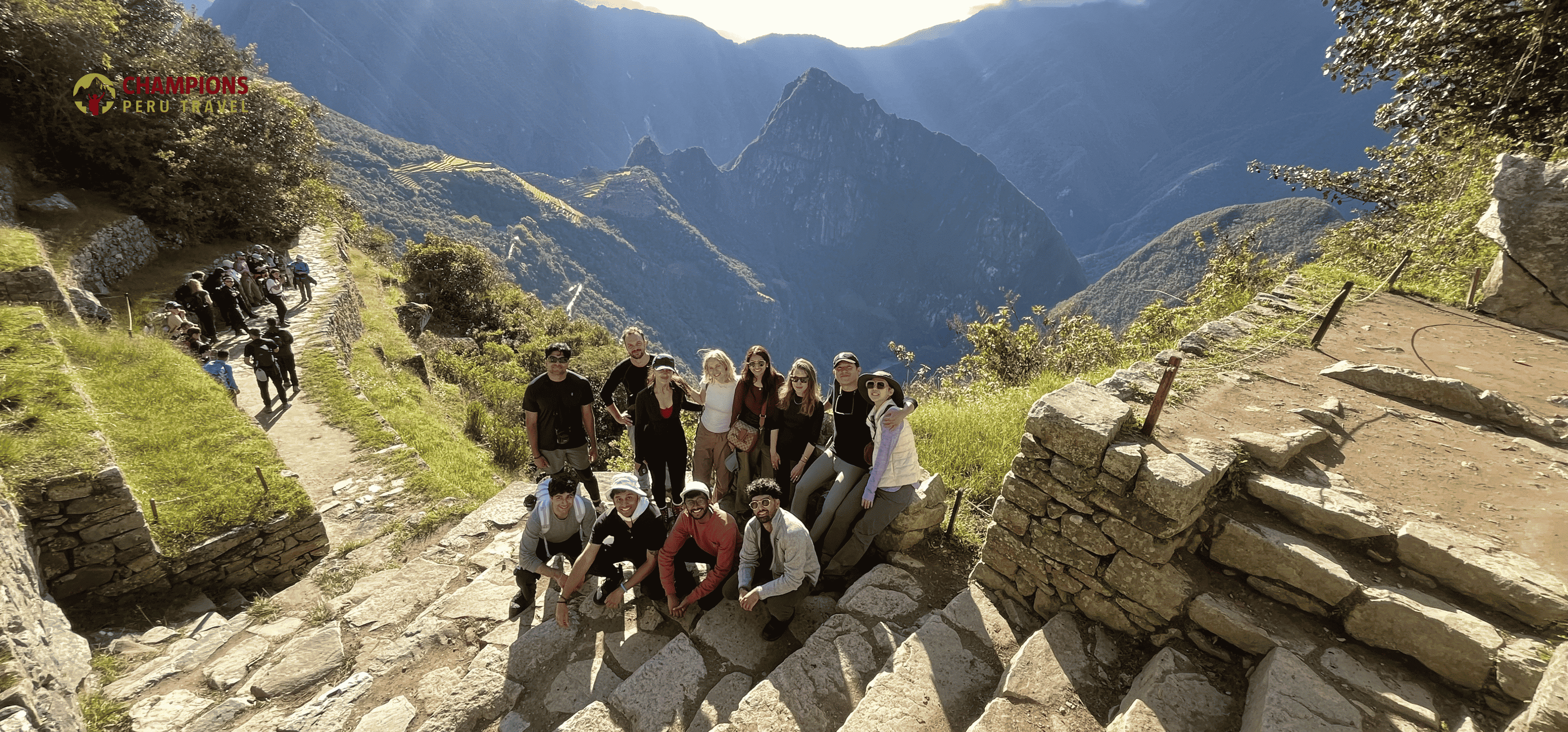
Sun Gate (Inti Punku) View of Machu Picchu – 2 day Inca Trail trek.
The Perfect Balance between Adventure and Comfort
A key advantage of the 2 day inca trail trek to Machu Picchu is its balanced experience.
You get:
- A real hiking adventure
- Incredible mountain and jungle scenery
- No need for camping
- Comfortable logistics (hotel, train, organized transport)
2 Day Inca Trail adventure Map & Route Overview
Knowing the route of the Short Inca Trail lets you picture the experience before you begin. In my time guiding this trail, I’ve found that understanding where you’re headed makes the journey most meaningful and enjoyable.
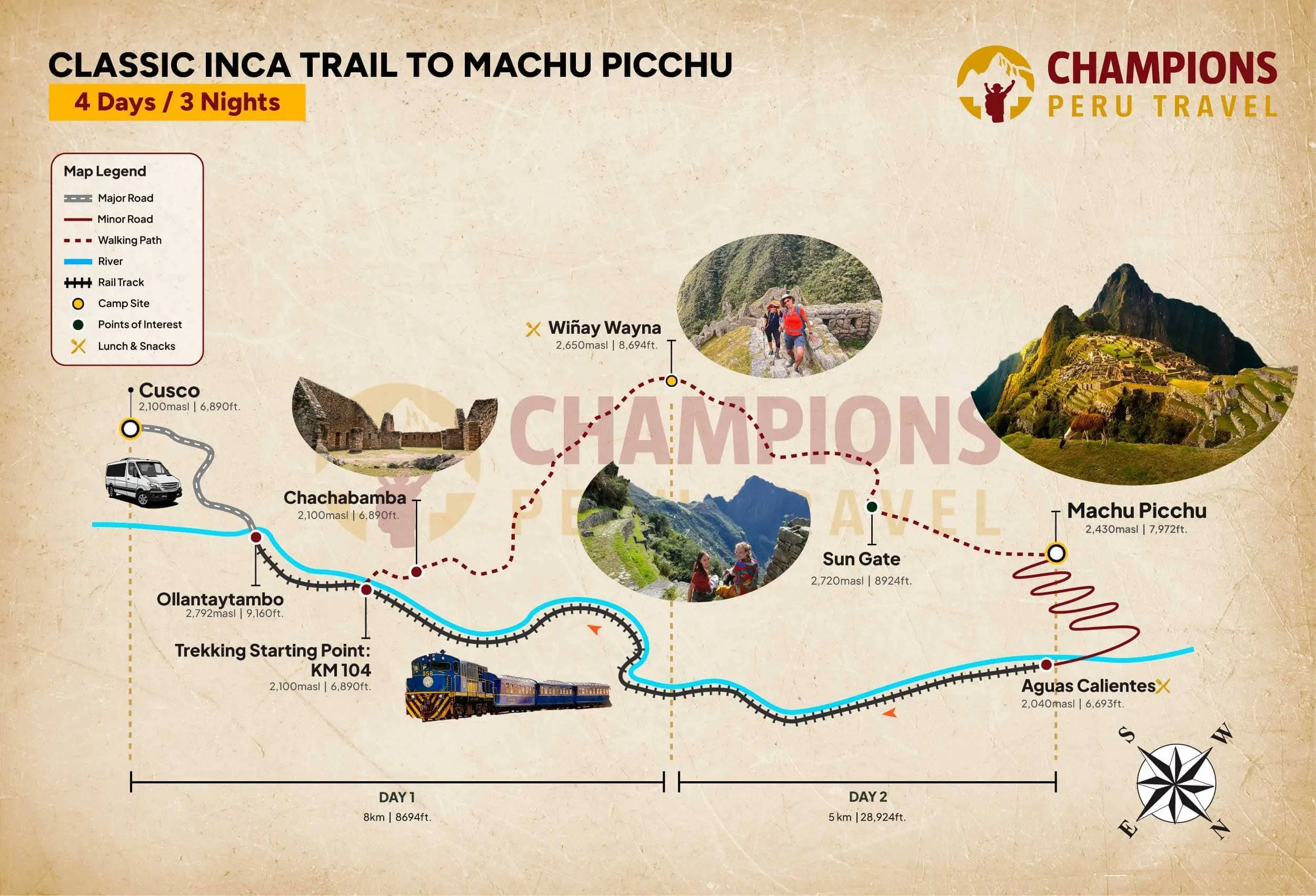
Short Inca Trail to Machu Picchu map.
Overview of the 2 Day Inca Trail Trek Route
The 2 day short Inca Trail trek starts at KM 104, a train stop on the railway between Ollantaytambo and Aguas Calientes.
From this point, the trail generalmente follows this path: KM 104, Chachabamba archaeological site, Gradual ascent through cloud forest, Wiñay Wayna ruins, Inti Punku (Sun Gate) and Machu Picchu.
Can You Combine the Short Inca Trail With Other Treks?
Yes, and this is one of the most exciting options for hikers who want both adventure and variety, while still arriving at Machu Picchu through the Sun Gate.
Moderate Fitness / Light Challenge
1. Huchuy Qosqo Trek + Short Inca Trail 2 Days (4D/3N)
2. Lares Trek 3 Days + Short Inca Trail 2 Days (5D/4N)
Challenging / High Fitness
1. Ausangate Trek 3 Days + Short Inca Trail 2 Days (5D/4N)
2. Salkantay Trek 3 Days + Short Inca Trail 2 Days (5D/4N)
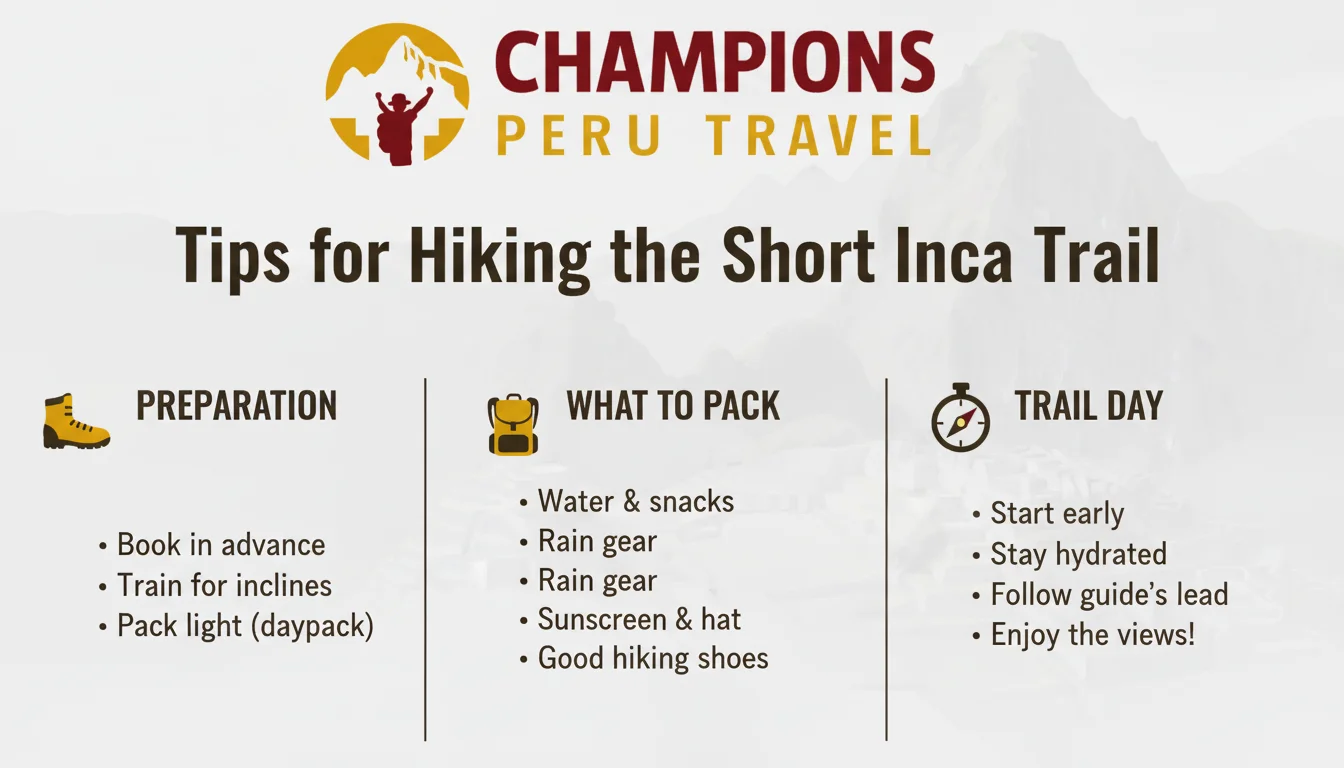
Tips for Hiking the 2 day Inca Trail Hike
- Physical Preparation: cardio and walking for at least 4 to 6 weeks.
- Acclimatization: Spend 2 to 3 days in Cusco before the trek.
- Timing Your Hike: Early start (7-8 AM) to maximize daylight.
- Packing Smart: Bring water, snacks, a rain jacket, hat, sunscreen, and a camera.
- Health & Safety: Carry at least 1.5 to 2 liters of water per day.
- Etiquette: Respect local culture and do not climb on ruins.
FAQs About the Short Inca Trail to Machu Picchu
If you are planning to hike the Short Inca Trail to Machu Picchu, you may have questions. Below are answers to common concerns to help you prepare for your trip.
Can You Hike the Short Inca Trail without a Guide?
No, hiking the Short Inca Trail independently is not permitted.
The Peruvian government strictly regulates the trail, requiring all hikers to be accompanied by a licensed guide. Permits are issued only through authorized tour operators, making tour booking mandatory.
How Many days do you need for the Short Inca Trail?
The Short Inca Trail is completed over two days.
- Day 1: Hiking from KM 104 to Machu Picchu
- Day 2: Guided tour of Machu Picchu
This itinerary is ideal for travelers with limited time who wish to experience part of the original Inca Trail
Is the 2 Day Inca Trail Worth It?
Yes, the 2 Day Inca Trail is highly recommended.
While shorter than the classic route, this trail allows hikers to follow original Inca paths, explore significant archaeological sites, and reach Machu Picchu through the Sun Gate.
This route provides an ideal balance of adventure and comfort, making it a rewarding option for travelers with limited time or moderate fitness.
What is the Difference Between the Short and Classic Inca Trail?
The main differences are:
- Duration: 2 days vs 4 days
- Distance: 12 km vs 45 km
- Difficulty: Moderate vs challenging
- Camping: Not required vs required
The short version is more accessible, while the classic route is more demanding
Can Beginners do the Short Inca Trail?
Yes, beginners can complete this hike.
Most travelers, even those without trekking experience, complete the trail successfully. It is important to walk at your own pace and prepare for the uphill section on day 1.
Do You need to be fit for the Short Inca Trail?
A high level of athleticism is not required, but a basic level of fitness is recommended.
If you can walk for several hours and manage moderate uphill sections, you should be able to complete the hike without difficulty.
Is Altitude a problem on the Short Inca Trail?
Altitude is less of a concern than on other treks, but it may still affect some travellers.
The trail ranges from 2,100 to 2,650 meters. It is recommended to spend a few days in Cusco or the Sacred Valley before starting the hike.
What Happens if it Rains?
Rain is common in the Andes, but even in the rainy season, it usually does not last all day. Most showers pass within a few hours.
If you bring the right rain gear and prepare well, the Short Inca Trail is still safe and enjoyable. The misty cloud forest can even make the hike more beautiful.
Is the Short Inca Trail safe?
Yes, the trail is generally safe.
You will hike with a licensed guide, and the route is well maintained and regulated. However, as with any mountain trail, exercise caution, especially in narrow or wet sections.
How far in Advance should I Book?
It is best to book:
- 3–4 months in advance for high season
- 1–2 months in advance for low season
Booking early ensures availability and peace of mind.
What is the elevation gain on the Short Inca Trail?
The main elevation gain is 550 meters (1,800 feet), climbed between KM 104 (2,100 m / 6,890 ft) and Wiñay Wayna (2,650 m / 8,690 ft). This section takes about 3.5 hours and is the most physically demanding part of the trek. After Wiñay Wayna, the trail levels out and the remaining climb to the Sun Gate (2,720 m / 8,923 ft) is much easier.
Do you need a permit for the 2 day Inca Trail?
Yes, a permit is mandatory. Only 250 permits are issued per day for the Short Inca Trail, covering hikers, guides, and support staff combined, and they can sell out 2–3 months in advance during high season (May–September). Permits are only issued through authorized tour operators - independent hiking without a permit and licensed guide is not allowed.
How do I get to KM 104 from Cusco?
You'll first travel from Cusco to Ollantaytambo by road (private transfer or shared van), then take an early morning train - with PeruRail or Inca Rail - from Ollantaytambo to KM 104. The train only stops at KM 104 for a few minutes, so hikers need to be ready to get off quickly; missing the stop means continuing on to Aguas Calientes and missing the start of the hike.
Is the 2-day Inca Trail the shortest hike to Machu Picchu?
Yes, the 2-day Inca Trail (Short Inca Trail) is the shortest official trekking route to Machu Picchu that still lets you arrive on foot through the Sun Gate (Inti Punku). At 12 km, it's a fraction of the 43 km classic 4-day Inca Trail, while still including original Inca stone paths and the Wiñay Wayna archaeological site - something you don't get by simply arriving via train.